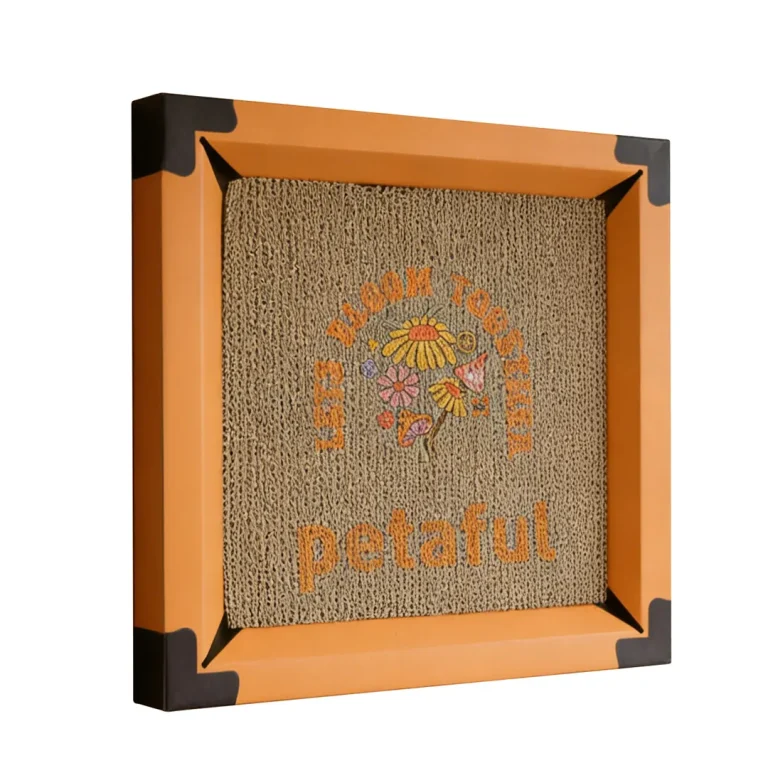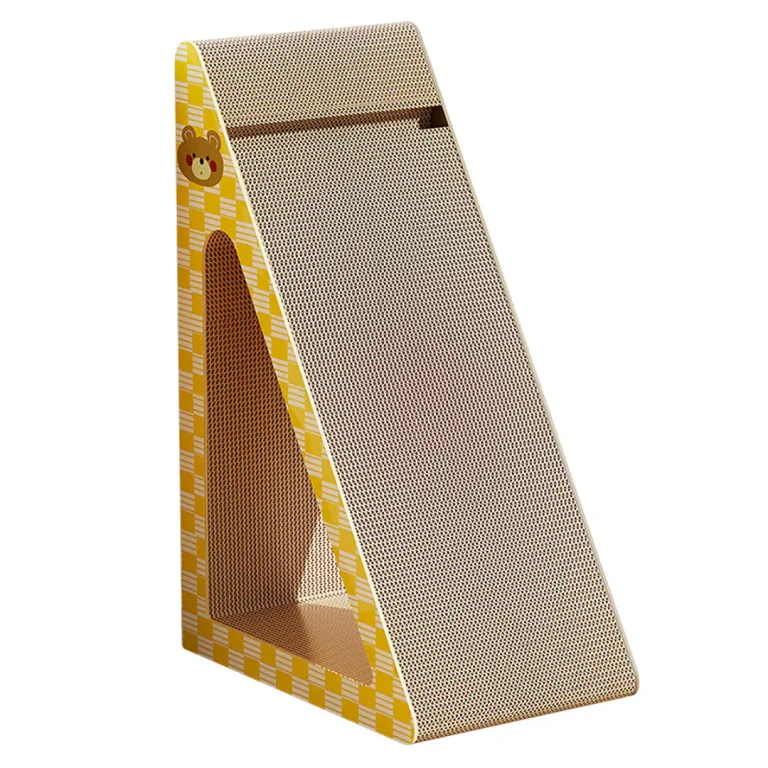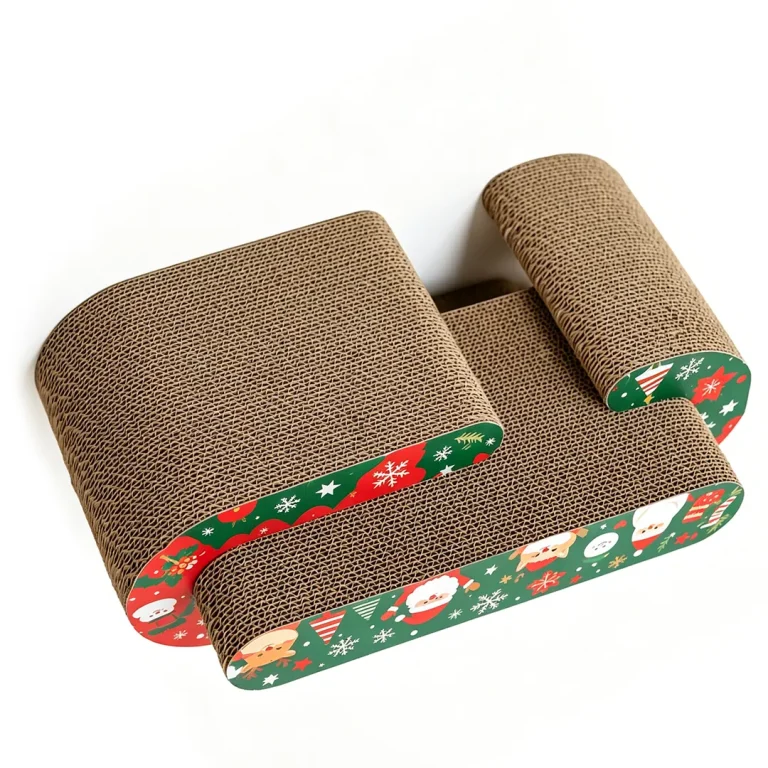
Customer project KD packing / North America
60% More Cat Houses per 40HQ. 34% Less Ocean Freight per Set.
A North American retailer was paying to ship the empty space inside a semi-assembled cat house. We rebuilt it as a KD flat pack: 2,960 sets per 40HQ instead of 1,850, with downstream damage reduced to 0.28%.
- Buyer
- Large North American retail channel operator
- Product
- Cardboard cat houses
- Route
- OEM / KD structural redesign
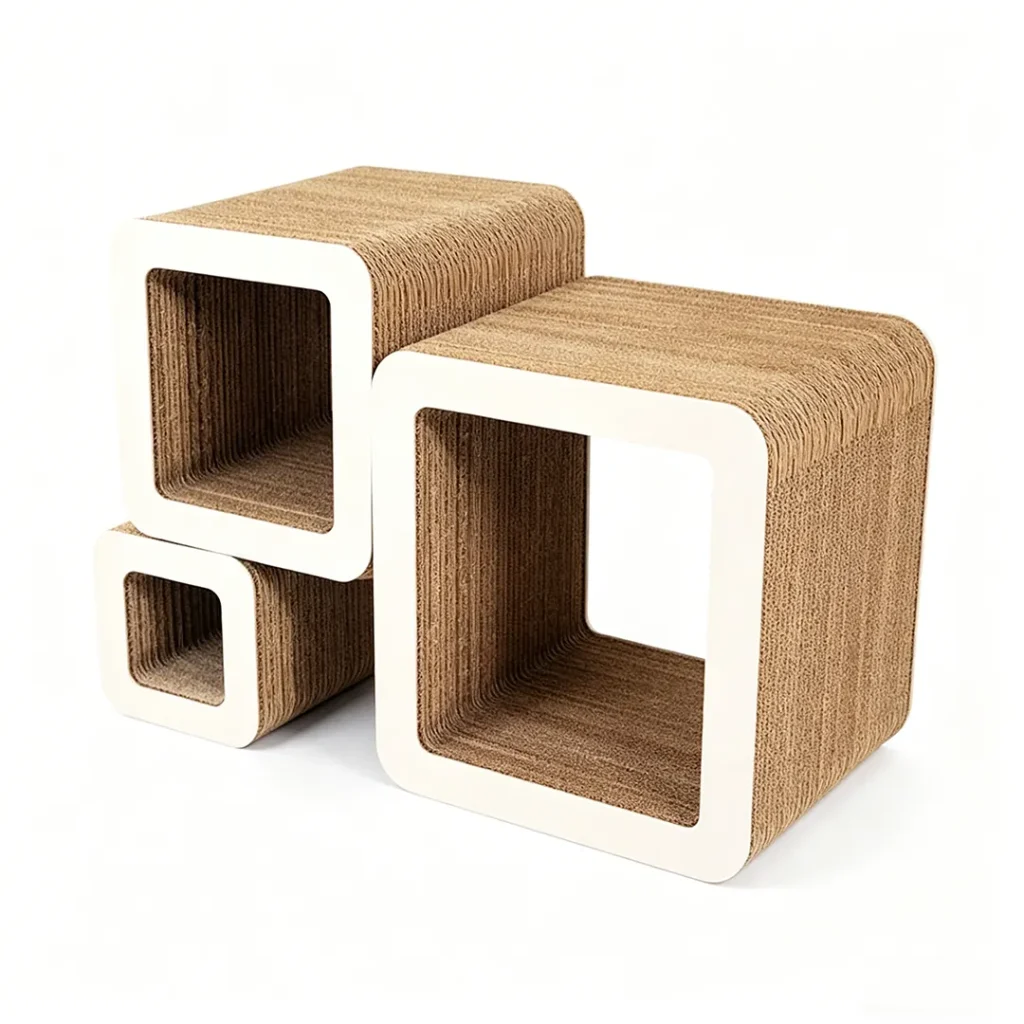
Sets per 40HQ
- Sets per 40HQ
- +60%
- Ocean freight per set
- −34%
- Transit and retail damage
- 0.28%
01 / THE BUYER’S PROBLEM
The container was full before the order was efficient
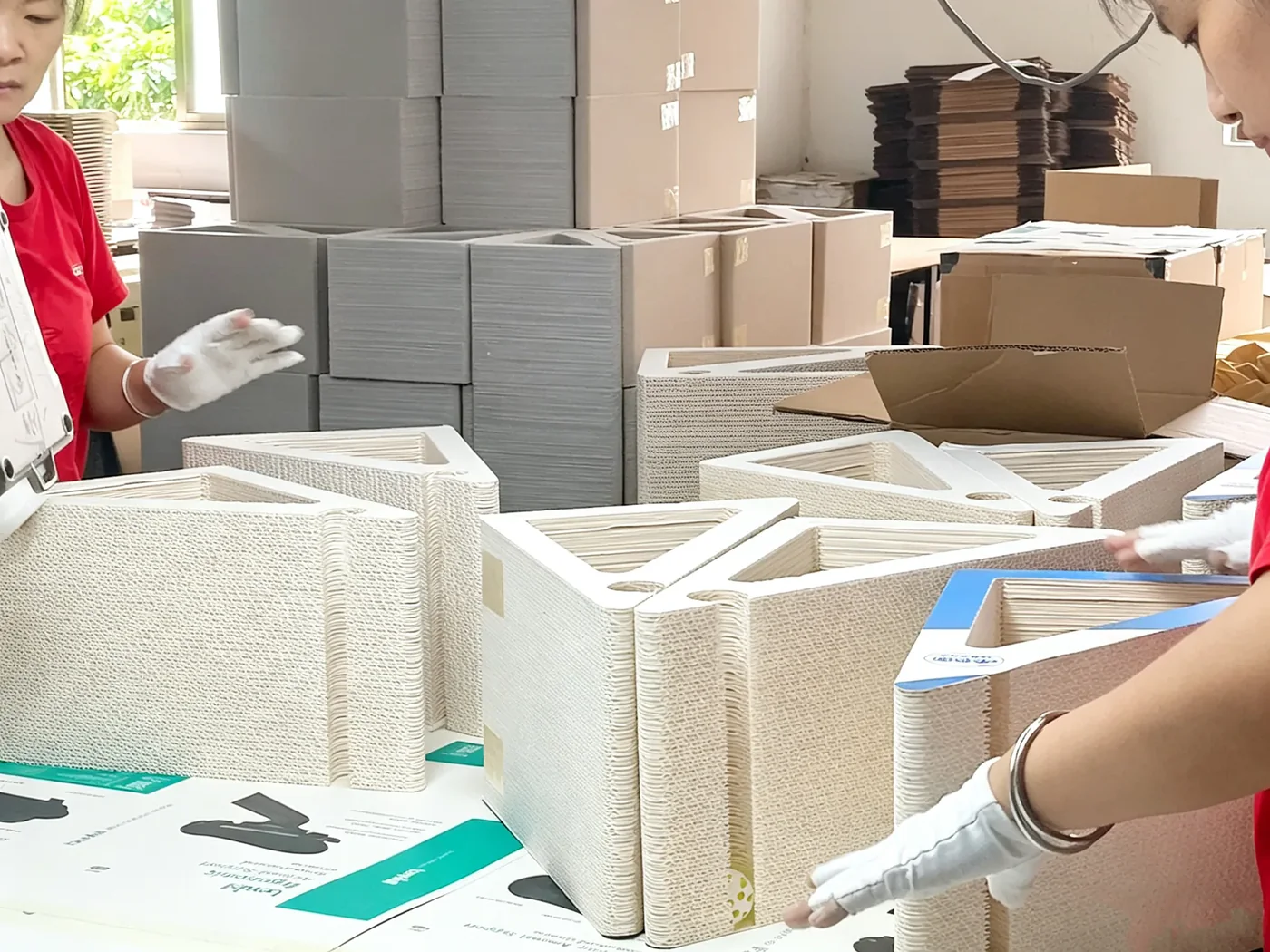
A large North American retail channel came to us with a cardboard cat house that shipped semi-assembled. The product’s hollow form occupied paid container space: a 40HQ carried 1,850 sets. At the other end of the journey, combined sea-freight and retail damage was 4.2%.
The buyer was losing on both sides—limited stock in each load and damaged goods after arrival. Our engineering brief was to get the house flat without making the assembled product unstable.
02 / THE CONSTRAINT
A smaller carton could not fix a bulky structure
The shipping format followed the semi-assembled house. Trimming the carton around it would leave the main source of volume untouched. We had to break down the product itself and retain a stable assembly after unpacking.
The 4.2% damage baseline also ruled out a volume-only answer. The revised house needed to reach retail in better condition, not simply occupy less room at dispatch.
03 / PRODUCT & PACKAGING ENGINEERING
Three decisions changed the load
Remove the hollow shipping volume
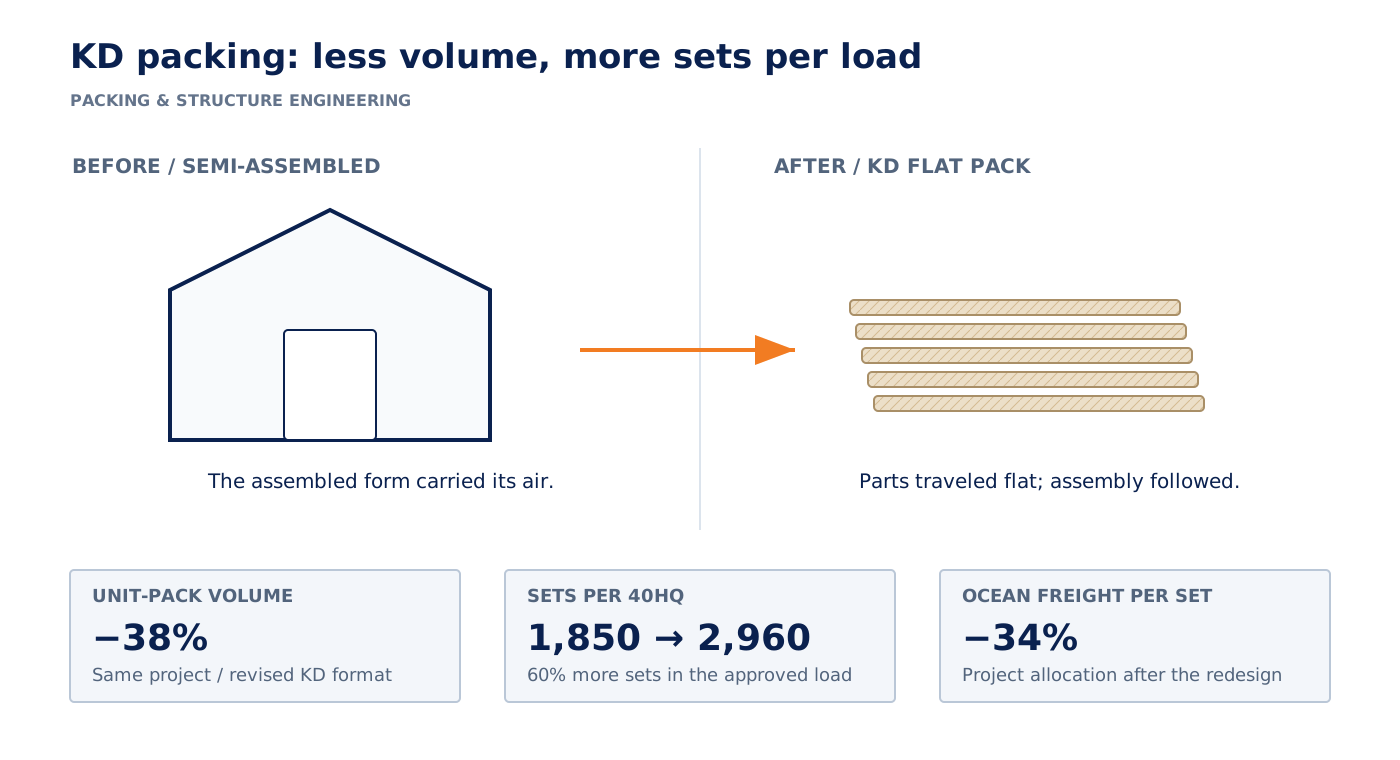
We replaced the semi-assembled format with a fully flat-packed KD structure. The engineering work moved to the parts and their assembly relationship: the house had to separate for transport and regain its intended form at the destination. Packaging volume per set fell by 38%.
KD construction removes the hollow product volume from the shipping format.
Count complete packs in the container
The new format carried 2,960 sets per 40HQ, up from 1,850. Both counts used the same container type. The 60% loading increase mattered commercially because the buyer’s ocean-freight allocation per unit fell by 34%.
A flat pack depends on the assembled joints and panels restoring the intended structure.
Release against the signed KD sample
We kept assembly stability in the sample approval and completed full inspection before the first load. The separate OQC sampling result recorded defects at no more than 0.15%. Packing density did not replace the product-quality requirement; the approved house remained the production reference.
Container capacity follows complete carton geometry, not the bare product’s footprint.
04 / SAMPLING, TESTING & RELEASE
Five-day sample. Day-seven sign-off. A 22-day first order.
 Structure sample5 days
KD breakdown and sample completed.
 Buyer approvalDay 7
Signed assembly reference.
 Inspect and load22 days
First order; eight days faster.
 Container result2,960 sets
Per 40HQ, previously 1,850.
Structural breakdown and sampling took five days. The buyer signed the sample on day seven. Full inspection and container loading for the first order were completed in 22 days, eight days shorter than the previous comparison cycle.
The release paired the signed structure with the flat-pack arrangement. At loading, the comparison was a complete retail set—not an unprotected panel or an empty carton—so the 2,960-set result represented goods ready for the buyer’s channel.
Release checks
- Match production to the signed KD assembly sample.
- Confirm the complete flat-pack set and measured carton.
- Keep full inspection and OQC sampling records distinct.
- Verify the loaded quantity against the approved packing arrangement.
05 / DISPATCH & COMMERCIAL RESULT
More stock arrived in saleable condition
Combined sea-freight and retail-end damage fell from 4.2% to 0.28%. The buyer gained container capacity while losing fewer units downstream, and confirmed a next-quarter reorder under an annual framework.
Its feedback focused on the combination: a smarter structure, stable assembly, and a meaningful reduction in freight allocation. That was the commercial reason to keep the KD design for the next order.
| What changed | Before | After | Project record |
|---|---|---|---|
| Sets per 40HQ | 1,850 | 2,960 | 60% more sets in the compared container-loading arrangement. |
| Packaging volume per set | Original semi-assembled pack | 38% lower | KD flat-pack comparison for this project. |
| Ocean-freight allocation per set | Original arrangement | 34% lower | Per-unit allocation for the approved packing and loading arrangement. |
| Sea-freight and retail-end damage | 4.2% | 0.28% | Combined sea-freight and retail-end project damage rate. |
| First-order inspection and loading cycle | Previous comparison cycle | 22 days | Eight days shorter; full inspection completed before loading. OQC sample defects ≤0.15%. |
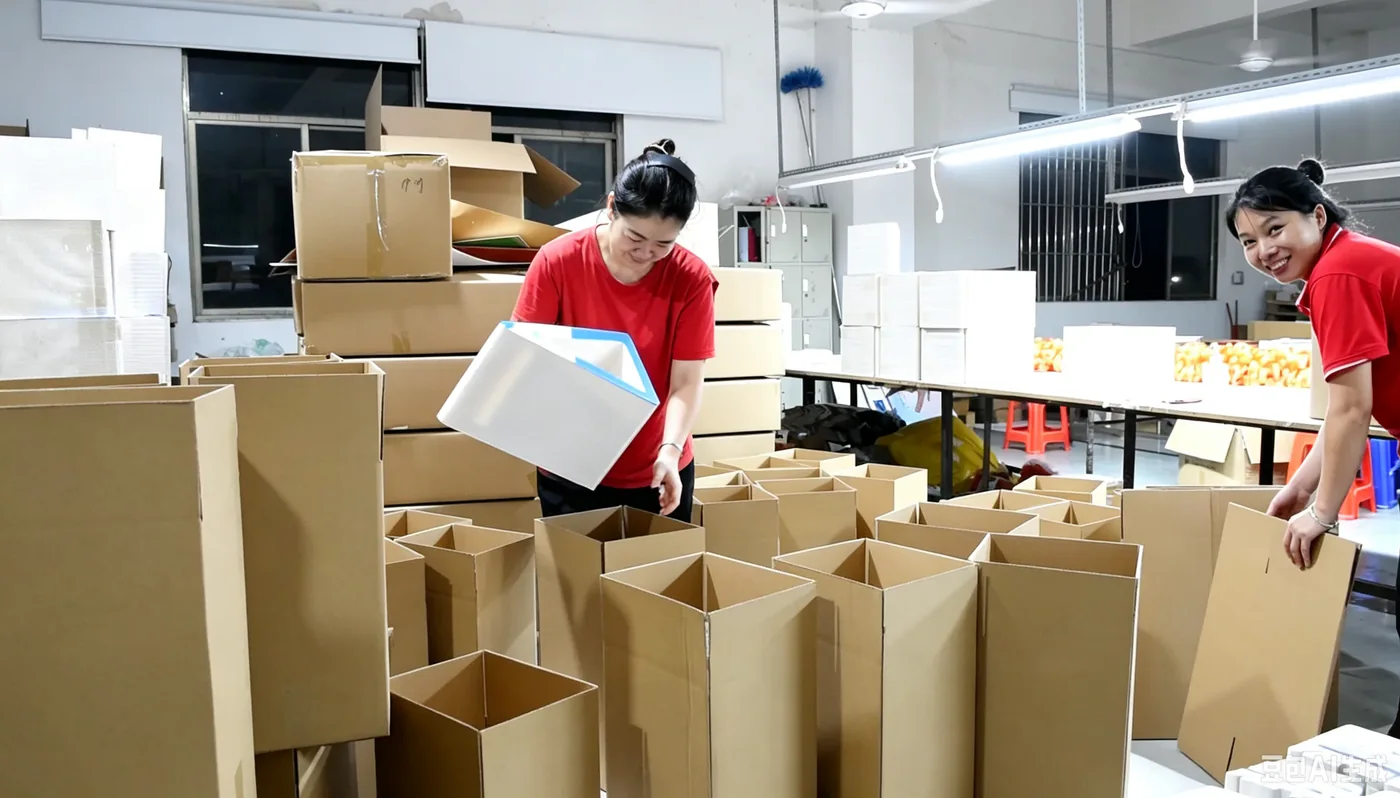
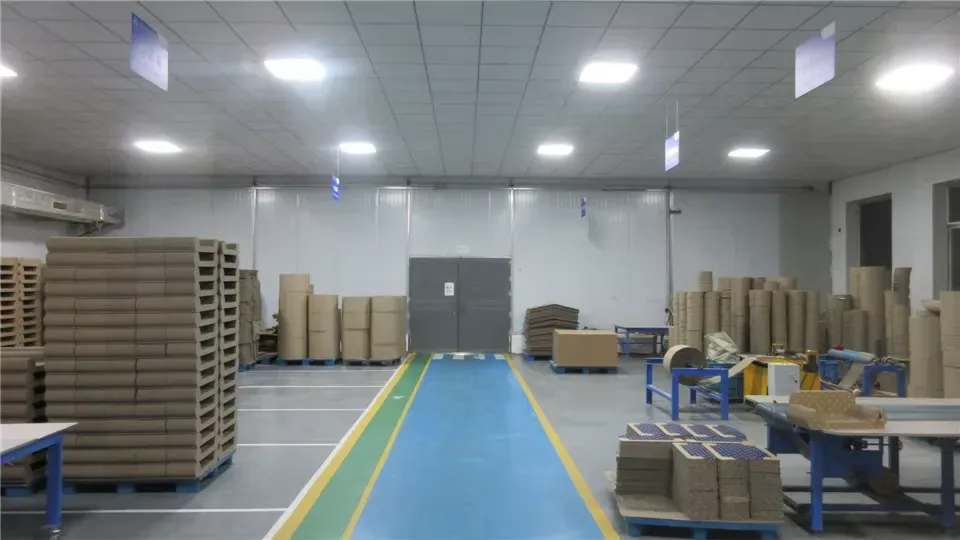
“Clever structure, and it still assembles solidly. We get 60% more sets into each high-cube container, so the freight saving is substantial. We’ll reorder next quarter under the annual framework.”
Purchasing team · North America
Planning a similar order?
Do we need to change the product to get a flat pack?
Often, yes. Here the semi-assembled structure created the shipping volume. Send the existing product and pack so we can identify what can separate without weakening the assembled house.
What information makes a KD review useful?
Current drawings or a sample, carton dimensions, sets per container, assembly requirements, damage history, quantity, and destination. These establish the structural and commercial starting point.
How was the first order released?
The buyer approved the day-seven sample. The first order then completed full inspection before loading, with a separate OQC sample-defect result of no more than 0.15%.