Customer project Precision & finish / Japan
16% Less Carton Volume. 94% Pallet-Space Utilization.
A premium Japanese retailer could not accept rough cut edges, unwanted odor or exposed glue. We connected precision die-cutting and plant-starch adhesive with individual protection and pallet-aligned cartons, keeping batch appearance and structure defects at ≤0.08%.
- Buyer
- Japanese premium department-store and retail-chain buyer
- Product
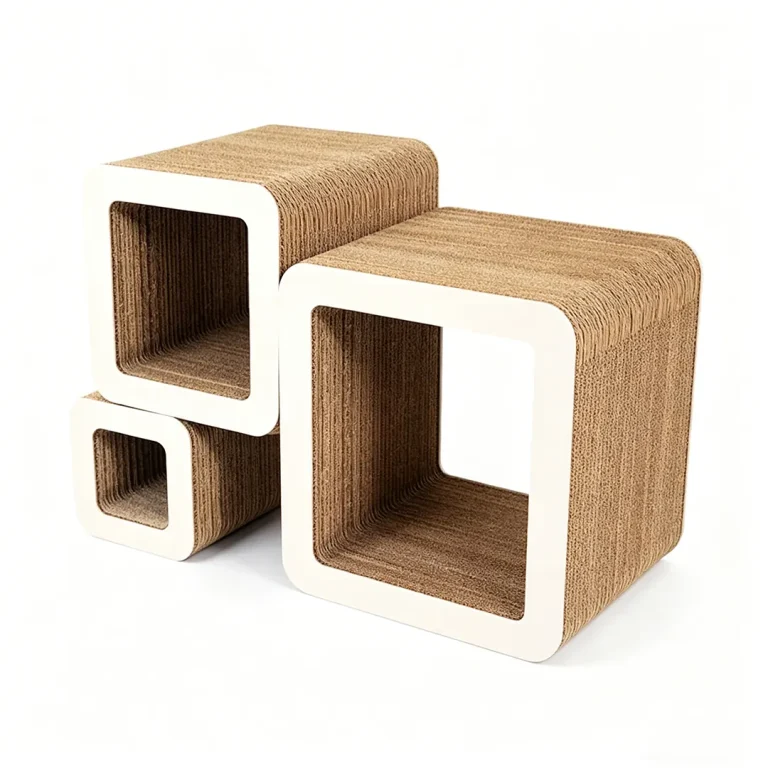
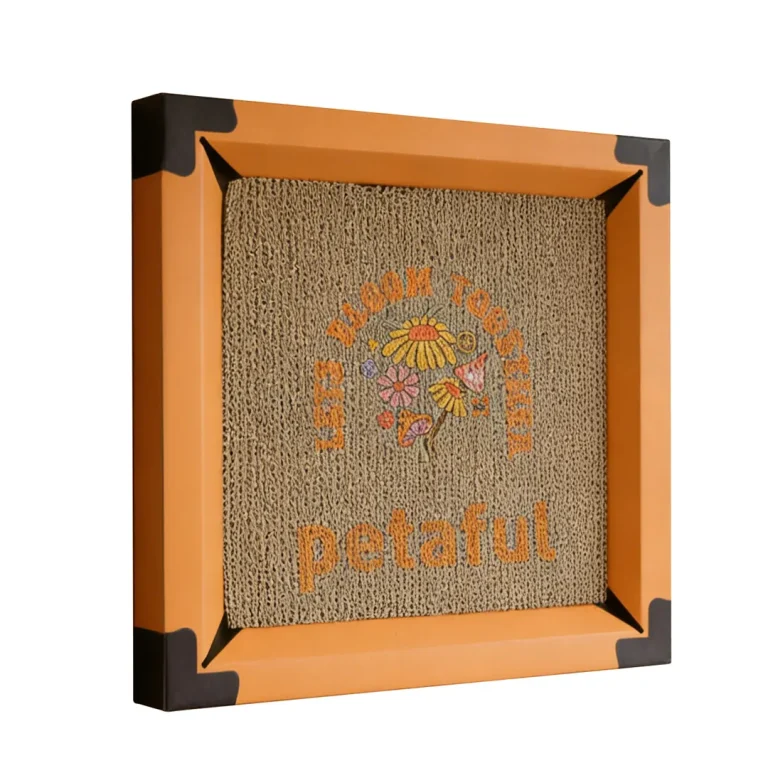
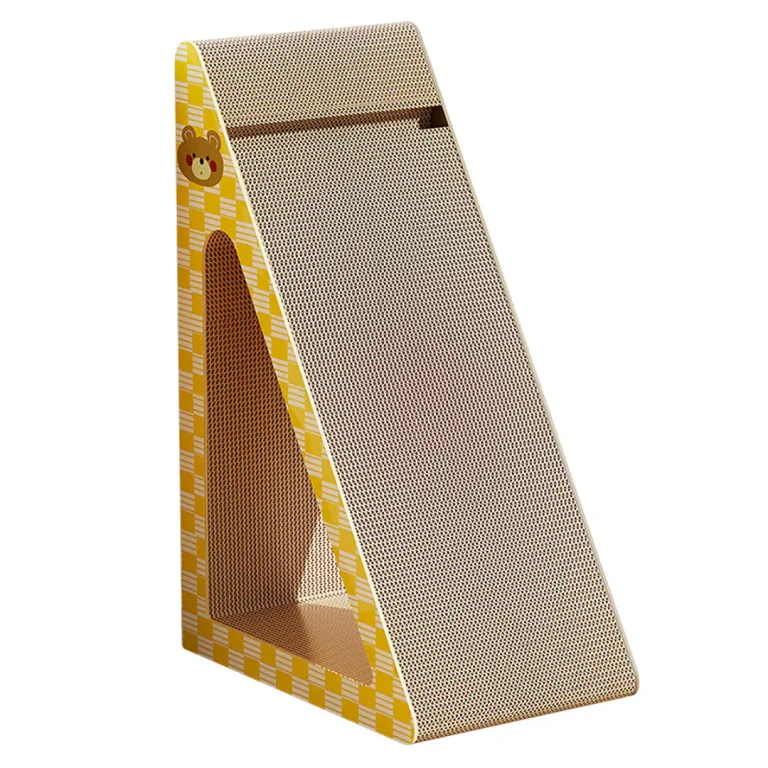
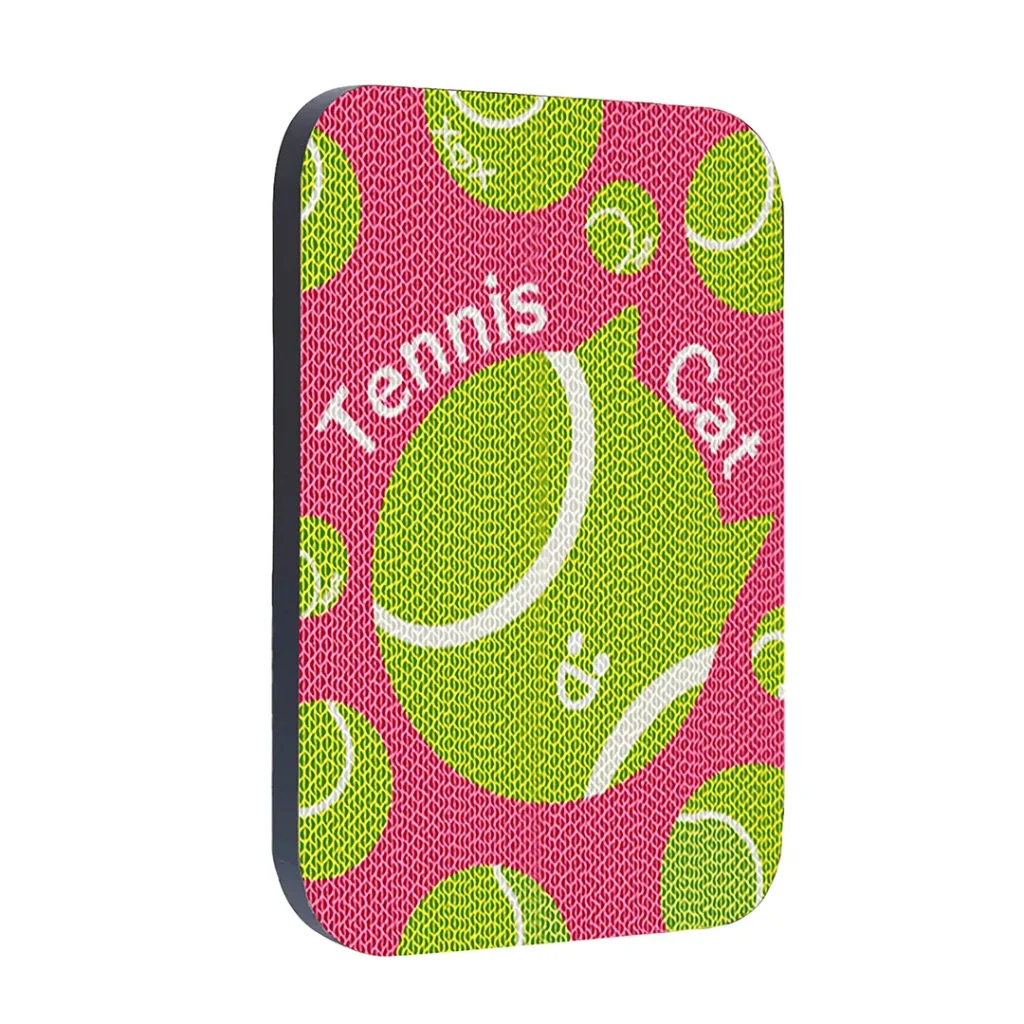
- Cat scratchers
- Route
- OEM / precision finish and packing control
Reported cut-edge flatness improvement
- Reported cut-edge flatness improvement
- +90%
- Outer-carton volume
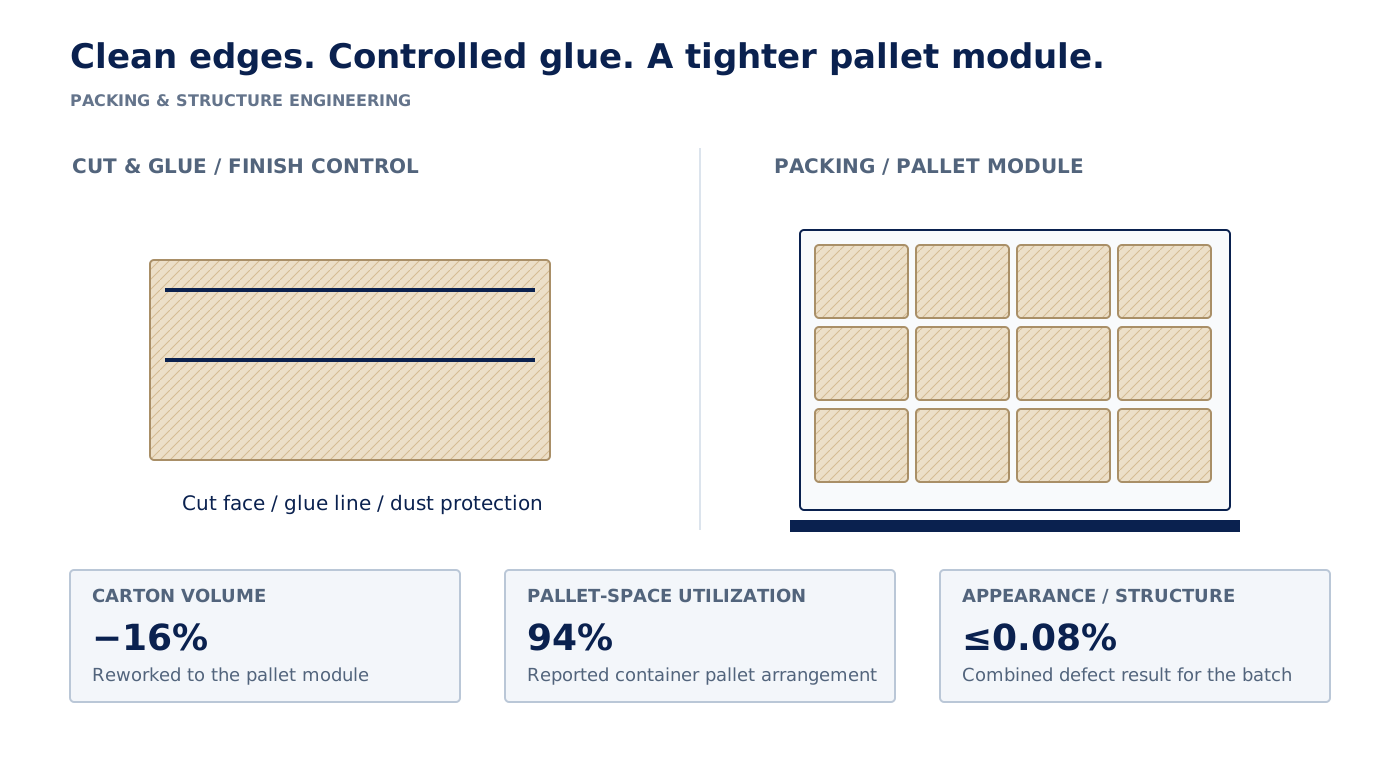
- −16%
- Batch appearance and structural defects
- ≤0.08%
01 / THE BUYER’S PROBLEM
At premium retail, the cut edge was part of the product
The Japanese buyer’s concern was the product a shopper would pick up. Rough edges, unwanted odor and visible adhesive could undermine an otherwise attractive cardboard scratcher. As a premium department-store and retail-chain customer, it needed the finished surface and the opened pack to meet the same expectation.
That made the assignment broader than cutting a cleaner sample. Our work covered tooling, die-cutting, the selected plant-starch adhesive, individual protection and the export carton. The product had to leave the line cleanly and remain presentable through packing, inspection and shipment.
02 / THE CONSTRAINT
A sharper tool alone would not solve the arrival condition
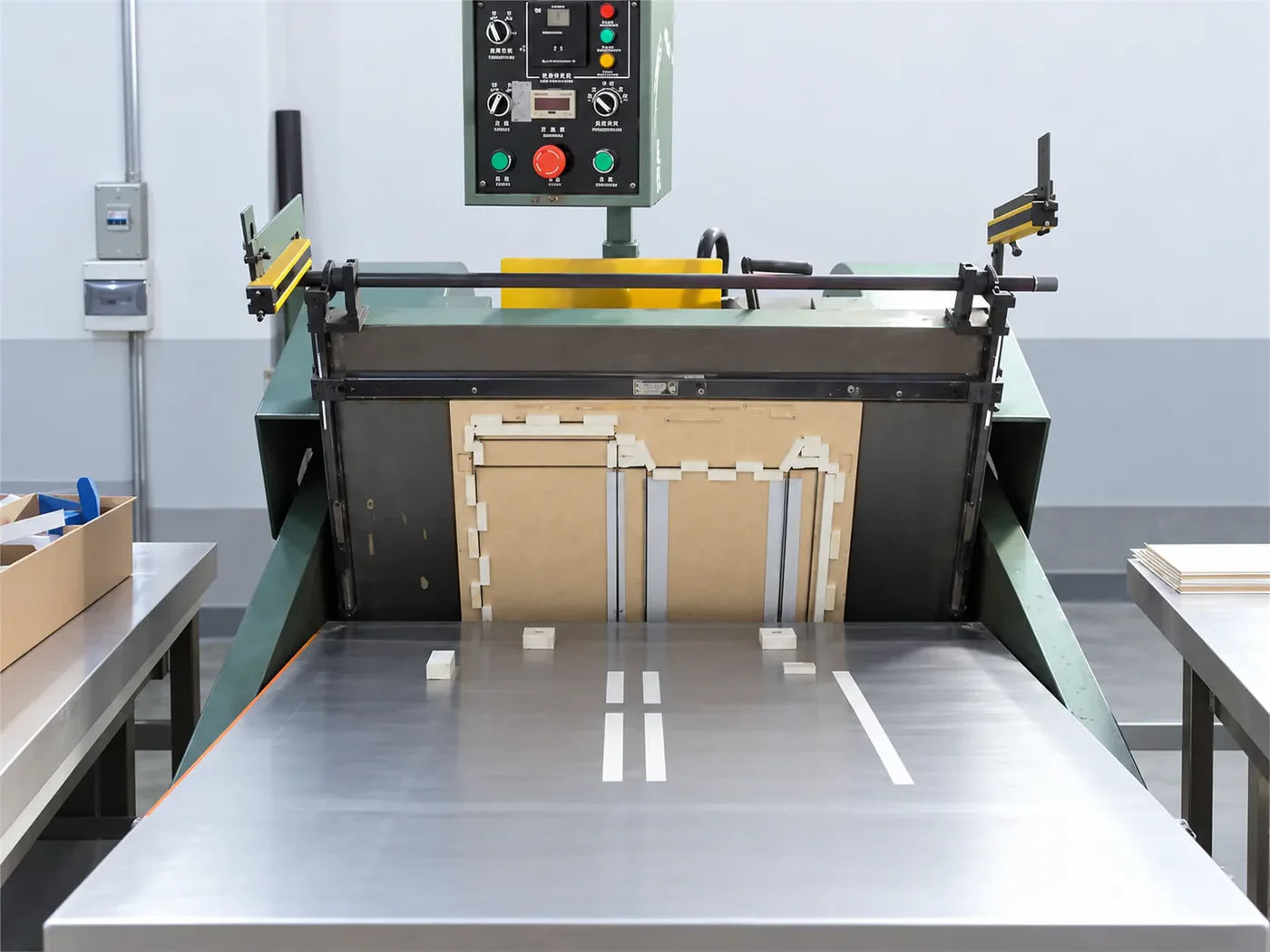
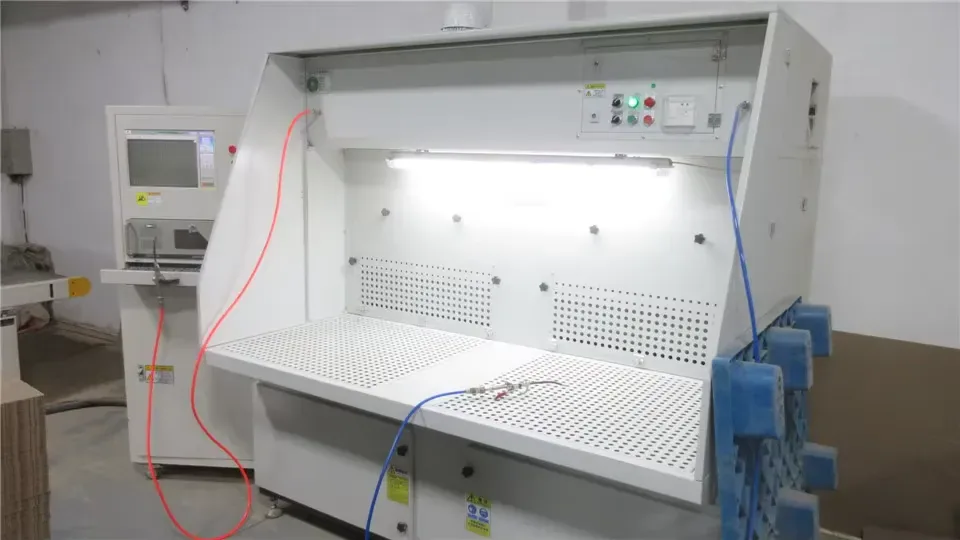
The cut exposed the corrugated structure. A rough edge could show immediately, while glue overflow could mark an otherwise clean face. Those problems met at production but required different controls: cutting accuracy for the edge, and a controlled bond for the joined surfaces.
The packing challenge started after that finish had been achieved. Dust protection needed to preserve the individual unit, while the outer carton needed to support efficient pallet handling. Reducing empty space was useful only if the protected product still fitted the packing system.
03 / PRODUCT & PACKAGING ENGINEERING
The finish and the pallet module were designed together
Bring tooling and adhesive into the same sample review
The high-precision tooling and low-odor plant-starch adhesive sample took five days. Automated die-cutting carried the approved edge geometry into production. We treated the cut face and the glue line as separate features of the same finished piece: cleaner cutting did not excuse visible squeeze-out, and the selected adhesive did not make a ragged edge acceptable. The project recorded a 90% improvement in cut-edge flatness.
Cutting governed edge quality; the adhesive bond governed glue appearance. Approving one feature did not replace inspection of the other.
Protect the individual finish before building the export pack
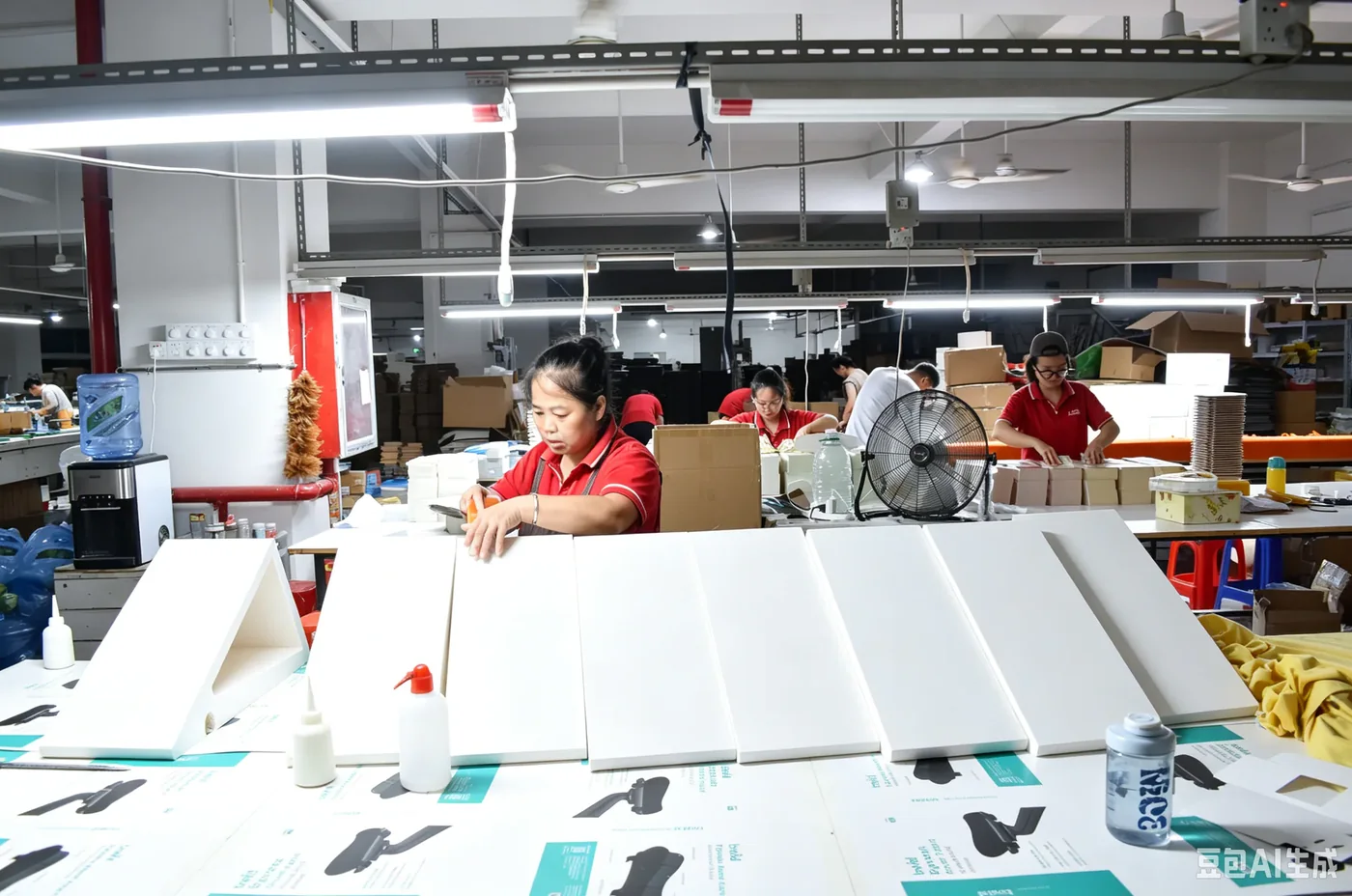
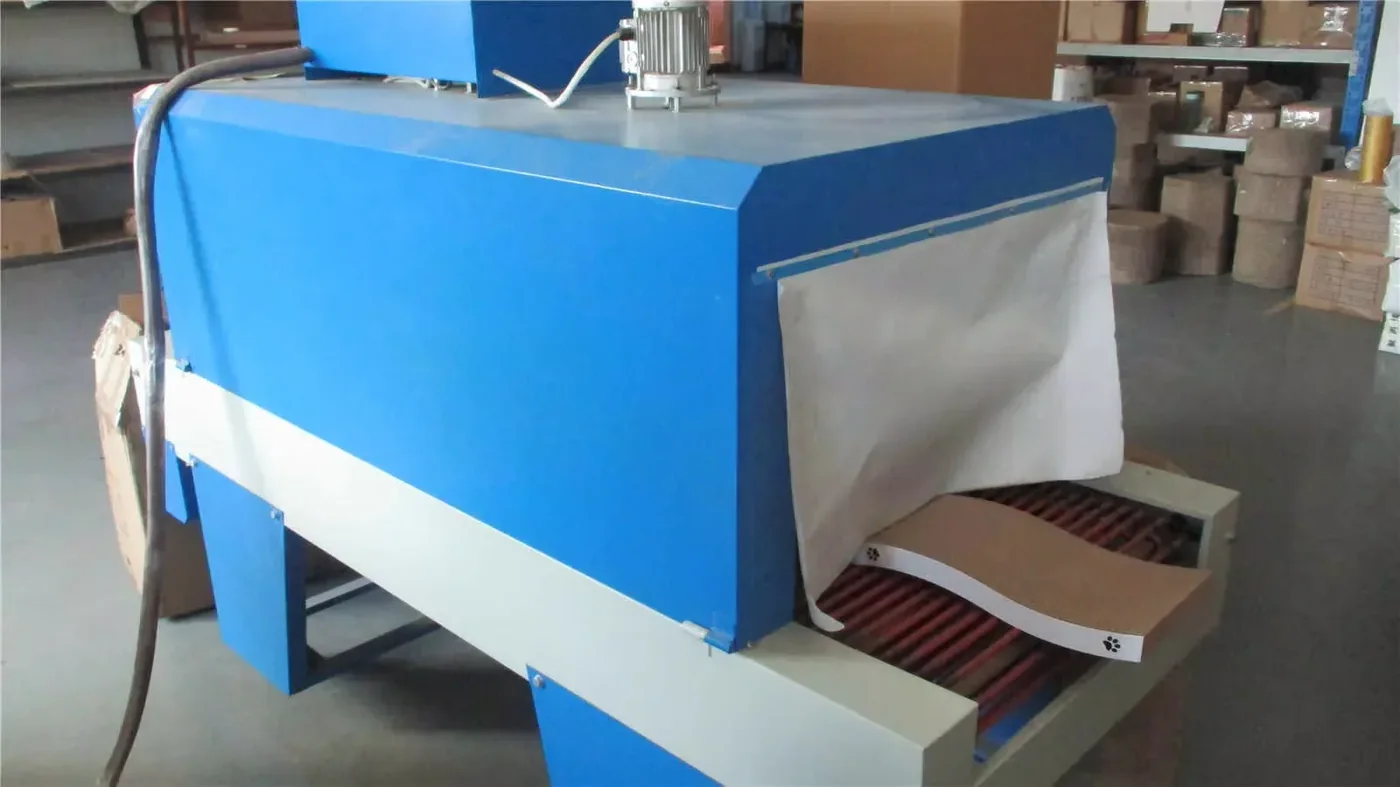
Each unit received dust-protective film wrapping inside a five-layer extra-rigid outer carton. The film protected the exposed product surface; the outer carton provided the next handling layer. That sequence mattered because a carton could arrive intact while the unprotected contents still looked dusty. The protected unit, rather than the bare sample alone, became the basis of the shipping arrangement.
Individual dust-protective film kept the exposed unit separate from its outer handling pack. The five-layer carton formed the next protection layer.
Recalculate the carton from the pallet footprint
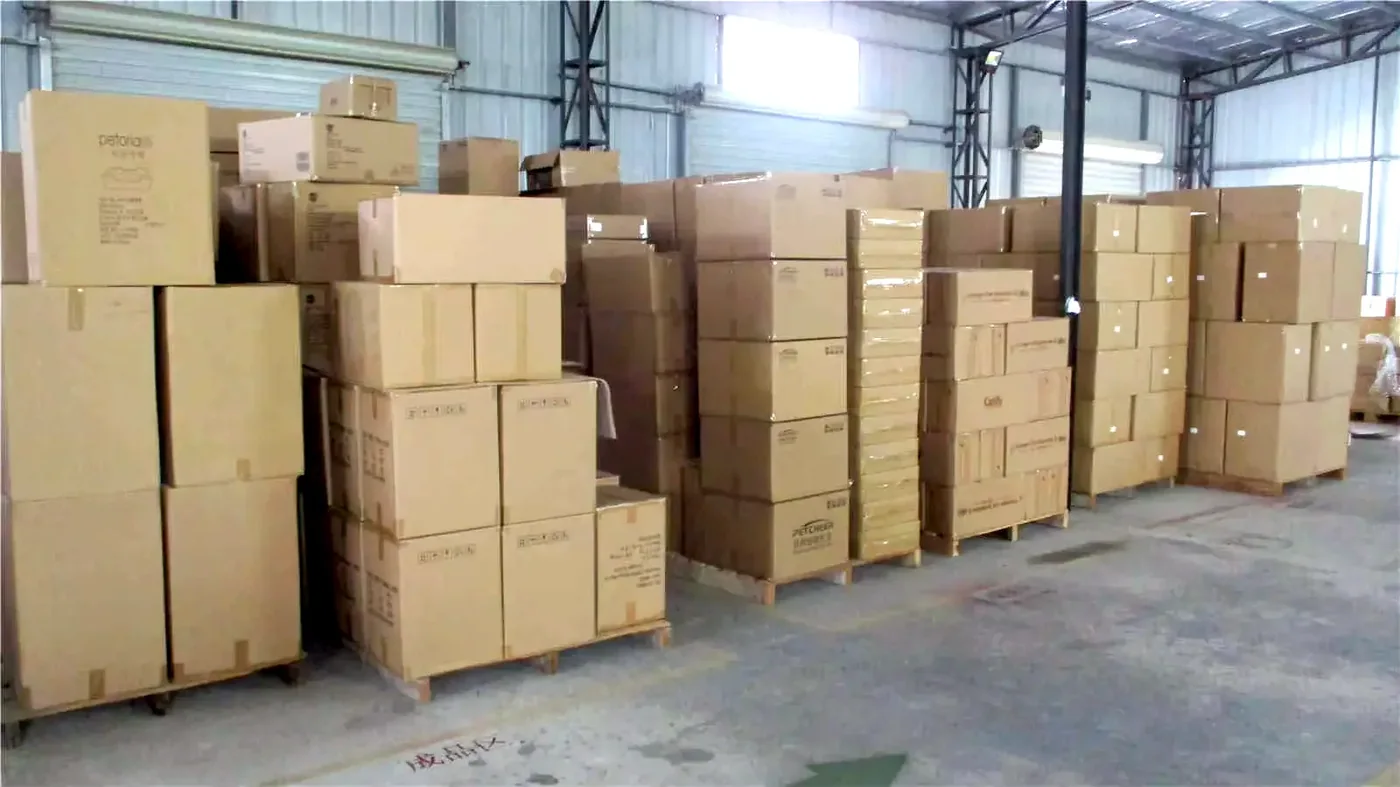
We aligned the outer-carton dimensions with the project’s standard pallet module. Cartons needed to work across the pallet face, so a small dimensional mismatch could repeat as unused strips of space. The recalculation reduced carton volume by 16% and brought container pallet-space utilization to 94%. This was a pallet-based layout: the pallet and its carton pattern were part of the result.
The carton footprint was recalculated as a pallet module, reducing repeated empty strips in the packing pattern.
04 / SAMPLING, TESTING & RELEASE
The shipment review covered more than the retained sample
 Tooling and adhesive sample5 days
Precision cutting and plant-starch adhesive reviewed together.
 Carton recalculation−16%
Volume reduction around the pallet module.
 Inspected shipment19 days
Production and third-party full inspection completed.
 Pallet-space result94%
Utilization for the project’s container arrangement.
Production and shipment, including third-party full inspection, were completed in 19 days. The quality plan also referenced AQL 1.0/1.5. Those were different inspection scopes: the AQL plan described the sampling framework, while the third-party full inspection covered the shipment release stated for this project.
The practical release question was whether the clean finish survived the complete process. Cut faces, adhesive appearance, individual wrapping and the pallet-aligned carton all remained relevant at that point. A correct tooling sample could establish the reference, but production and packed goods still had to follow it.
Release checks
- Review the automated die-cut edge and plant-starch adhesive against the approved finish sample.
- Check individual dust-protective wrapping before closing the five-layer extra-rigid carton.
- Match the packed carton dimensions and pallet arrangement to the approved module.
- Record AQL 1.0/1.5, third-party full inspection and batch odor/glue observations as distinct quality scopes.
05 / DISPATCH & COMMERCIAL RESULT
The batch met the finish brief without wasting pallet space
The inspected batch recorded no observed odor or glue-overflow defects. Combined appearance and structural defects were no higher than 0.08%. Alongside the finish improvement, the smaller carton and 94% pallet-space utilization gave the buyer a more efficient shipping arrangement.
The buyer highlighted the cutting precision, low-odor adhesive and packing standard as meeting its premium-retail requirements. The zero odor and glue-overflow observation belonged to this inspected batch, alongside the recorded appearance and structural result.
| What changed | Before | After | Project record |
|---|---|---|---|
| Cut-edge flatness | Previous comparison | 90% improvement | Project-reported comparison; no extra measurement method inferred. |
| Carton volume | Previous carton | 16% lower | Recalculated around the project’s standard pallet module. |
| Container pallet-space utilization | — | 94% | Pallet-based space metric for this shipment. |
| Observed odor and glue-overflow defects | — | 0% | Observation for the inspected production batch. |
| Combined appearance and structural defects | — | ≤0.08% | Reported project batch. AQL 1.0/1.5 plan and third-party full inspection were distinct scopes. |
“Our customers notice every rough edge. Burrs and unwanted odor simply don’t work in this market. The cutting precision, low-odor adhesive and packing were at the standard we needed for premium retail.”
Purchasing team · Japan
Planning a similar order?
What should a premium-retail scratcher sample include?
Include the cut faces, bonded surfaces and individual protective wrap, as well as the product shape. In this project, tooling and plant-starch adhesive were reviewed together before the finished unit entered its five-layer outer carton.
Can you align our cartons with a specified pallet module?
Send the pallet requirements and proposed assortment with the product brief. Here, recalculating the outer carton around the standard module reduced carton volume by 16% and achieved 94% container pallet-space utilization.
What did the batch’s 0% odor and glue-overflow result mean?
No odor or glue-overflow defects were observed in the inspected batch. The project separately recorded combined appearance and structural defects of ≤0.08%, an AQL 1.0/1.5 quality plan, and third-party full inspection before shipment.