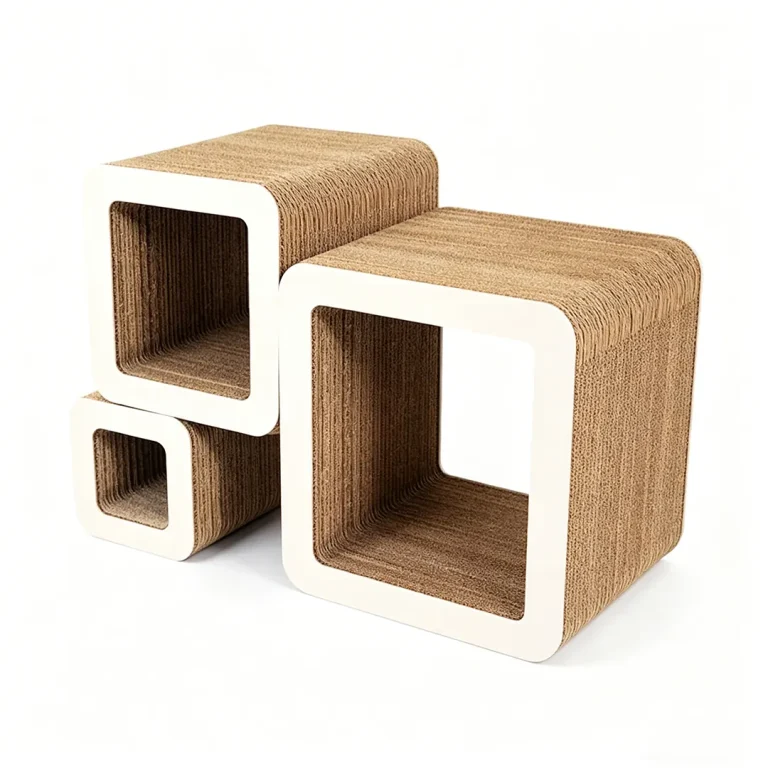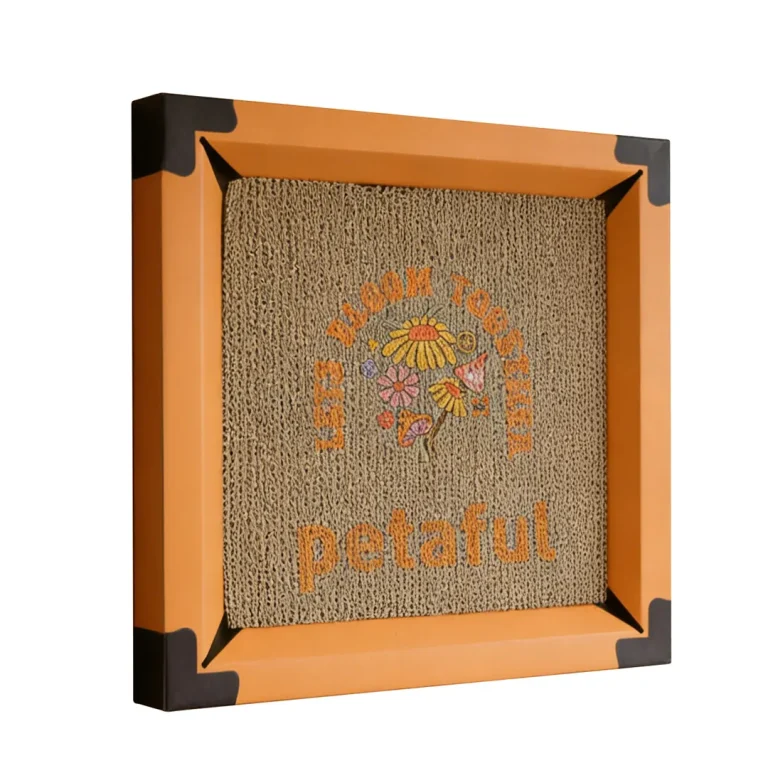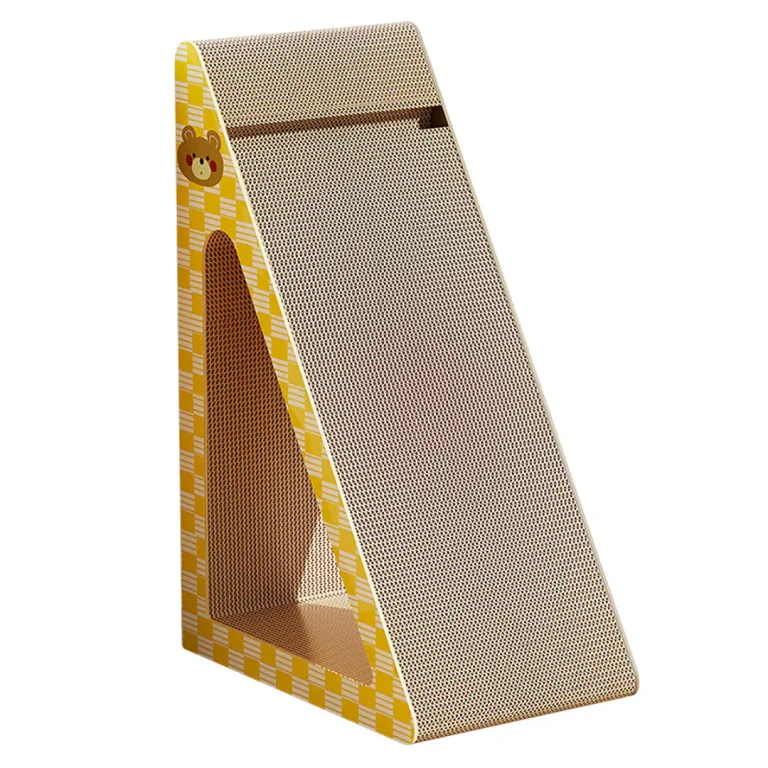
Customer project Cross-slot structure / Europe
35 kg Static Load. A 7.5 cm Flat Pack.
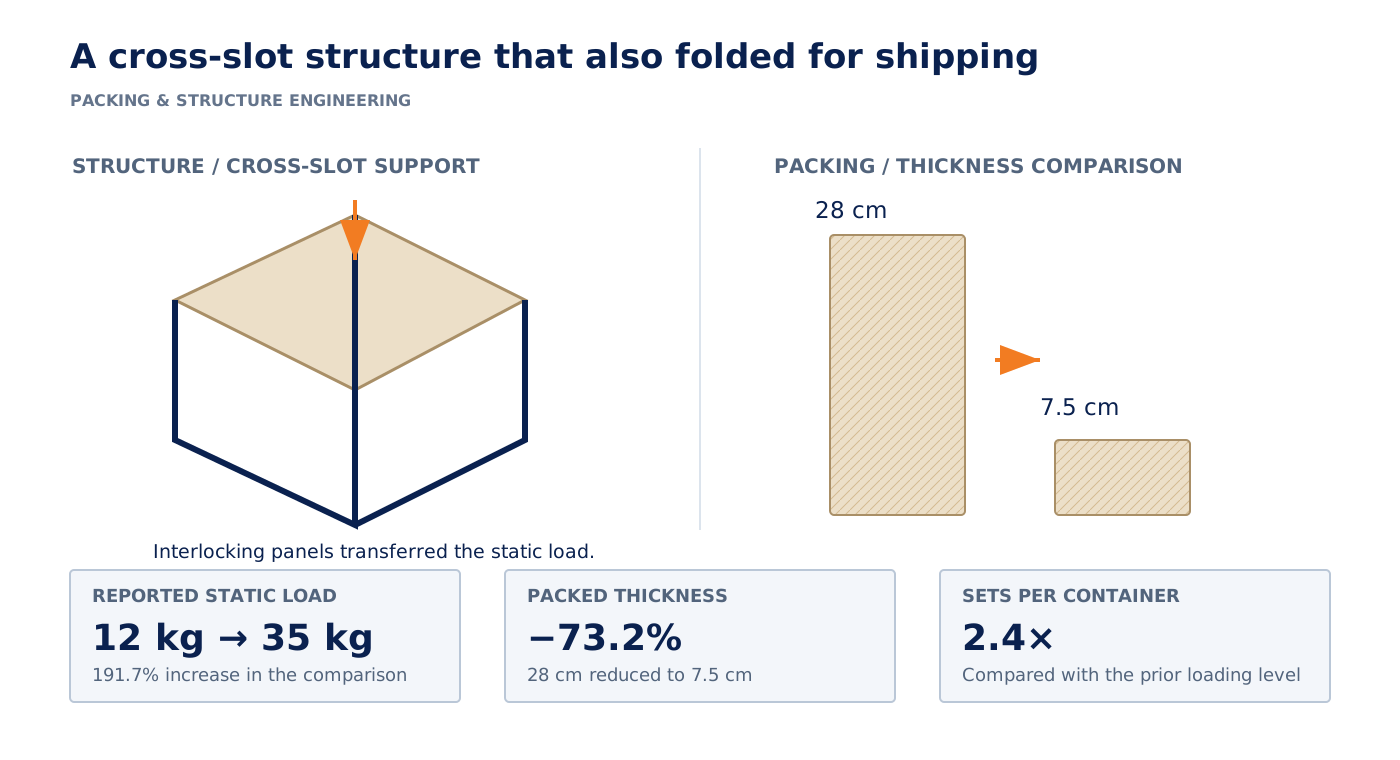
Two previous factories had treated strength and flat packing as competing requirements. We replaced complex glued construction with internal cross-slot joints, increased the project’s static-load result from 12 kg to 35 kg, and raised loading to 2.4× its previous level.
- Buyer
- Premium retail-chain program serving France and Central Europe
- Product
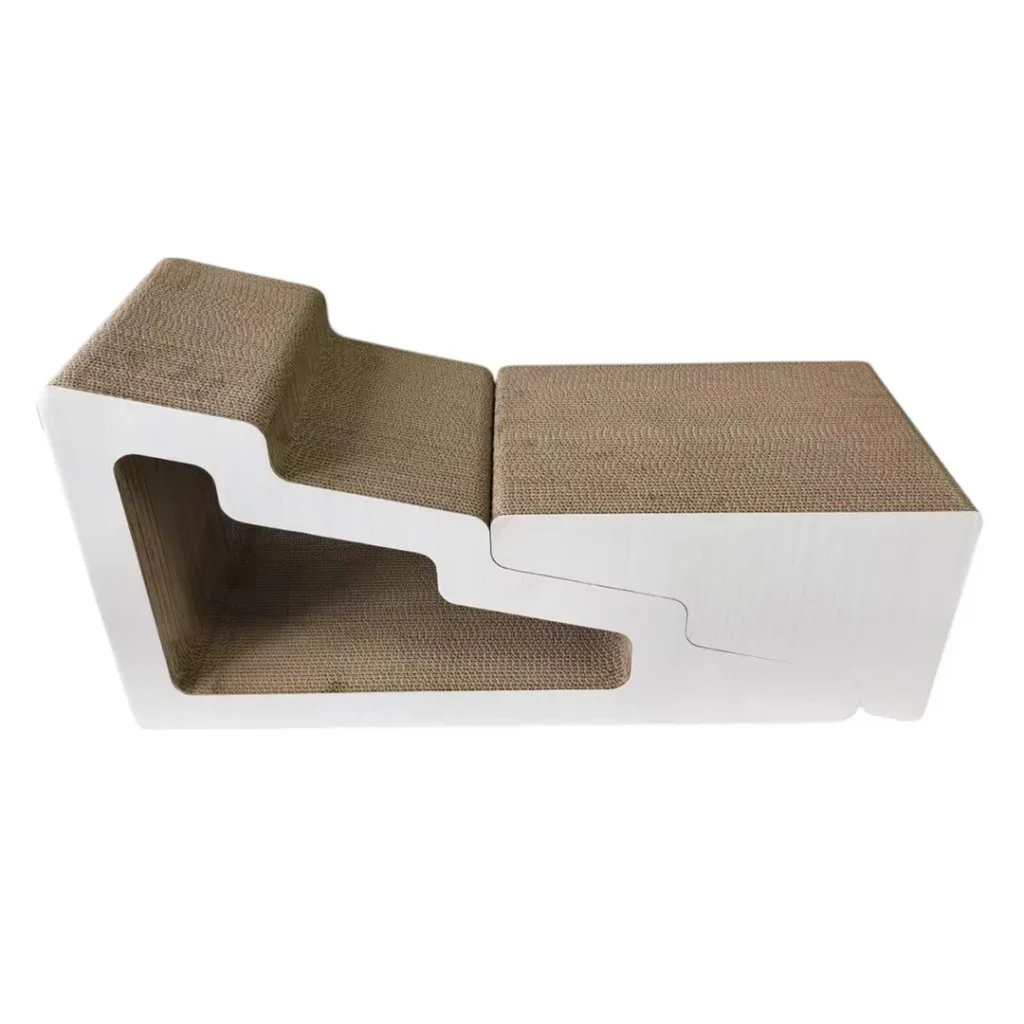
- Modular cat furniture
- Route
- ODM / cross-slot structural engineering
Project static-load result
- Project static-load result
- 12 → 35 kg
- Packed thickness
- 28 → 7.5 cm
- Previous container loading level
- 2.4×
01 / THE BUYER’S PROBLEM
The buyer had already been told to choose strength or flat packing
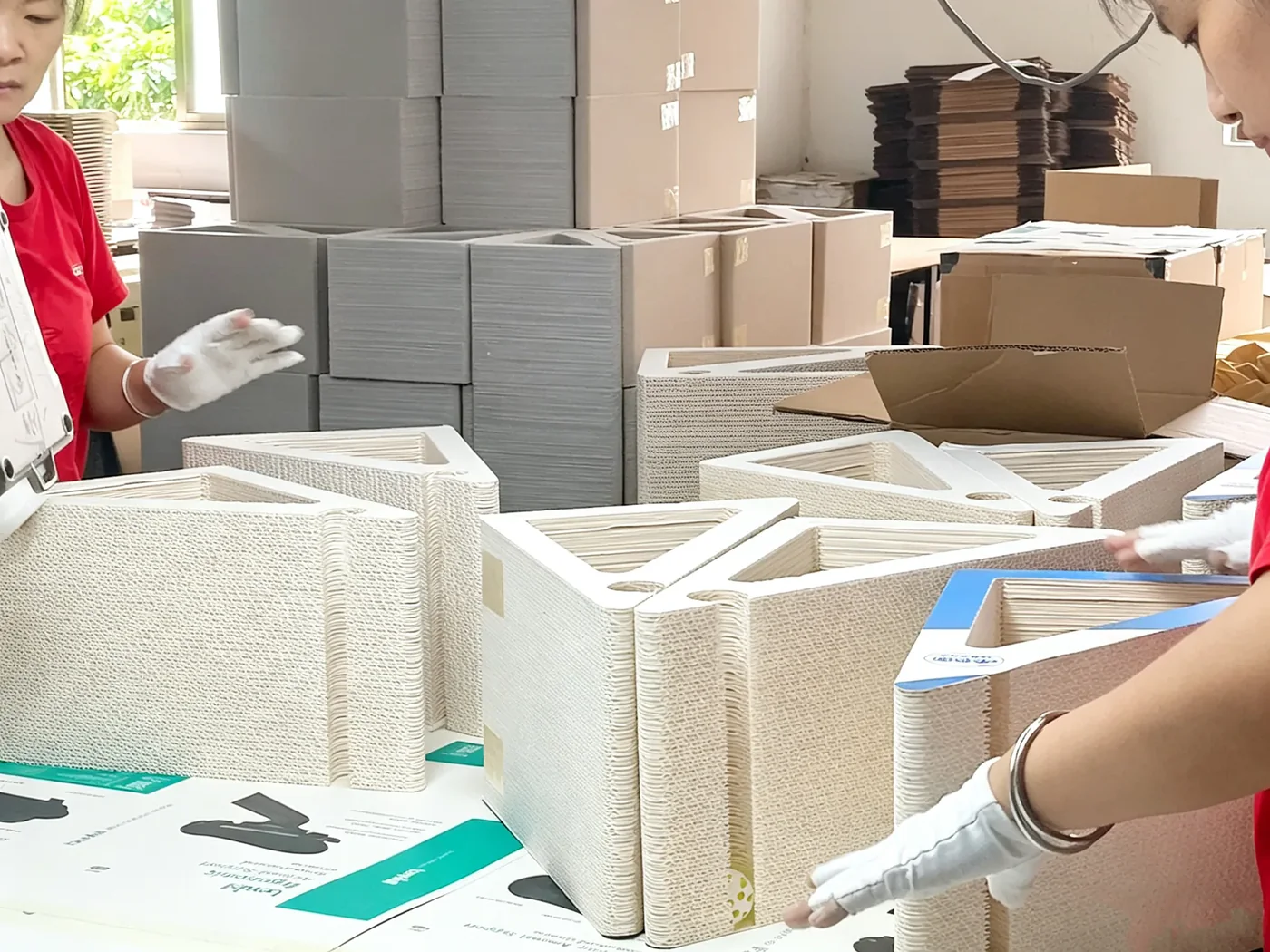
The France and Central Europe retail program came to us after discussions with two previous factories. The response had been that the modular furniture either could not pack flat or could not reach the load requirement. Keeping the existing form meant a thick shipping pack; flattening it appeared to compromise the structure.
The starting comparison was a 12 kg static-load result and a 28 cm packed thickness. We treated those as connected constraints. The buyer needed furniture that assembled into a dependable support structure and travelled in a much thinner format, with production goods that matched the approved hand sample.
02 / THE CONSTRAINT
The carton could not solve a problem inside the structure
The complex glued construction fixed too much of the product’s volume before shipment. Compressing its outer pack would not change the way those glued parts occupied space. We needed a different relationship between the flat components, their assembled joints and the paths carrying the load.
The prototype-to-production gap was equally important. A carefully made hand sample could demonstrate an idea without proving that the line would reproduce its slot relationships. The retained standard and the first production checks therefore belonged in the development brief from the beginning.
03 / PRODUCT & PACKAGING ENGINEERING
Interlocking panels changed the load path and the shipping format
Move the support into cross-slot relationships
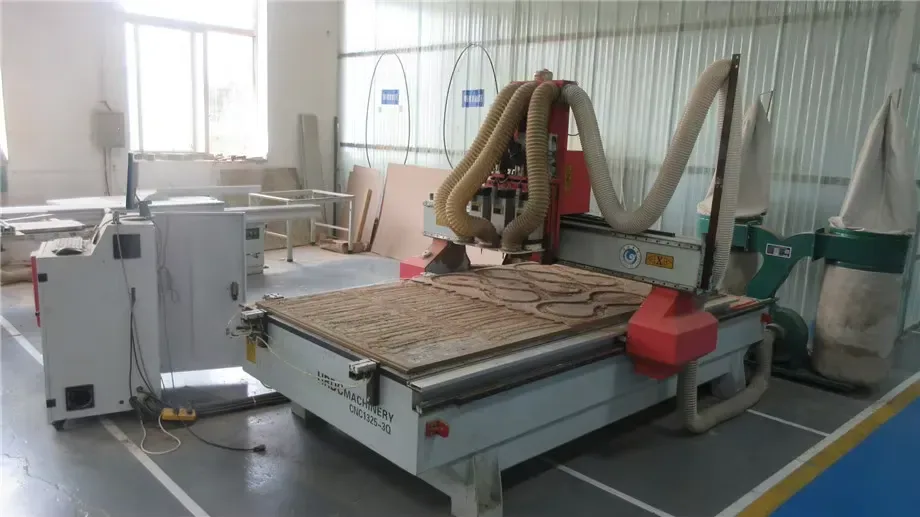
We replaced the more complicated glued arrangement with internal cross-slot joints. Intersecting parts located one another in the assembled structure, making their engagement part of the support system. Slot fit mattered in both directions: the parts needed to assemble into position, then stay correctly seated as they carried the project’s static load. The mechanical breakdown and cross-load sample took seven days.
Cross-slot engagement located the intersecting parts. Their seated relationship contributed to the assembled load path.
Let the shipping format follow the separated components
The revised joint arrangement allowed the product to return to a flat-folding shipping format rather than travel as its complete assembled volume. Packed thickness fell from 28 cm to 7.5 cm, a 73.2% reduction. That improvement came from changing the structure’s assembly relationship. It was not simply the same glued furniture squeezed into a narrower outer carton.
The flat-folding format followed the revised component relationships, reducing the need to ship the complete assembled envelope.
Control the joint geometry beyond the hand sample
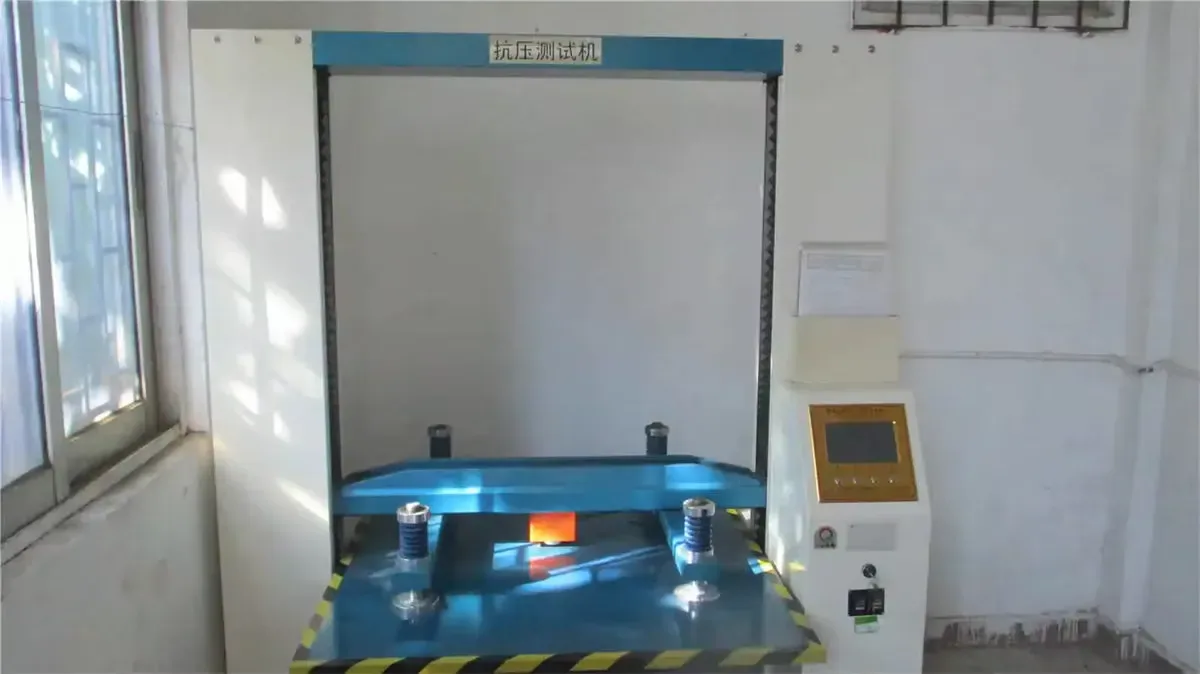
The load comparison increased from 12 kg to 35 kg, approximately 191.7% higher. Keeping that structural relationship in production required more than checking the silhouette. We tied the retained signed sample to first-article inspection and in-process quality control, so the fit and seating of the interlocking parts remained part of the production reference. The recorded figure was a static-load result for this design.
FAI and IPQC used the retained standard so slot fit and assembled seating stayed connected to the approved structure.
04 / SAMPLING, TESTING & RELEASE
The signed structure stayed beside the production process
 Mechanical and cross-load sample7 days
The interlocking structure became the development reference.
 Static-load comparison35 kg
Up from the original 12 kg project result.
 First production batch24 days
Retained standard with FAI and IPQC coverage.
 Downstream record0%
Reported collapse complaints for this production batch.
The seven-day mechanical sample established how the parts engaged. The first production batch and retained standard sample were completed in 24 days. FAI covered the first-article relationship to that reference, and IPQC carried the same structural requirements into the production run.
Inspection needed to preserve the assembly logic as well as the individual components. Correct-looking flat parts could still assemble differently if their joints failed to locate as intended. Keeping the signed structure available gave the team a concrete reference for the assembled form while the outgoing pack followed the approved flat arrangement.
Release checks
- Compare assembled cross-slot fit and support relationships with the signed mechanical sample.
- Keep the 12-to-35 kg comparison attached to the recorded static-load test scope.
- Check the separated packing arrangement against the approved 7.5 cm thickness and loading plan.
- Carry the retained standard through FAI/IPQC and keep complaint results attached to the production batch.
05 / DISPATCH & COMMERCIAL RESULT
A stronger assembled product travelled in a much thinner pack
Container loading reached 2.4 times the previous level. The 35 kg static-load result and 7.5 cm packed thickness addressed the two requirements the buyer had been told could not coexist. Within the reported batch inspection scope, production-to-signed-sample consistency was 100%, supported by FAI and IPQC coverage.
The downstream complaint record for that batch showed 0% collapse complaints. In its feedback, the customer highlighted both the stronger cross-slot structure and the thin pack, then singled out the fact that production matched the hand sample. That last point completed the engineering task: the new joint system had to work as a manufactured product, not only as a convincing prototype.
| What changed | Before | After | Project record |
|---|---|---|---|
| Reported static-load result | 12 kg | 35 kg | Approximately 191.7% higher in the project static-load comparison. |
| Packed thickness | 28 cm | 7.5 cm | 73.2% reduction. |
| Container loading | Previous loading level | 2.4× previous level | Loading comparison for the revised flat-folding arrangement. |
| Production-to-signed-sample consistency | — | 100% | Reported batch inspection scope with FAI and IPQC coverage. |
| Reported downstream collapse complaints | — | 0% | Complaint record for this production batch. |

“The other two factories told us it either wouldn’t pack flat or wouldn’t carry the load. Your cross-slot design did both. Just as importantly, the production goods matched the hand sample.”
Purchasing team · France and Central Europe
Planning a similar order?
Could cross-slot joints replace our glued construction?
Send the assembled product, how it is used and the current packing arrangement. We would review the support paths and joint engagement together. In this project, internal cross-slot joints enabled a thinner format while improving the static-load result.
What did the 35 kg load result cover?
It was the static-load comparison for this project’s design, up from 12 kg. It did not define a dynamic-use rating or a rating for another size or configuration. The assembled structure and agreed test scope need to stay together.
How did you carry the approved sample into production?
The signed structure and retained standard provided the reference for FAI and IPQC. The first batch reported 100% consistency within its inspection scope, and its downstream record showed 0% collapse complaints.