Customer project Mixed-container order / Canada
6 SKUs. 2 Carton Modules. Container Utilization at 93%.
A Canadian wholesaler needed a mixed cat-product load without cartons crushing one another. We coordinated six SKUs around two outer-carton modules, improved container utilization by 17 percentage points, and reduced packaging cost by 23%.
- Buyer
- Leading regional Canadian pet-products wholesaler
- Product
- Mixed wholesale cat products
- Route
- Catalog assortment / modular export packing
Container utilization
- Container utilization
- 93%
- Mixed-load carton system
- 6 SKUs / 2 modules
- Packaging cost
- −23%
01 / THE BUYER’S PROBLEM
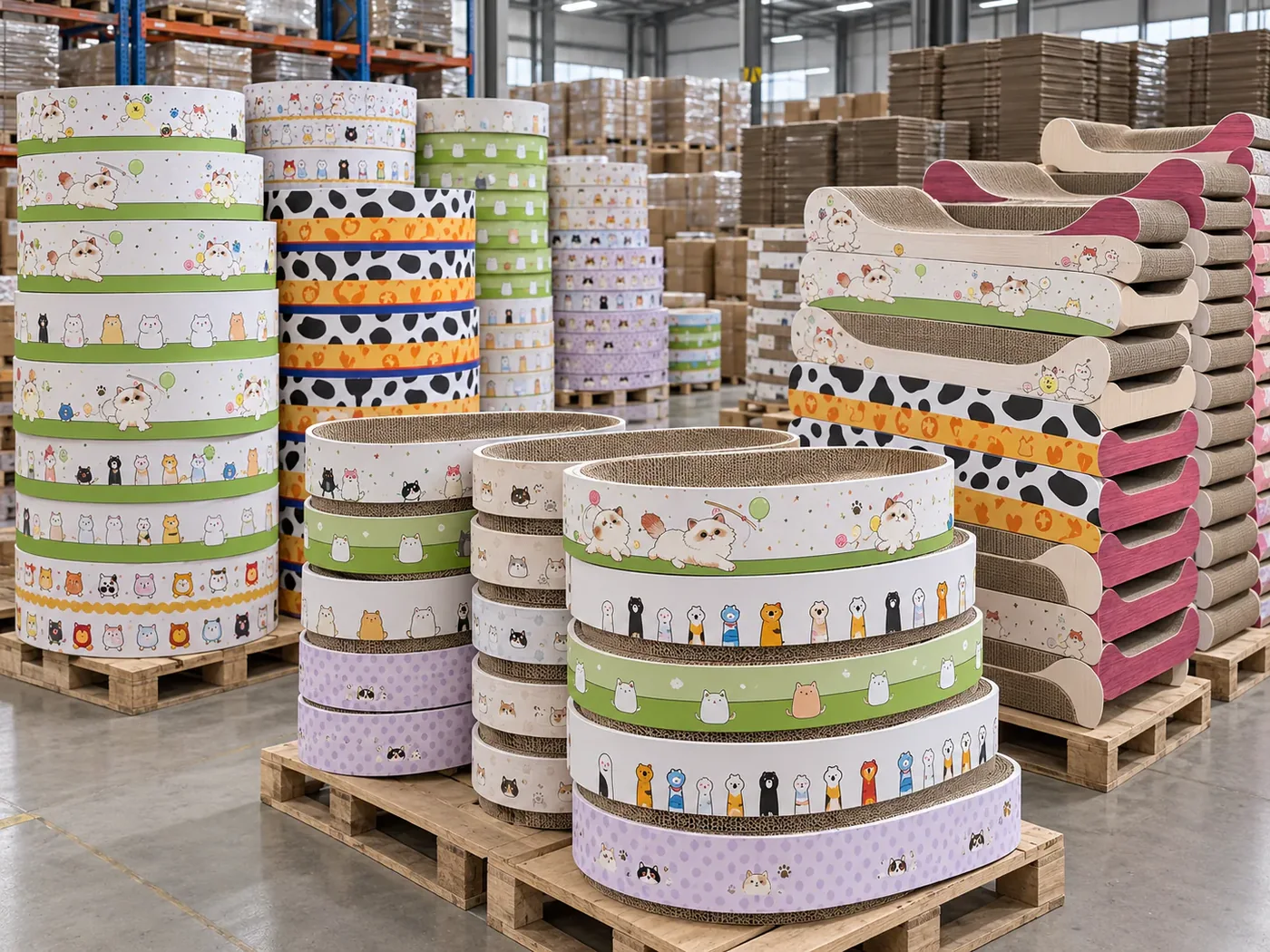
The buyer needed a mixed range, not a container of one product
A leading regional Canadian wholesaler brought us a six-SKU order that needed to travel as an assortment. Ordering a single product would have simplified the container, but it would not have served the buyer’s range. The existing mix used 76% of the container and left the customer worried about cartons pressing against one another.
Our brief was to make the different products work together in the load. That meant keeping each SKU identifiable while reducing the number of external carton shapes the loading team had to reconcile. The carton system, rather than any single cat product, became the central engineering task.
02 / THE CONSTRAINT
Empty space and uneven support came from the same mismatch
Different footprints could leave strips of unused space or interrupt the bearing surface beneath the next carton. A box could be adequate for its own contents and still sit poorly in a mixed stack. The buyer’s concern about mutual compression therefore belonged in the loading plan, not just in an individual carton-strength discussion.
The assortment also had to remain practical to buy. Optimizing each product separately could push the customer back toward larger single-line orders. We looked for a small family of outer modules that fitted the intended mix, while preserving product-specific protection and counts inside them.
03 / PRODUCT & PACKAGING ENGINEERING
Two external modules gave the six-SKU load a common language
Standardize the footprint without merging the products
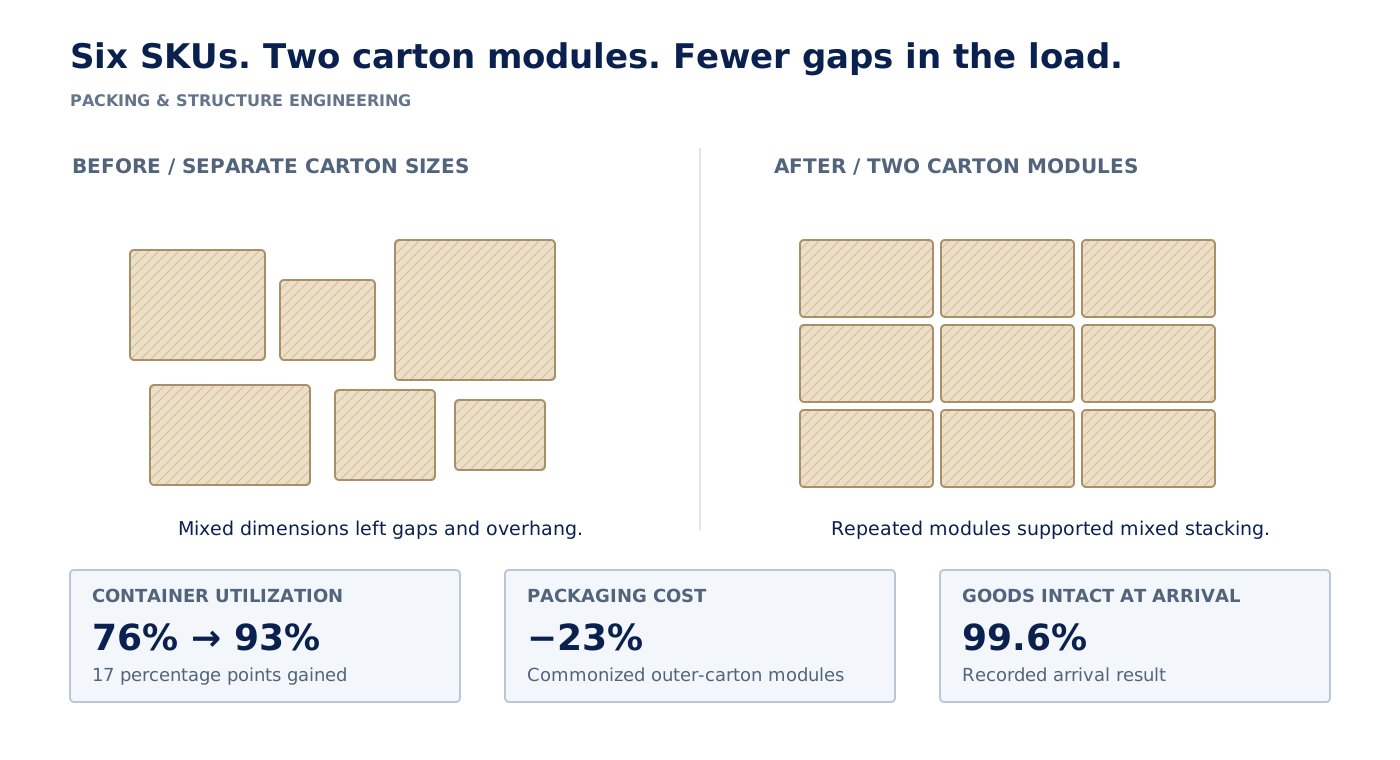
The common-series packaging samples took four days. We brought the six product sizes into two outer-carton modules, giving the load a repeatable set of external dimensions. Inside those modules, each SKU still had its own packing arrangement and identity. Sharing a shipping footprint did not mean treating differently shaped contents as interchangeable, or losing track of which product the receiving team would unpack.
Two external modules organized the load. Each SKU retained its own contents, protection and identity inside that common shipping system.
Build the mixed stack around continuous support
We used the two modules to develop a mixed pallet arrangement without unsupported overhang. Their positions had to work together: a carton edge needed support beneath it rather than projecting into a gap created by an unrelated footprint. That addressed the buyer’s compression concern directly. The load was reviewed as a stack of compatible modules, rather than a collection of boxes that happened to fit through the container doors.
The mixed arrangement avoided unsupported overhang, so a change of carton module did not leave an exposed edge above a gap.
Reconcile the assortment before the container was closed
The loading decision connected module position with SKU and quantity. A shared carton system could simplify the outside of the load while making identification more important, so the module could not become a substitute for the product reference. Keeping the contents and stack position connected let us assess space use and packing support against the actual six-SKU order.
A common outer footprint simplified loading, but the loading sequence still needed the correct product reference and quantity.
04 / SAMPLING, TESTING & RELEASE
Four-day samples led to a sixteen-day mixed-container run
 Shared-packaging sample4 days
The six-SKU assortment entered one packing review.
 Approved carton family2 modules
Common outer dimensions retained separate SKU identities.
 Mixed-container production16 days
The six products followed the approved packing arrangement.
 Arrival condition99.6%
Goods reported intact; arrival damage was 0.4%.
After the four-day packaging sample, production of the six-SKU mixed container took 16 days. The two approved modules provided the packing reference, and the mixed arrangement provided the loading reference. Both mattered: correct cartons in an inconsistent stack would not have answered the original brief.
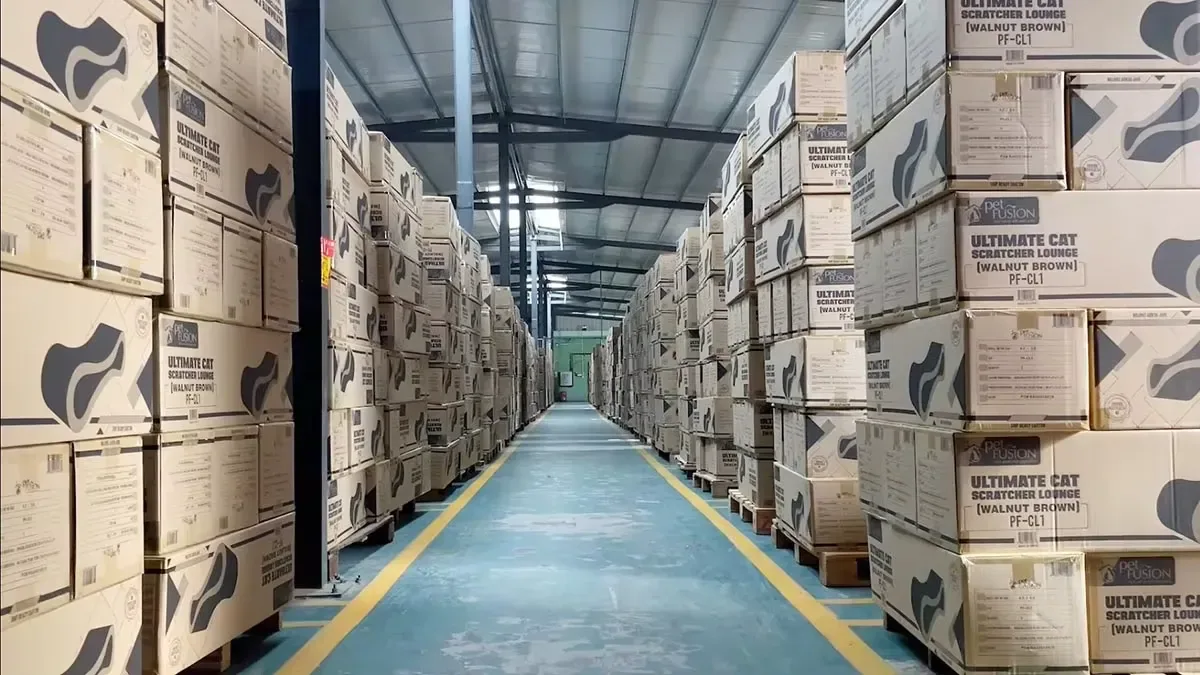
The buyer later reviewed the goods as they were unloaded. Its feedback described secure arrival without the collapsed-carton problem it had feared. The wider arrival record showed 99.6% of goods intact and 0.4% damage, giving the customer a quantitative result alongside its observation of the stack’s condition.
Release checks
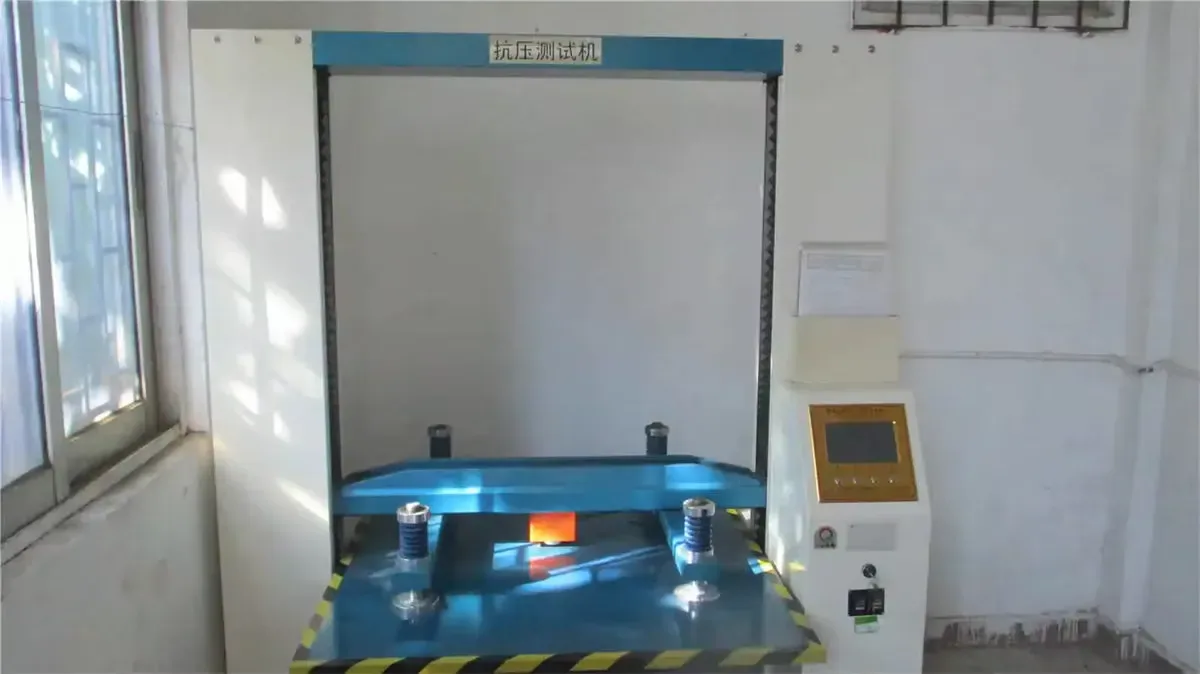
- Reconcile all six SKU quantities with the contents of the two approved outer-carton modules.
- Check mixed-stack support and prevent unsupported carton edges or overhang.
- Keep SKU references visible when similar external modules enter the loading sequence.
- Compare the same container scope and record intact arrival separately from specific unloading observations.
05 / DISPATCH & COMMERCIAL RESULT
A better loading pattern kept the assortment commercially useful
Container utilization increased from 76% to 93%, a gain of 17 percentage points. Packaging cost was 23% lower in the six-SKU project comparison. The shared modules improved both the loading pattern and the packaging spend, while the arrival result showed that fuller use of space had not been pursued at the expense of the contents.
The wholesaler also reported less pressure from single-SKU minimum quantities. The two-module arrangement supported the six-product order as a mixed assortment, with 99.6% of goods reported intact on arrival.
| What changed | Before | After | Project record |
|---|---|---|---|
| Outer-carton modules for 6 SKUs | Separate product-size arrangements | 2 modules | Shared external modules while retaining SKU identity. |
| Container utilization | 76% | 93% | Increase of 17 percentage points, not 17%. |
| Packaging cost | Previous assortment pack | 23% lower | Project comparison for the six-SKU program. |
| Goods intact on arrival | — | 99.6% | Reported arrival damage was 0.4%. |
| Mixed-container production cycle | — | 16 days | Six-SKU load following the four-day shared-packaging sample. |
“Our biggest worry was the different products crushing each other in the load. The shared cartons made the assortment easier to order, and the unload we checked arrived securely. We didn’t see the collapsed cartons we’d been concerned about.”
Purchasing team · Canada
Planning a similar order?
Can our mixed product range share outer-carton sizes?
Send the whole assortment, quantities and current carton data together. We would review the contents inside each proposed module as well as the loading pattern. This project coordinated six SKUs around two outer-carton modules.
What does a 76%-to-93% utilization change mean?
It is a gain of 17 percentage points. For this mixed-container program, it described how much more effectively the approved assortment occupied the container. Packaging cost was a separate comparison and fell by 23%.
How can a common carton system help avoid mixed-stack damage?
Compatible external modules make it easier to plan continuous support without overhang. Product-specific internal packing and clear SKU identification still matter. The Canadian shipment recorded 99.6% intact goods on arrival, with 0.4% damage.