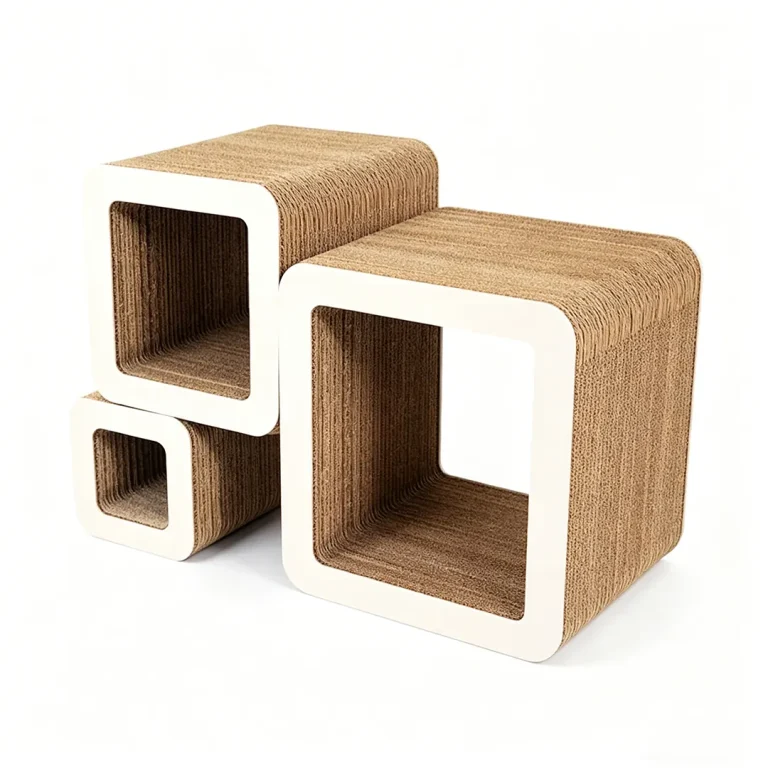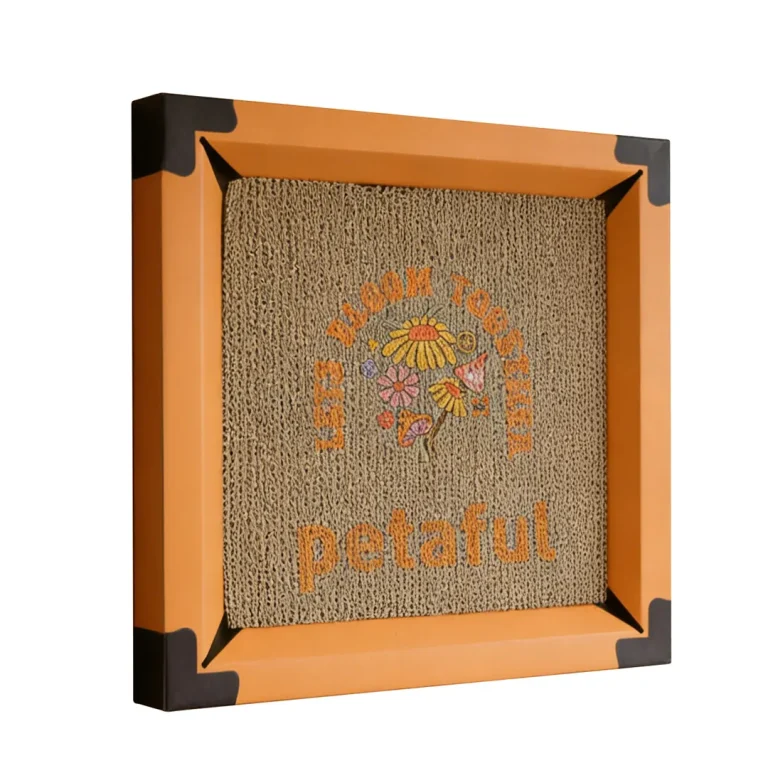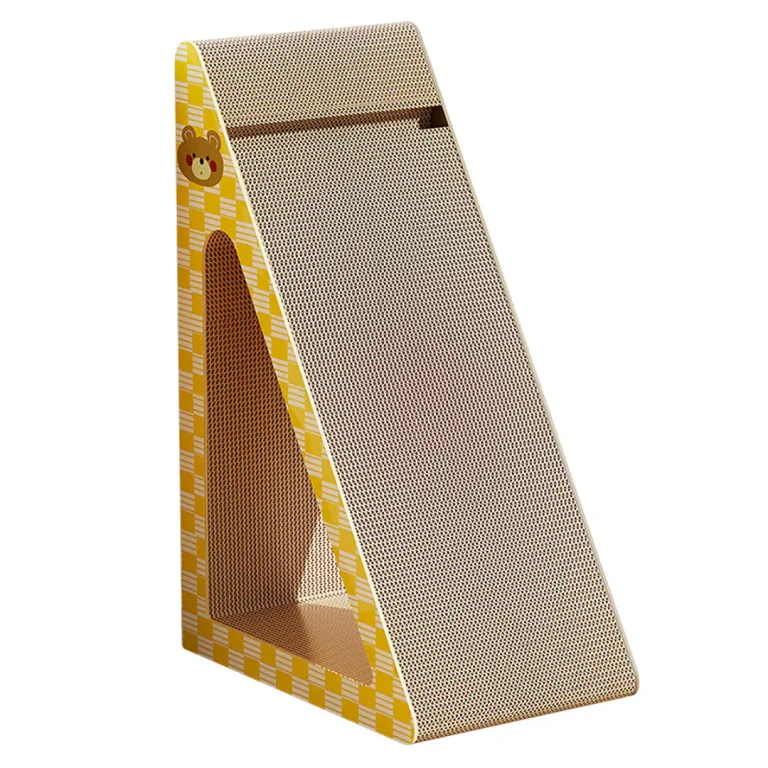
Customer project Nested refills / Australia
Two Refill Sets. Same Carton. 42% More Goods Value.
An Australian retailer needed its lounge and refill range to earn more from the space it shipped. We nested two replacement sets inside the lounge, kept the outer carton unchanged, and increased ex-factory goods value per carton by 42%.
- Buyer
- Large Australian pet and home retail channel
- Product
- Cat scratcher lounges and refills
- Route
- ODM / nesting and replaceable-core development
Goods value per carton
- Goods value per carton
- +42%
- Refills / same carton volume
- 2 sets
- Buyer’s full-container margin space
- +28%
01 / THE BUYER’S PROBLEM
The lounge was shipping space the refill range could use
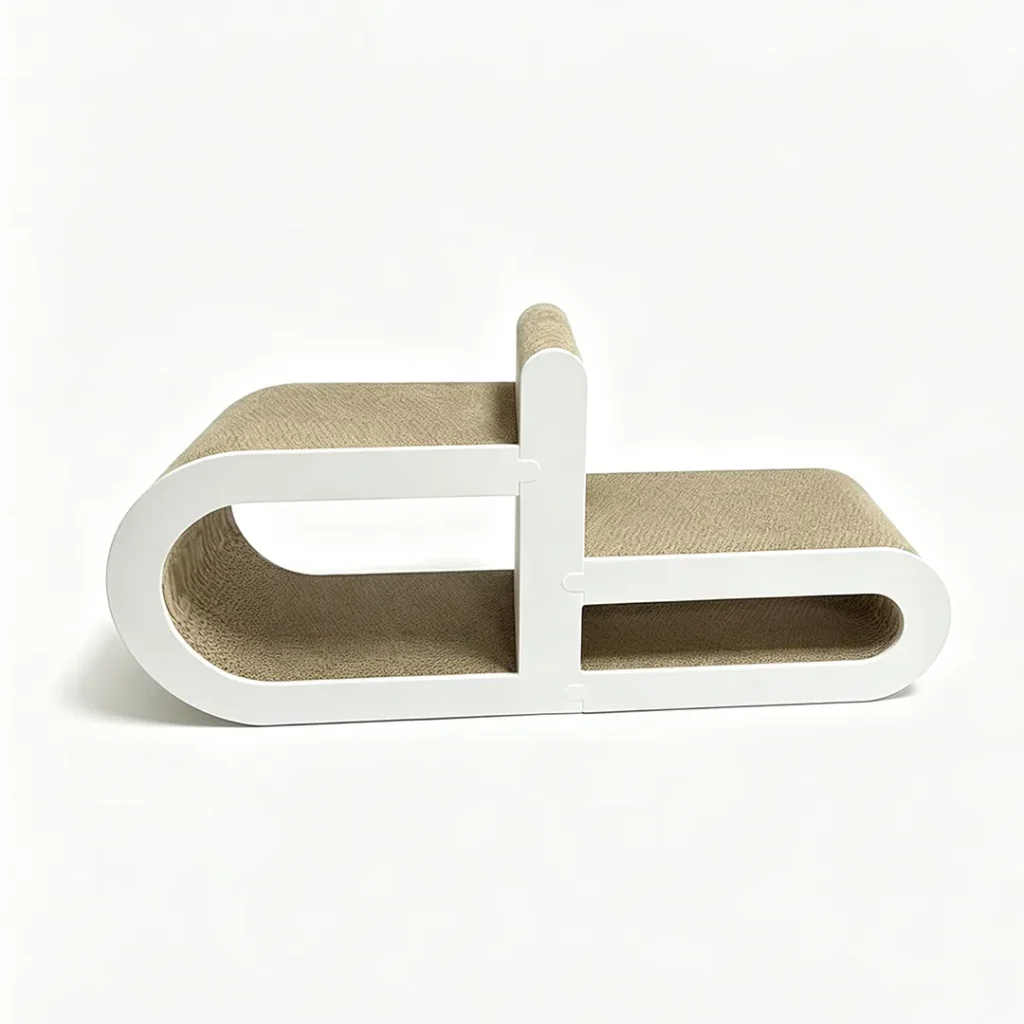
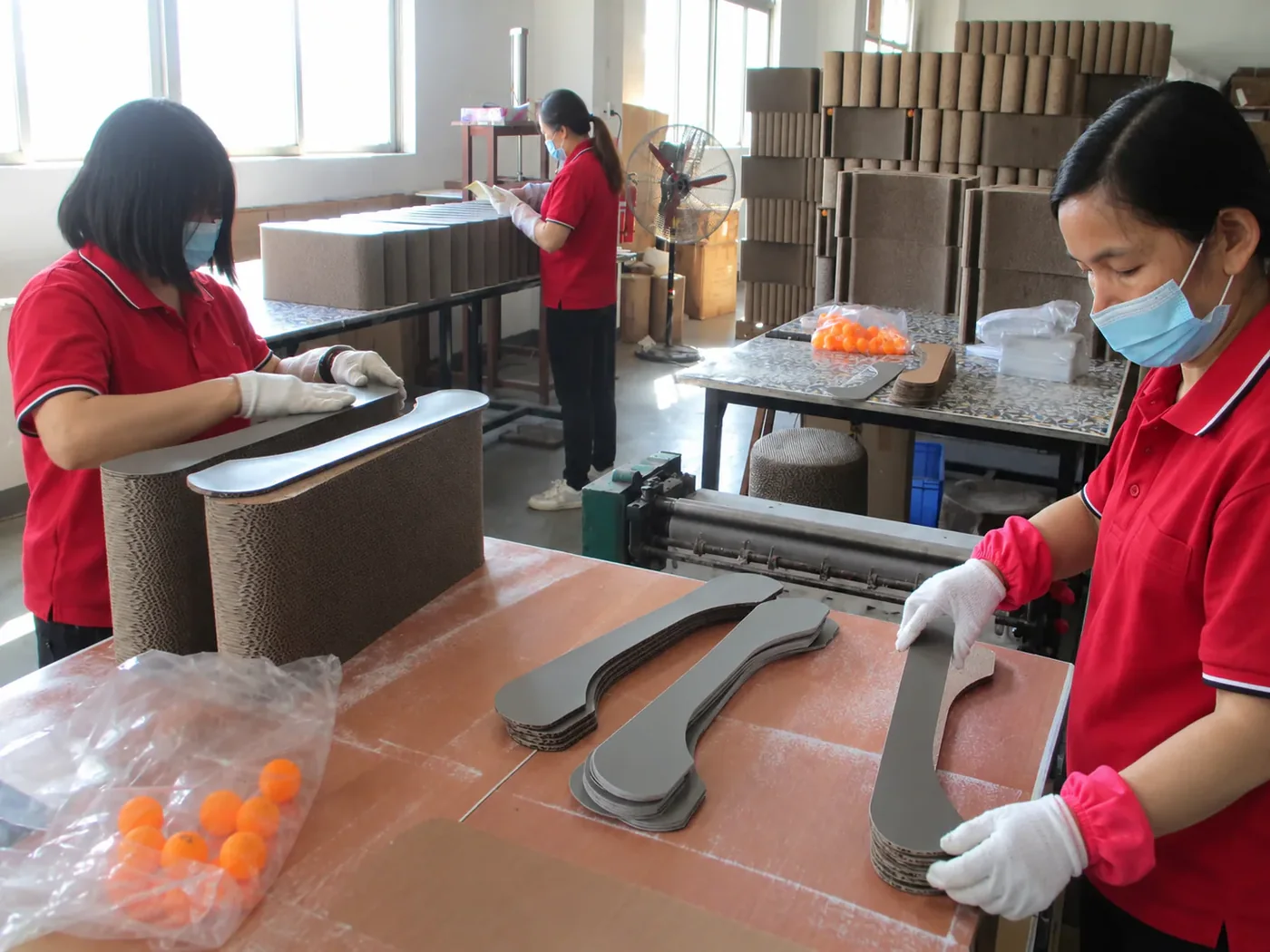
The Australian buyer was developing more than a single scratcher. Its pet and home retail range paired a lounge with replacement cores, so the first purchase could lead naturally to a refill purchase. The commercial problem was in the pack: the lounge occupied a large shipping envelope, while its hollow form left space inside that envelope.
Our starting point was that unused cavity. Instead of giving the refills a larger share of the export carton, we developed the lounge and replacement cores as a combination. The buyer needed a pack that carried useful stock, then separated cleanly into the main-product and refill offer at the receiving end.
02 / THE CONSTRAINT
A cavity was only useful if the refills still fitted the lounge
There were two fits to solve. A replacement core had to locate correctly in the lounge when used, and the nested refill sets had to fit the available shipping space. Solving only the second problem could produce an efficient carton with the wrong replacement part inside it.
Packing the pieces tightly also could not be allowed to distort their edges or turn the refill set into an unidentifiable bundle. We kept the assembled fit and the packed arrangement connected throughout development, rather than approving a lounge first and finding somewhere for its refills afterwards.
03 / PRODUCT & PACKAGING ENGINEERING
How we turned hollow space into sellable refill stock
Develop the contact surfaces as one product system
The combination sample took six days. During that work, the lounge and replacement cores stayed together for review. Matching faces, insertion clearance and the seated position mattered because a refill was supposed to renew the product, not change its geometry. We used the complete combination as the reference for both the retail offer and its packed arrangement.
The core-to-lounge contact surfaces governed replacement fit; the lounge cavity governed the shipping position. Both relationships had to work in the same combination sample.
Nest around the cavity, rather than the carton walls
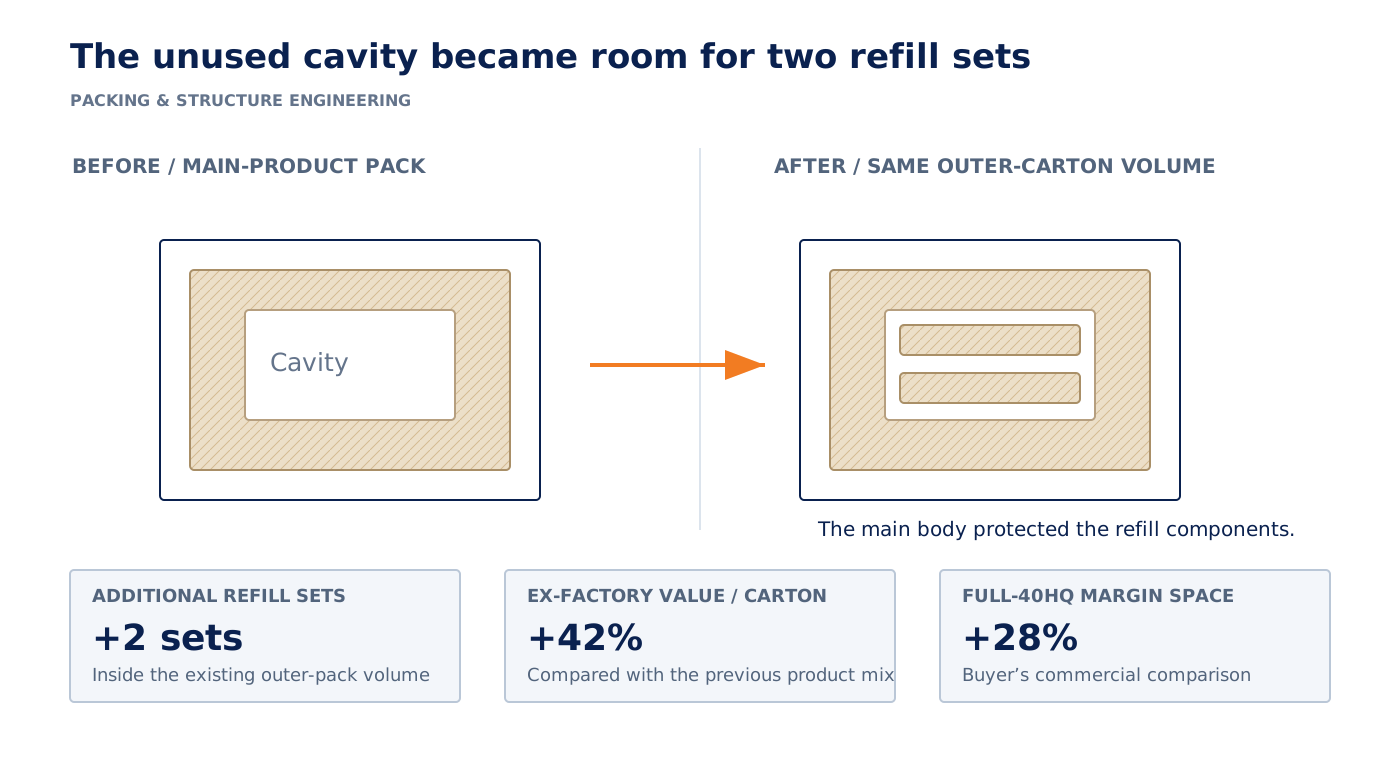
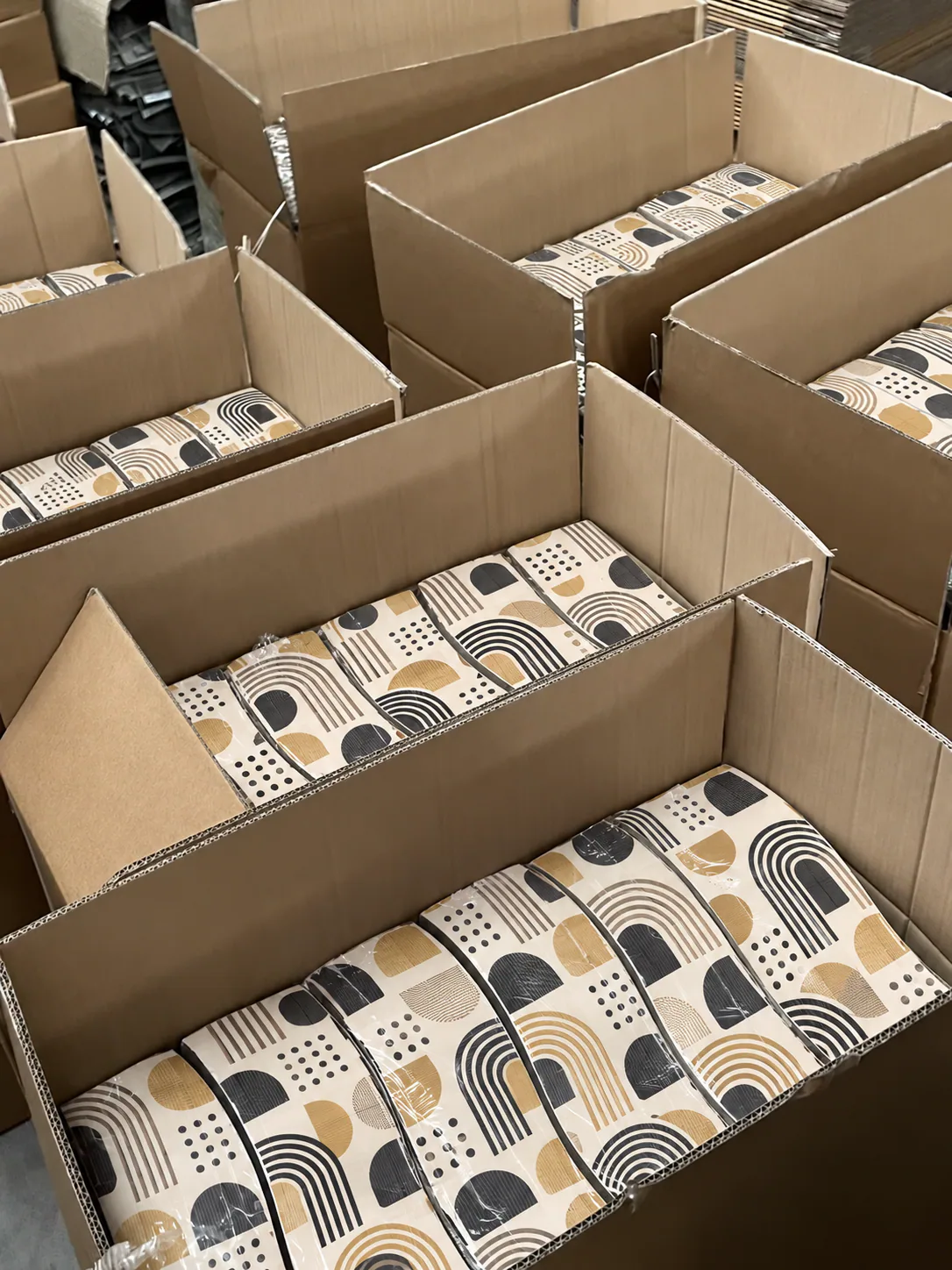
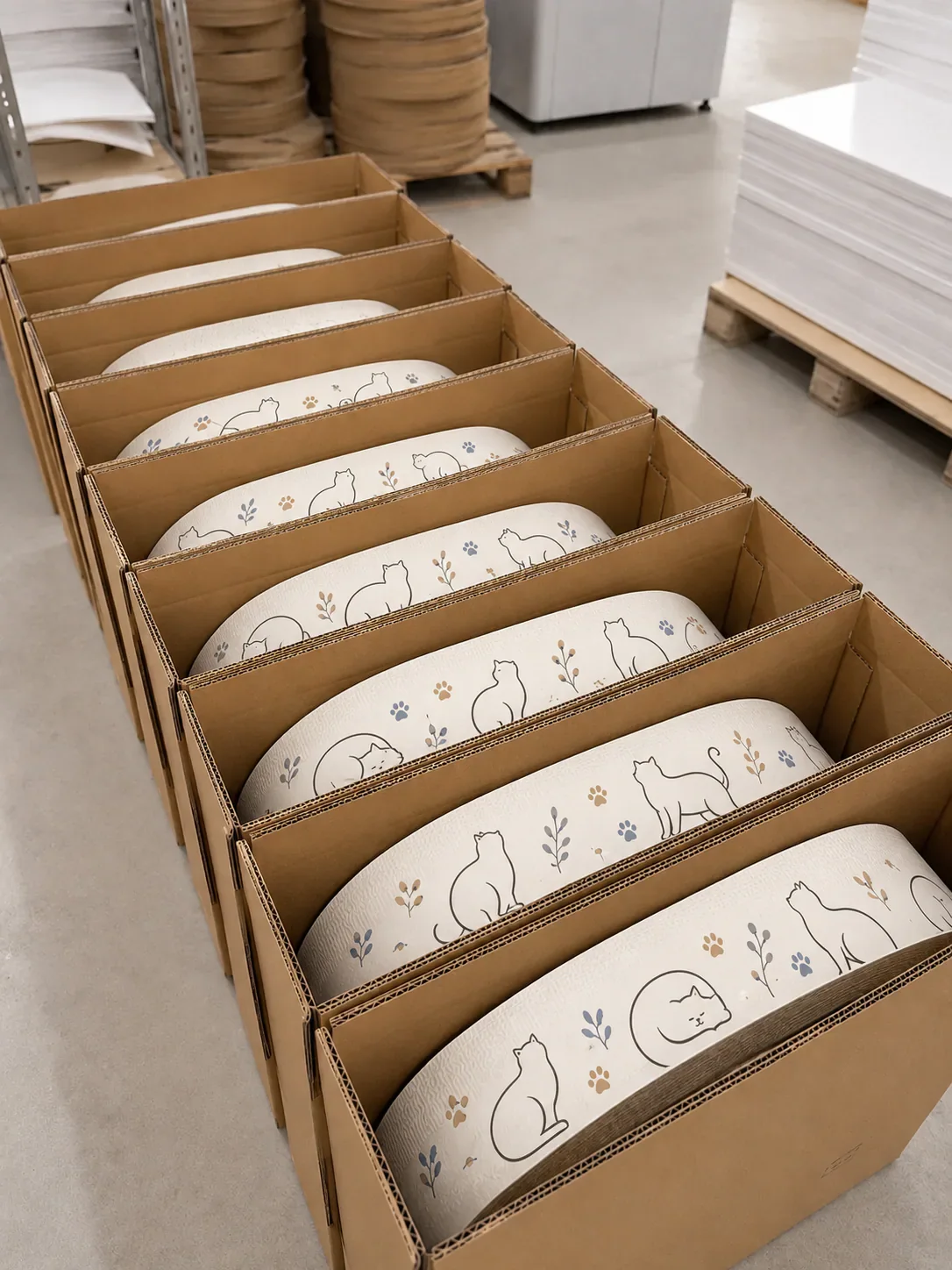
The approved large-around-small layout carried two refill sets within the lounge’s internal space. Its outer-carton volume stayed unchanged. That distinction drove the design: the cavity provided the additional capacity, while the outer pack continued to define the shipping envelope. Checking the complete packed set revealed whether an edge or projecting part interrupted that nesting relationship before the carton was closed.
Two refill sets occupied existing internal space. The added assortment did not depend on increasing the outer-carton envelope.
Make the extra contents usable after unpacking
The mixed shipment paired the main lounges with their replacement cores. That gave the buyer refill stock alongside the first-sale product, without increasing the outer-carton volume. In the buyer’s commercial comparison, this packed mix carried 42% more ex-factory goods value per carton.
Nesting had to preserve clear component identification, so the receiving team could separate the lounge and its matching replacement offer.
04 / SAMPLING, TESTING & RELEASE
The combination sample became the mixed-shipment reference
 Combination sample6 days
Lounge and replacement cores reviewed together.
 Nesting layout2 sets
Refills fitted within unchanged outer-carton volume.
 Mixed shipment21 days
Main products and replacement cores shipped together.
 Retail experience0.18%
Reported return-and-exchange rate.
After the six-day sample, the main products and replacement cores moved into a mixed shipment within 21 days. The outgoing review followed the combination, not just the visible lounge: the refill count, nesting orientation, external carton and assembled fit all belonged to the same approved pack.
Die-cut burr and fit defects stayed below 0.2% in the project production record. The later retail return-and-exchange rate was 0.18%. Those figures tracked different parts of the product’s journey: cut and fit quality at production, followed by the retailer’s experience after the assortment entered its channel.
Release checks
- Match the replacement cores to the approved lounge-and-refill combination sample.
- Check both refill sets, nesting orientation and unchanged external carton volume.
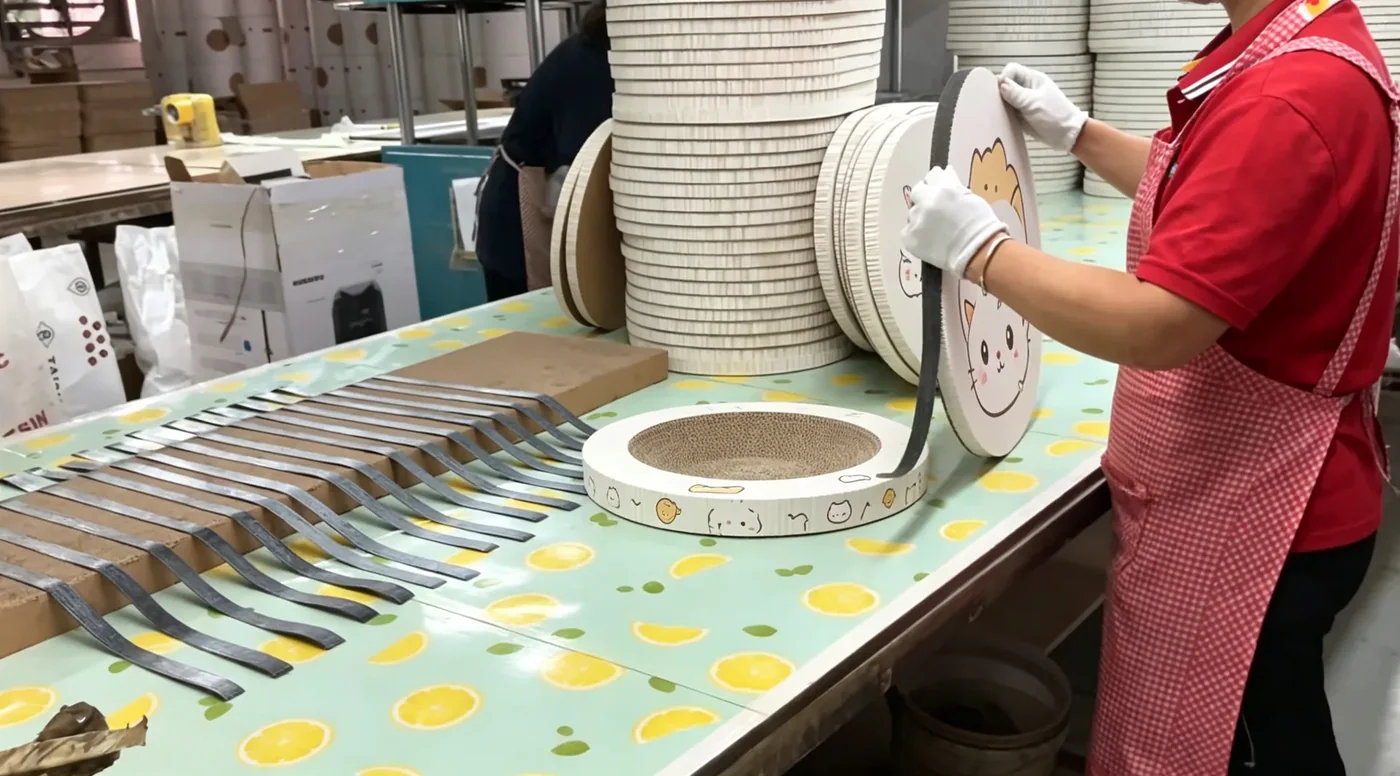
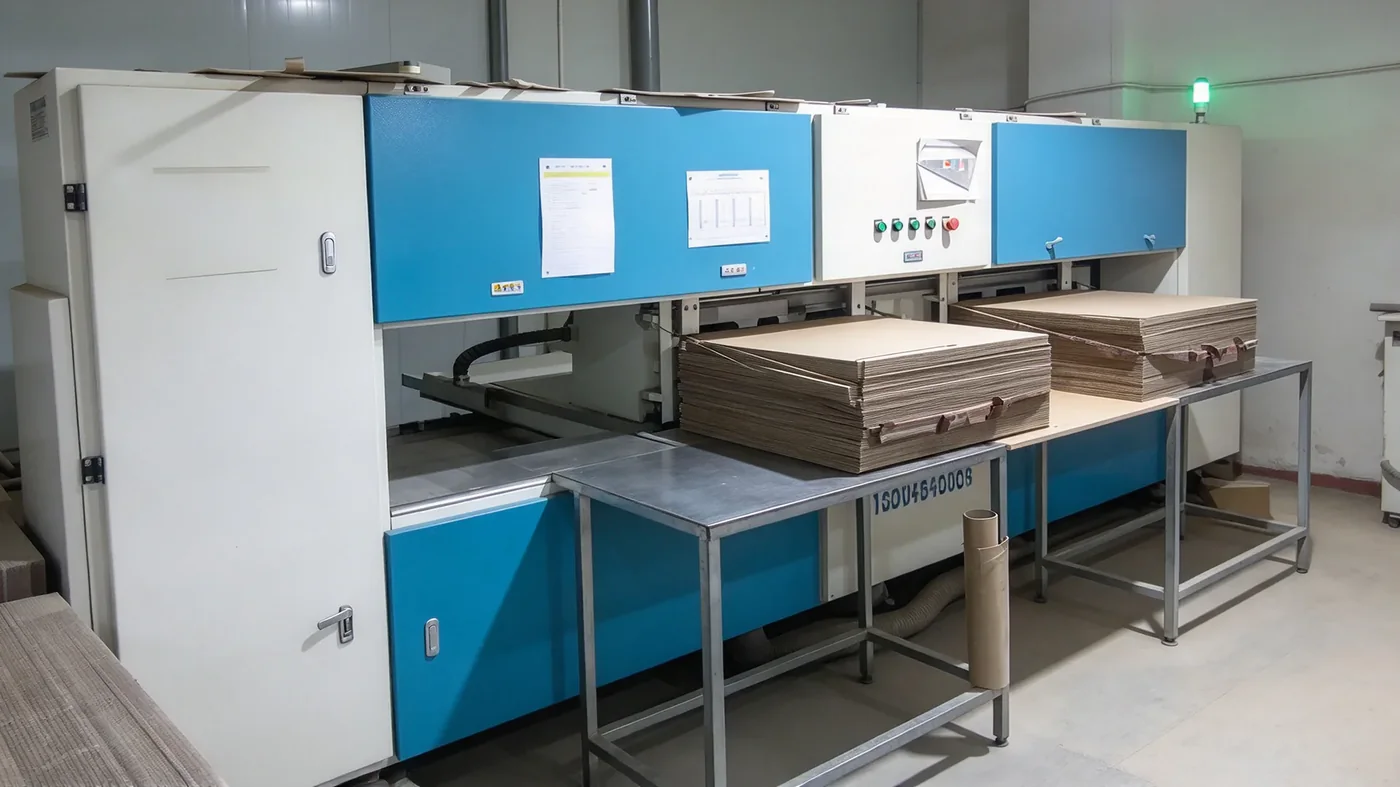
- Inspect cut edges and assembled fit before approving the mixed pack.
- Keep carton goods value, full-container margin calculation and retail returns in their correct reporting scopes.
05 / DISPATCH & COMMERCIAL RESULT
More value travelled in a carton the buyer already had to ship
Ex-factory goods value per carton increased by 42%. Across the complete 40HQ assortment, the buyer’s commercial calculation showed 28% higher gross-margin opportunity. The first figure described the value of the packed goods; the second reflected the buyer’s selling mix and channel economics.
The refill offer also continued beyond the initial shipment. In its feedback, the customer reported increases of more than 30% in both basket value and longer-term repeat purchasing. The useful change was the relationship between the products: the lounge created the first sale, and its correctly matched refill gave the customer a reason to come back.
| What changed | Before | After | Project record |
|---|---|---|---|
| Additional refill sets inside the pack | Original main-product arrangement | 2 sets | Nested without increasing outer-carton volume. |
| Ex-factory goods value per carton | Original carton mix | 42% higher | Value of the project assortment carried in each carton. |
| Full-40HQ gross-margin opportunity | Previous commercial mix | 28% higher | Buyer-reported commercial calculation for the approved container assortment. |
| Die-cut burr and fit defects | — | Below 0.2% | Project production-quality result. |
| Retail returns and exchanges | — | 0.18% | Reported downstream rate for this project. |
“We got the extra refills into the shipment without adding carton volume. Basket value and longer-term repeat purchasing both went up by more than 30%. The lounge and refill offer finally worked as one range.”
Purchasing team · Australia
Planning a similar order?
Can you check whether our lounge has room for refill sets?
Send the lounge and refill references together, plus the current packed arrangement. We would review the cavity, projecting edges, refill fit and complete carton. This project accommodated two refill sets within the original outer-carton volume.
Should refills be developed before or after the main lounge?
Develop them together when repeat purchasing is part of the range. The shared contact surfaces determine replacement fit, while the combination determines whether the refills can nest inside the lounge during shipment.
How would you compare the value of a nested pack?
Compare the actual contents and ex-factory goods value in each carton, then calculate the container economics using your selling mix. Here, goods value per carton rose 42%; the buyer’s full-40HQ gross-margin opportunity rose 28%.