After Sample Approval, the Order Becomes a Production Specification
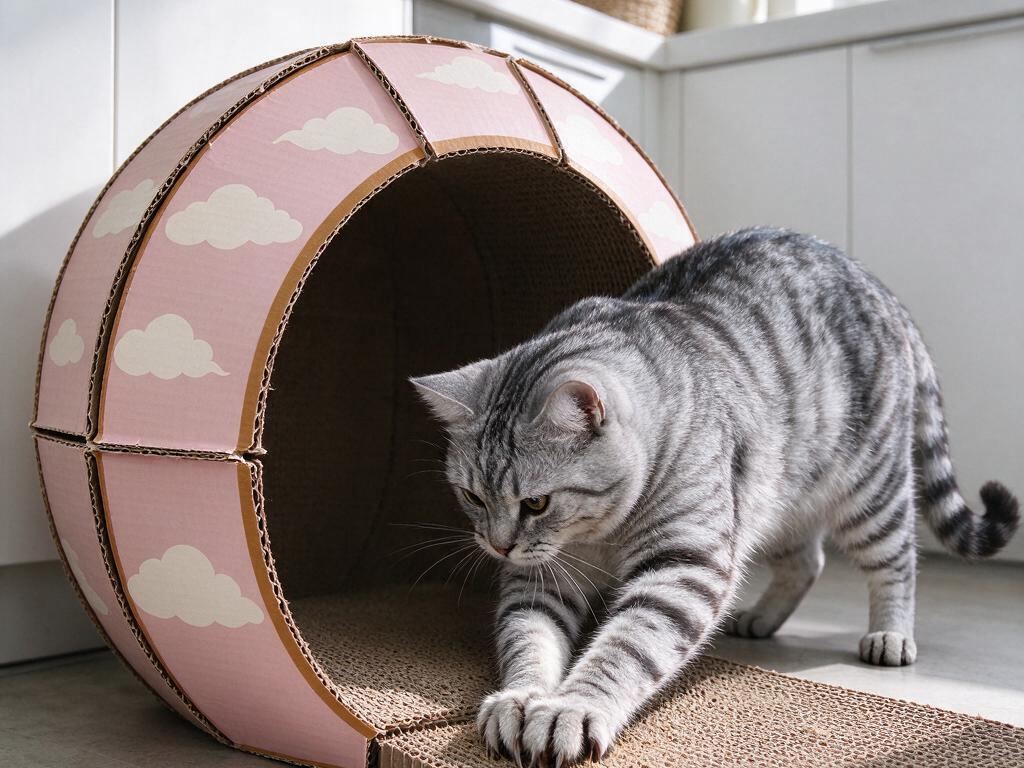
The approved sample sets the reference every later check reads back to.
Signing off on a sample does not end development; it changes the sample’s job. Once approved, the physical piece stops being a proposal and becomes the reference against which everything else is judged. From that point the order typically moves through a set sequence: the approved sample is translated into a controlled production specification, board and tooling are prepared, the line runs and is checked, packing is approved, and cartons are handed off. Each step reads back to the sample, so the approval needs to be specific enough to serve as that reference.
What the approved sample has to lock
Appearance alone is too thin a reference. A usable approval covers board grade and fluting, print colors and coverage, cut and crease lines, assembly method, any hardware, finished dimensions, and packed size. The product’s own behavior belongs in there as well. On a spherical cat scratcher house, the opening and stability need to be defined. On an interlocking X-shaped scratcher, the joint fit and stability of the assembled piece need to be checked. A bendable track scratcher with two layouts needs track clearance confirmed in both configurations, a three-panel foldable scratcher needs each layout and fold checked, and a four-piece modular set needs its connectors and finished size settled before anything is cut.
The approval should also leave two artifacts behind: a marked reference sample the factory retains, and a versioned specification. Verbal approval leaves color, board substitution, and tolerances open to interpretation, and those are exactly the details that drift first when a file is reopened months later.
One boundary is worth stating plainly. Sample approval covers the physical piece, not necessarily print quality or carton fit. A short-run or handmade sample may not show how production printing will register across a full sheet, or how the packed dimensions fall out once real quantities are stacked. Those get their own approvals later, against production-representative output rather than the sample.
The Pre-Production File Set: Dieline, Artwork, Color Proof, and Packout
Once a sample is approved, the physical piece must become controlled documents that a production floor can act on without guessing. The dieline is the first controlled file. Cut lines, score lines, glue tabs, and locking slots are traced to the approved sample and issued under a version number, so operators work from dimensions that match the piece they approved.
Board is confirmed against the approved grade and flute at the same time. A substitute changes caliper, stiffness, and fit, so if stock is short, the swap should be approved before any cutting begins.
Artwork is checked against the print method and approved as a color proof on production-representative board, since corrugated absorbs ink differently from an office printout. Small text, barcodes, seasonal artwork, and mounting instructions each need their own sign-off; a logo approval does not cover a barcode. A Christmas-tree wall scratcher, for example, needs both its seasonal print and wall-mounting method approved.
The packout drawing completes the set: assembly state, inner protection, master-carton quantity, carton dimensions, and shipping marks. Packed size becomes part of the product specification, and the master carton should match the channel and destination it ships through.
Any change after approval should trigger a revised proof or dieline and a written decision on whether a new sample is required. Otherwise the line may run from the last approved file.
Tooling, Print Setup, and Scheduling Before the Line Runs
On a custom cardboard cat scratcher order, print setup starts when final artwork is released. Where the print method uses plates, those plates carry the approved artwork to press, and the press is set against color targets established from the approved proof. Corrugated liner absorbs ink unevenly, and the print method affects how fine type and small graphics hold, so the approved color proof is a target rather than a promise of an exact match. The first-off sheet pulled at the start of the run is the practical check: it shows how the job actually prints on the specified board before the rest of the run follows.
Cutting tools follow the same sequence. The cutting die and crease rules are built from the approved dieline and test-cut. Crease rules need to match the board caliper so folds form without cracking the liner. Glued or multi-piece products may also need assembly fixtures, so joints, openings, and folded shapes repeat consistently instead of depending on how one operator holds the piece.
The production slot is scheduled once the material and proofs are cleared. If artwork or proof approval is still pending, plates cannot be made, the die cannot be released, and the line cannot be booked with confidence, which is why a quoted production date can move. Material is planned against the run plus a sampling and spoilage allowance, so a later quantity change becomes a scheduling conversation rather than a simple add-on: it may mean new board, a revised slot, and additional tooling time.
First-Off Approval and the Full Production Run
At a custom cardboard cat scratcher manufacturer, the first-off piece is checked against the approved sample and the controlled reference set: dieline, color proof, and packout drawing. The purpose is to confirm that tooling, print setup, and assembly have reproduced the approved product, not something close to it. The check covers dimensions, openings, joints, hardware, print registration, and how the piece assembles. If a joint is loose, an opening sits off-center, or a printed panel drifts against the crease, the run is corrected before more board is committed.
In-process checks then follow the same reference at each stage: printing, die-cutting, gluing or assembly, and packing. Settings can shift during a run, so critical dimensions and visible defects should be measured and recorded rather than recalled. A record also gives everyone on the line the same definition of within tolerance.
Multi-configuration products need a check for every layout, because a piece can pass flat and still fail when folded or combined. A three-panel foldable scratcher, for example, should be tried flat, upright, and in its nook position. A two-in-one cat-face design needs both the tunnel layout and the separate-scratcher layout checked, and a modular set that forms a lounge, tunnel, or track layout needs each arrangement checked as assembled.
Finally, a production sample is pulled from the run and kept. It becomes the reference for the pre-shipment comparison, so that check reflects a shippable piece from the actual run rather than an early sample that may not represent production.
Packing Approval and Sealing the Cartons

A production sample from the run becomes the reference for the pre-shipment check.
Packing is a production stage with its own approval. The approved packout should define assembly state, inner protection, hardware bag, instructions, labels, and carton marks. As the first cartons are packed, each of those elements is checked against that document before the line continues at full speed.
Packed dimensions and weight are measured from finished, closed cartons, not calculated from the drawing alone. A thicker insert, an extra hardware bag, or a switch from flat to assembled packing can move the carton size enough to change how many units fit on a pallet or in a container. Because carton count and container loading follow that measurement, the figure should come from the actual pack and be recorded.
Multi-piece sets need particular care. The packed size of the complete set is the number that matters, not the footprint of one component. Petaful’s Four-in-One Nesting Cat Scratcher House page, for example, asks buyers to check the fit and packed size of the complete set; nesting reduces shipping volume only when the pieces actually sit together inside the approved carton.
Carton count and pallet pattern are recorded as the run is packed. Shipping marks should be compared with the buyer’s forwarder instructions before cartons are sealed, so a wrong or missing mark is caught while the carton is still open.
Where Orders Slip Between Approval and Shipment
Slippage after sample approval often comes from a change that arrives after the affected step has already been committed. Plates are made and then artwork changes; board is cut and an unapproved substitute appears; cartons are ordered and the packout changes. Each one can force rework upstream of the line, and the schedule absorbs it. A color proof approved on a different substrate than the production board belongs to the same family: the approval is real, but it was given against the wrong surface, so the first-off sheet becomes the moment the error surfaces.
Control is divided between the two sides. The manufacturer owns the line, material call-off, and the production schedule. The buyer owns timely approvals and a single point of contact who can speak for the brand. Versioned documents — one current dieline, one approved proof, one packout drawing — keep both sides from working from different files. Where label or hardware approvals are still pending, that is a known open item, not something to discover at packing.
Before freight is booked, a pre-shipment check compares finished goods and cartons against the approved production sample, the approved packout, and the ordered quantity. Discrepancies get resolved while the goods are still in the factory. Handover then means packed goods, carton marks matching the forwarder’s instructions, and shipping documents. Who books freight depends on the agreed terms, so that split is worth confirming early rather than at the end. The order is ready to ship when the production sample, the packed carton, and the paperwork agree.
Questions
Does approving a sample also approve the printing and carton fit?
Not necessarily. A short-run or handmade sample may not show how production printing registers across a full sheet or how packed dimensions work out at real quantities, so print and packout get their own approvals against production-representative output.
What happens if artwork or the packout changes after tooling has started?
The change should trigger a revised proof or dieline and a written decision on whether a new sample is needed. Otherwise the line may keep running from the last approved file, and plates, cut board, or ordered cartons can force rework and delay the schedule.
Why can the quoted production date move after the order is placed?
The production slot is booked only once material and proofs are cleared. If artwork or proof approval is still pending, plates cannot be made and the die cannot be released, so the date shifts; a later quantity change can also mean new board, a revised slot, and more tooling time.
Who books freight for a custom scratcher order?
It depends on the agreed terms, so confirm the split early rather than at handover. Before freight is booked, a pre-shipment check compares finished goods and cartons against the approved production sample, packout, and ordered quantity.

His guides cover board selection, structural samples, OEM/ODM development and export packing for corrugated cat products. They help purchasing teams compare specifications, prepare a product brief and agree sample and packaging requirements before production.