
Why Your Cardboard Cat Scratcher Supplier Asks About Shipping Format First
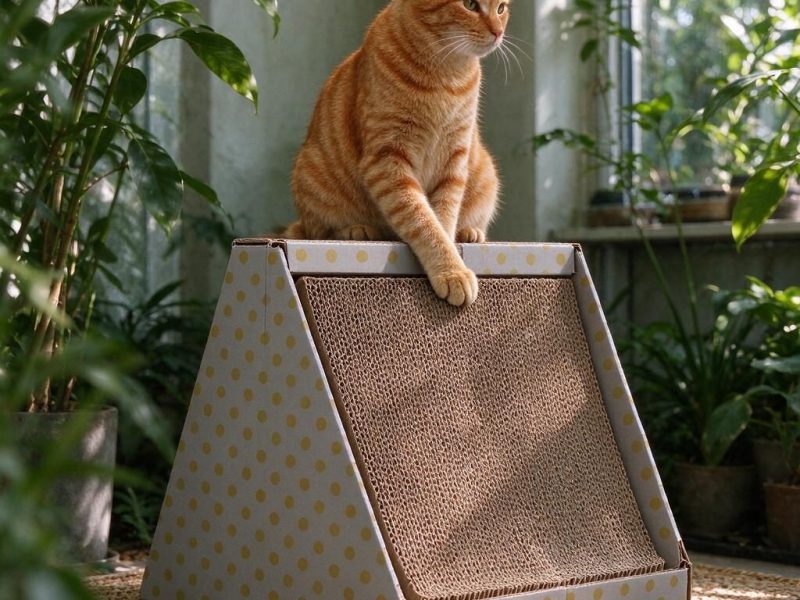
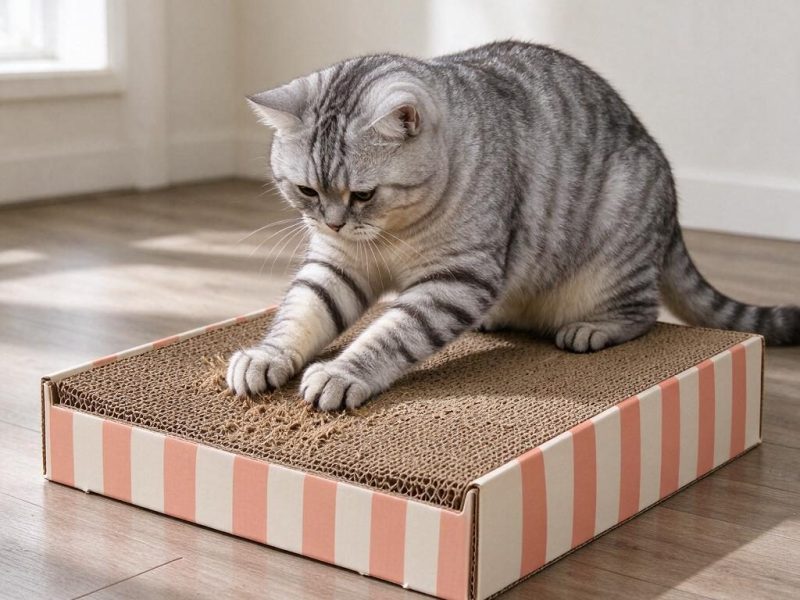
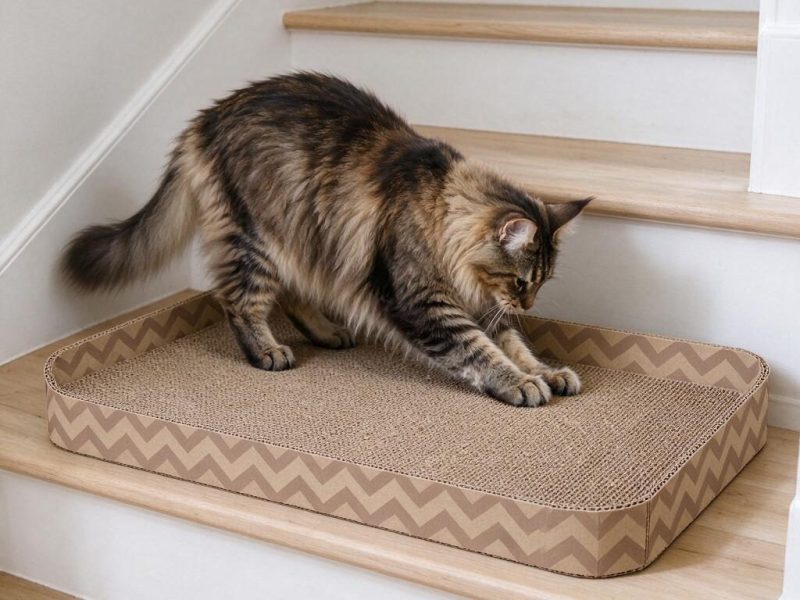
The question turns up early in most quote threads, and it is not small talk. A scratcher pad, a lounge bed, a cardboard house: the same design can leave the factory either collapsed or built. That one call fixes the die line, the carton spec, how many units fit a container, and who does the assembly at the far end.
On most LCL sea lanes, freight prices on cubic volume rather than weight. Cardboard is light and bulky, so a container fills long before it gets heavy. Format is a landed-cost decision before it is a product feature.
Both directions carry a failure. Ship flat and the final step lands on someone else: an end customer with a diagram and no patience, a 3PL billing for assembly time, a retail DC that will not open the carton and build. A flat-pack that will not square up turns up in reviews instead of returns. Ship built and you pay for air inside the container, plus corner damage wherever nothing in the carton absorbs impact.
The answer moves per SKU as well. A wall-mounted scratcher may barely change between formats; a spherical house usually changes a great deal.
What Changes When a Cardboard Cat Scratcher Supplier Ships Flat
Before either format gets approved, put both on the same six lines. Material sets the floor first: a 5 cm pad stacks roughly half the sheets of a 10 cm pad, so thickness drives cost before format enters the conversation. E-flute at about 1.5 mm with tight ridges suits thin pads and wall pieces, while B-flute at about 3 mm carries more cushioning and rigidity in larger houses.
| Factor | Flat-pack (collapsed) | Assembled (built) | What to verify | Where the answer flips |
|---|---|---|---|---|
| Billable cubic volume per unit sold | Panels stack; carton volume falls sharply | Holds its full air volume as built | Carton dimensions measured on the sample, not read off a drawing | On lanes billed by cubic measurement, flat wins this line outright |
| Assembly owner and location | Factory, destination 3PL, retail DC, or the customer | Stays inside the factory | The named party, in writing, before the carton is specified | When destination labour is unavailable or priced above the freight saving |
| Carton spec and board grade | Load-bearing panels need the stiffer sheet; E-flute suits thin pads and wall pieces | B-flute carries cushioning and rigidity in larger houses | Flute density on the production sample; loose corrugation signals lower grade | When the shape needs B-flute anyway, the flat-pack saving narrows |
| Protection under stack load | Compression at the pallet base; inserts do the work | Corner damage and crush on a built piece | Where the unit sits in a full pallet, not at the top | When handling is rough and the run is short |
| Retail presentation | A carton the store has to open and build | Shelf-ready out of the case | Whether a pop-up carton is actually in the spec | When the planogram slot will not wait for assembly |
| Order tier and tooling | Stock runs near 50 pieces; custom from roughly 200 | Same tiers apply | Which parts are tooling-backed and which are cut from existing dies | When volume is low enough that tooling, not freight, dominates |
Score each SKU against those rows rather than arguing the format in general. A wall-mounted scratcher and a spherical house do not collapse the same way. In practice the second row decides it: if nobody at the far end will build the unit, the cubic-volume saving never gets cashed. Where a destination 3PL does build, price its per-unit assembly against the freight difference before either sample is signed off.
Which Format Fits Your Channel: Retail Shelf, FBA, or Subscription Box
Start with where the unit becomes sellable. That question usually settles the format before freight is ever quoted.
Big-box retail is the channel that punishes flat-pack hardest. A planogram slot wants a built unit or a pop-up that opens in seconds, and a carton of loose panels has to be opened and assembled by store staff who are not paid to do it. A display-ready carton fixes that, but it is a separate spec with its own tooling and cost. On a larger piece retailing in the USD 20 to USD 40 band, that packaging spend is easier to absorb than on an entry-level pad, which is why the format decision and the price architecture tend to arrive together.
Marketplace and FBA push the other way. Dimensional weight and per-unit prep fees make air expensive; flat-pack collapses it. The line buyers underestimate is prep. Every loose panel has to be bagged and labelled before it clears, and a prep centre will not assemble for you. A carton holding nine pieces means nine billable touches, not one.
A subscription box is the one place where assembly is a feature. Small flat panels and a one-colour print on the inside face turn the build into part of the unboxing, and there is no shelf to satisfy. Timing is the real constraint: a monthly drop against a 30–45 day OEM build plus logistics leaves little slack for a late design change.
Assembled still wins where volume is small and handling is rough. A short run of built lounges going to a single independent retailer can cost less than paying destination labour to build a few dozen units. Large-format houses measured in tens of centimetres per side are where knocked-down construction moves the freight quote most; a flat pad barely notices the difference.
Where Both Formats Fail After the Container Lands
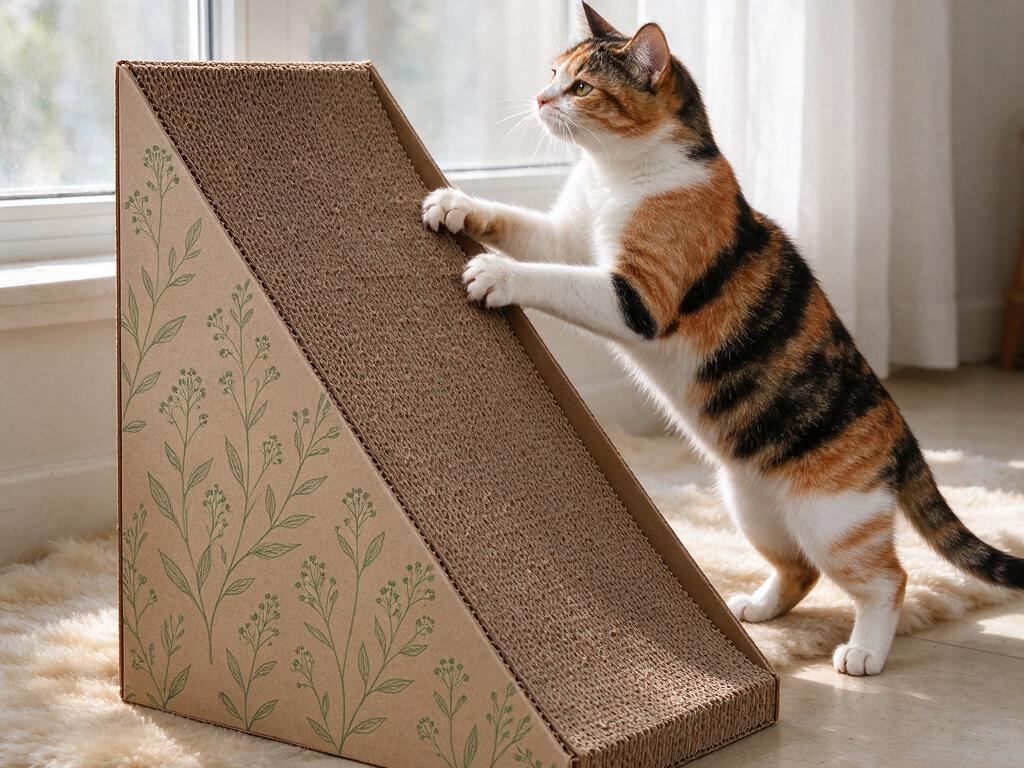
A unit that still takes a scratching after weeks of use is the real test of a shipping format.
The problems that matter rarely show up on the sample. They show up weeks later, when a pallet has sat in a warm third-party warehouse and the units inside no longer fit together the way they did at the factory.
Flat-pack fails slowly, through tolerance. Die-cut tabs are tuned to one board moisture level; let cartons sit in a humid warehouse and the panels swell, so a joint that clicked together on arrival wobbles after a month or two of a cat working it. Stacked flat cartons also take load on the panel face rather than on an edge, so the flute at the base of the pallet crushes and the whole stack goes slightly soft. And the assembly card: a unit the customer cannot build without hunting for a video gets reviewed as an assembly problem, not a scratcher. Collapsed is cheaper only until the extra carton, the insert, the printed card, and the labour at the destination are quoted on the same line.
Assembled fails through air and edges. A built house ships with a void inside it, and that void is billed on every leg, which is why the packed dimension matters more than the product dimension. Nothing in that carton absorbs impact unless corner protection is specified and priced, so a crushed corner arrives looking like a manufacturing defect. And a built unit that does come back cannot be re-shipped economically, so it is usually written off rather than resold.
One check catches most of it. Ask for a unit built on the production line from production board, packed in its production carton, and dropped once. A sample that lands in seven days is a prototype; it proves the design, not the tolerance.
Questions to Put to a Cardboard Cat Scratcher Supplier Before Sign-Off
Tone of voice is not evidence. Once both formats sit side by side, the useful part of the conversation is a short list of answers you can hold in your hand, each with a name against it so nothing dies in a shared inbox.
| Ask | Evidence you should see | Red flag | Owner |
|---|---|---|---|
| Die line and carton drawing for the collapsed unit | A dimensioned drawing with panel sizes and slot tolerance called out | A product photo, or “same as the sample” | Product |
| Both formats quoted at the same order quantity | Two landed numbers, with freight and destination labour broken out separately | One price, and freight described as “about the same” | Procurement |
| Has this exact format shipped at the carton count we are ordering? | Carton spec and packing list from that run | A generic spec sheet, or “very similar” | Quality |
| Assembly time, and any tool the end customer needs | Minutes per unit, step count, whether glue or a mallet is involved | An answer that opens with “it’s obvious” | Product |
| Which board grade sits in load-bearing panels, and what the carton passed | Flute named panel by panel, plus a compression or drop test report | “Export standard”, with no grade named | Quality |
| Who builds it at the destination, and what that costs | Written scope and a per-unit rate from the 3PL | “Your warehouse can handle it” | Destination 3PL |
| What the sample actually contains | Die-cut panels, production carton, printed assembly card | A hand-built unit in a plain box | Product |
Pick the Format That Survives the Last Mile
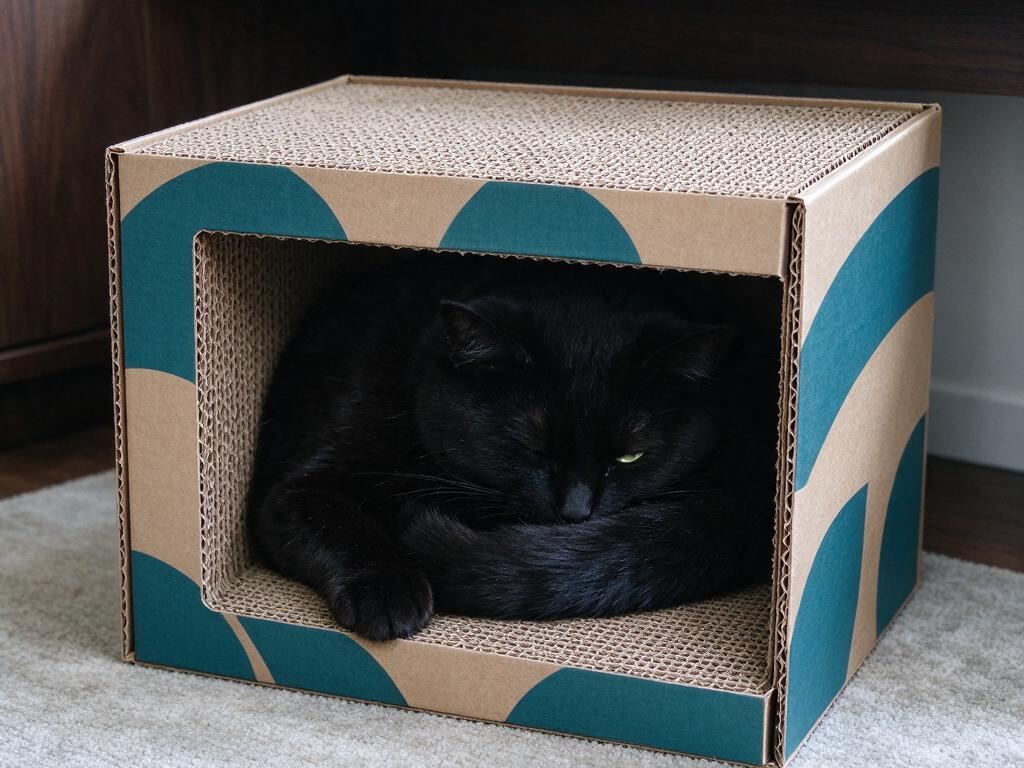
The last-mile check: does the unit still sit square once it is built at home?
One test settles the format question, and a customer runs it in a living room weeks after the container is unloaded: does the unit still sit square when someone who has never seen it opens the carton and builds it without help? If it does, flat-pack has done its job. If it does not, the freight saving turns into a return or a support email, and the landed-cost spreadsheet missed the part that mattered.
Put both formats in front of the supplier at the same order quantity, so the freight difference is two landed numbers on one page rather than a claim. Then pin the sample before you pin the launch date. Ask what the sample includes: die-cut panels only, or the production carton, printed assembly card, and fittings that go with the real unit. Sampling usually follows within about a week of artwork agreement, while the sea leg is what actually sets the calendar. Petaful answers customization requests with a draft and a quote, and samples typically follow within about 5–7 days of artwork agreement. Get the physical sample and build it yourself before you commit a launch date.
Questions
What MOQ should I expect from a cardboard cat scratcher supplier?
Stock runs start near 50 pieces, while custom orders typically begin around 200 pieces plus tooling. Confirm which parts of your design are tooling-backed and which are cut from existing dies before you commit.
How long does a cardboard cat scratcher supplier need for samples and production?
Samples usually follow within about 5 to 7 days of artwork agreement, and custom orders run 7 to 15 days in production. Add the sea leg after that, so plan the launch date around the full calendar rather than the factory clock.
Can I mix flat-pack and assembled formats across one order?
Yes, and you should decide per SKU rather than per order. A wall-mounted scratcher barely changes between formats, while a spherical house changes a great deal, so score each design separately.
What should I check in the sample before approving a cardboard cat scratcher supplier?
Build it yourself and confirm it still sits square without help. Ask whether the sample includes die-cut panels, the production carton, printed assembly card, and fittings, not just a hand-built unit in a plain box.

His guides cover board selection, structural samples, OEM/ODM development and export packing for corrugated cat products. They help purchasing teams compare specifications, prepare a product brief and agree sample and packaging requirements before production.