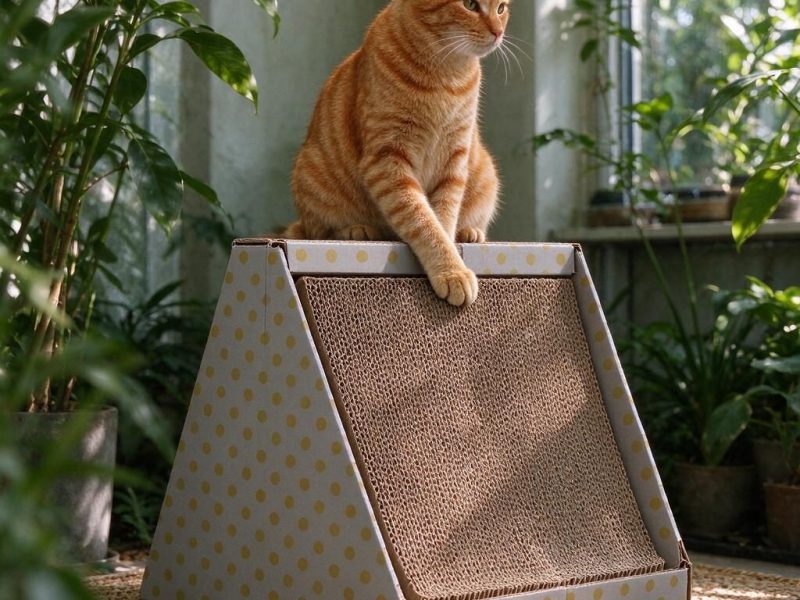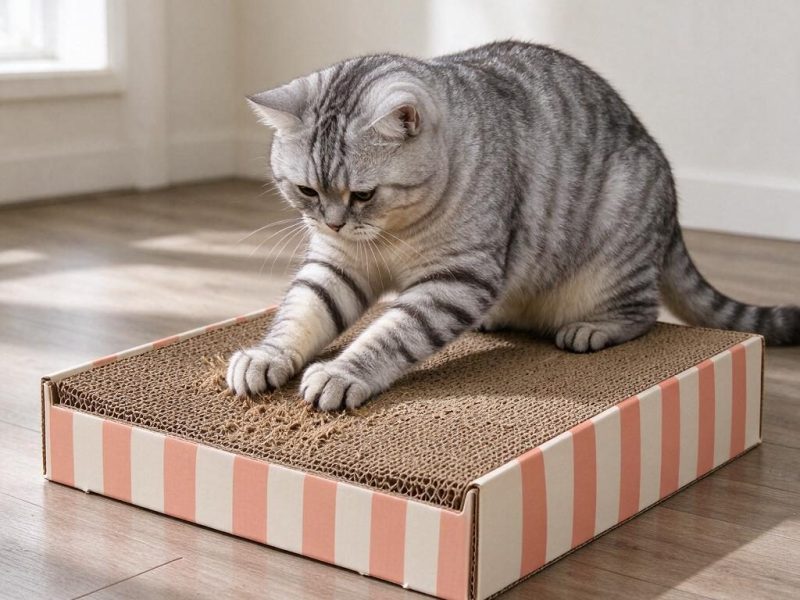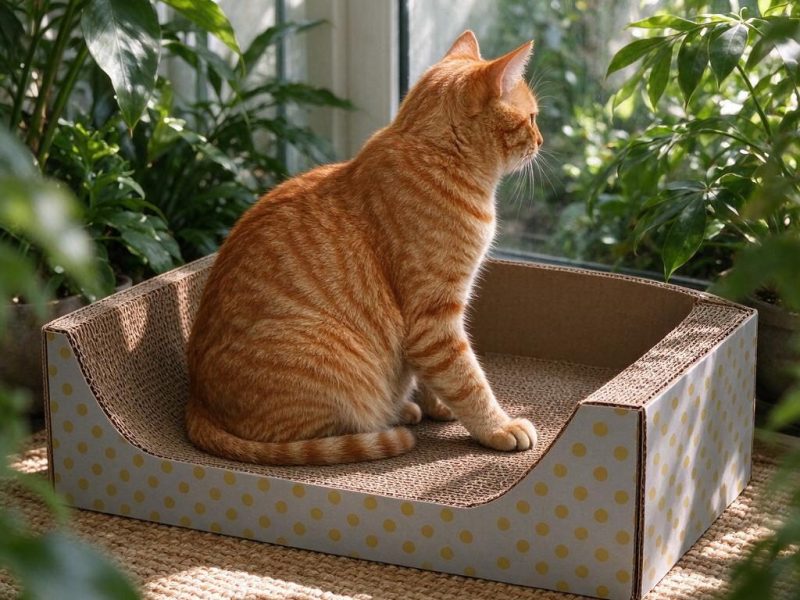
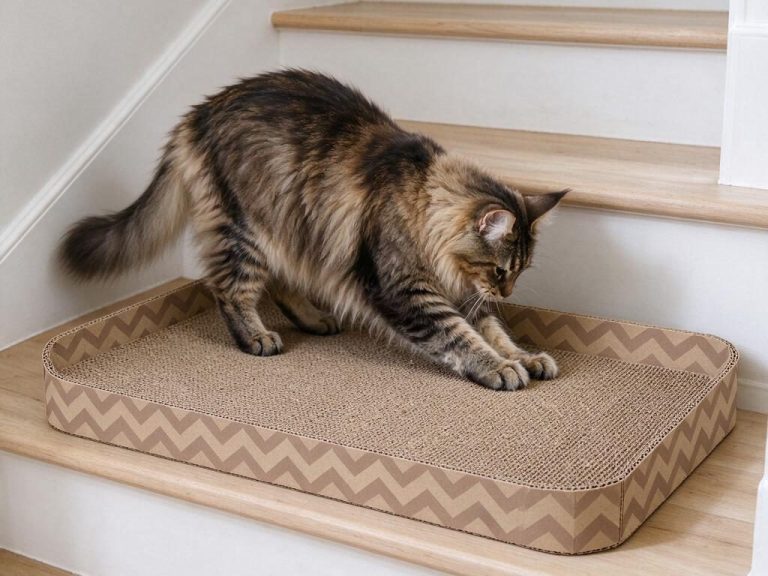
Why Two Quotes for the Same Cardboard Cat Scratcher Come Back With Different MOQs
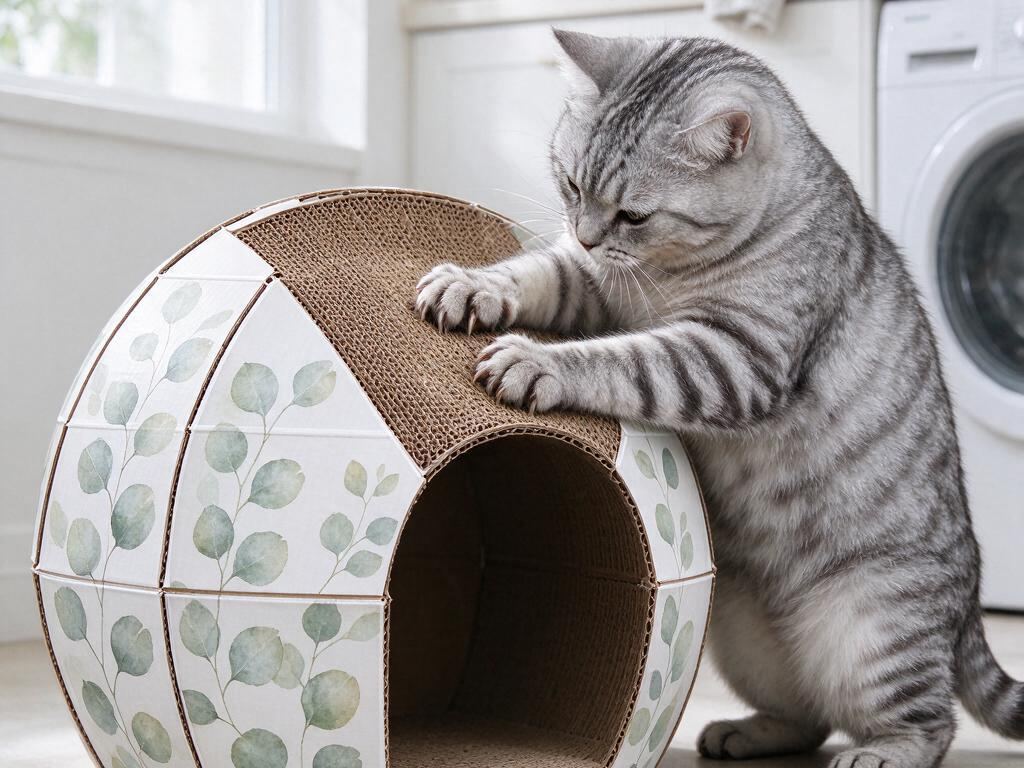
Stock designs carry the lowest commitment — the trade-off is fixed print, size and shape.
Two quotes for what looks like the same cardboard cat scratcher can land far apart, and neither supplier is padding the number. They are pricing different levels of commitment.
Buy catalogue stock and the board, print, colour and size are already fixed; you pick a quantity off a list. That is the lowest commitment you can make, and it is also the least say you get in how the product looks next to a competitor’s.
Put your artwork and packaging on an existing structure and nothing is cut new. The order floor is set by the print run rather than by the board, because a printer has to set up and that setup has to spread across enough units.
The tooled level is the bigger step. A new shape or die is cut for you, and setup plus first run arrive as one number. That quote reads high against a stock quote at the same piece count, but it buys a shape no other buyer can order off the same list.
So a 200-piece quote for a stock pad and a 200-piece quote for a new die-cut house are not the same commitment, even when the piece count matches.
What decides it is whether the product has to look different on shelf, or just be on shelf at a workable price.
What MOQ Do Cardboard Cat Scratcher Manufacturers Actually Set?
Most published MOQ tiers for cardboard cat scratchers land on three numbers, and what moves them is the level of customization, not the product category. Stock carries the lightest commitment, custom print on an existing structure sits in the middle, and a new shape adds tooling on top of the same order. Here is how the three levels line up against what a buyer is actually trying to do.
| Your situation | Order level | Reference MOQ | What sets that floor | What you still control | What you carry if it does not sell |
|---|---|---|---|---|---|
| First shelf test, no design budget | Stock | 50 pcs | Existing catalogue stock, already in production | Order quantity only — print, size, and colour stay fixed | The inventory, but at the lowest commitment |
| Private label on a proven structure | Custom print | 200 pcs | The print run | Artwork, colour, retail packaging, carton marks | Printed packaging and plates; the die is unchanged |
| New shape or licensed look | Tooled | 200 pcs plus tooling | Number of dies and assembly steps | The shape itself, footprint, board grade | The tooling charge plus first-run volume |
Those figures are published reference points from one supplier’s tier list, not an industry standard, so treat the level as the thing you are quoting rather than the number. A 50-piece quote on a stock pad promises nothing about a new die-cut house: the second shape brings its own dies, extra glue stations, and more waste board per sheet. Board counts too. E-flute at roughly 1.5 mm is common for pads, and a deeper or wider construction stacks more sheets per unit, which manufacturers price into the run rather than into the tier.
Which Order Level Fits: A First Shelf Test, a Private Label, or a New Shape
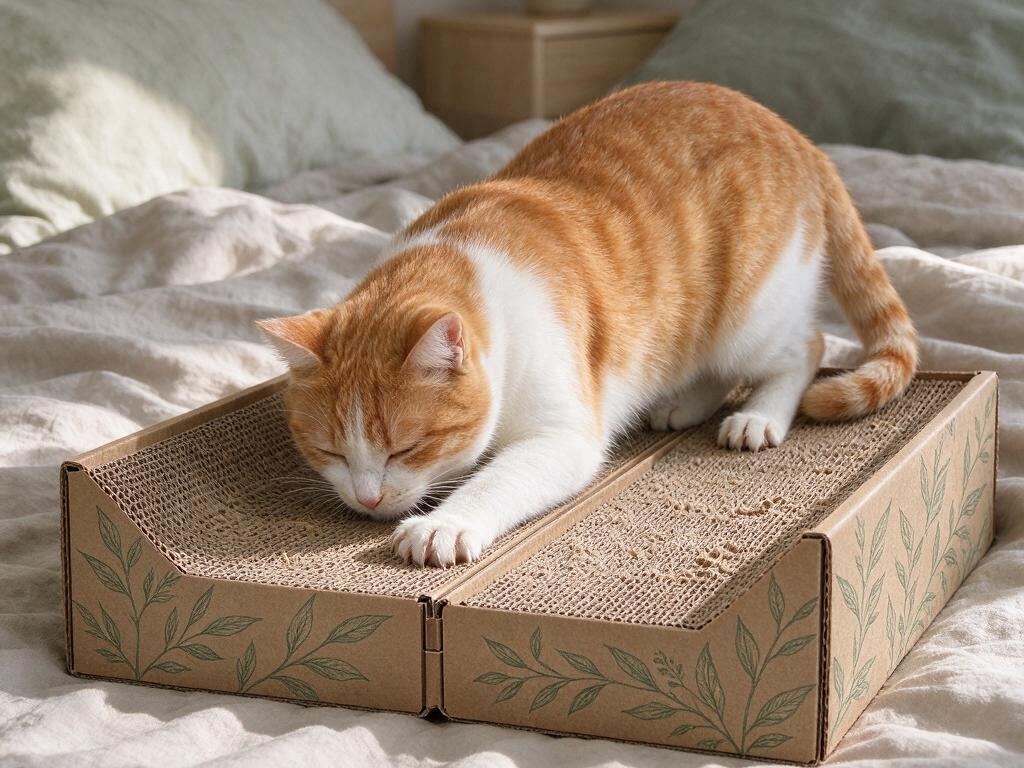
Custom print reuses an existing structure, so the floor is set by the print run rather than the board.
A first shelf test and a licensed character shape are not the same purchase, even when both arrive as a request for a quote on what looks like a small cardboard pad. The right order level turns on one question: does the product have to look different on shelf, or only be on shelf at a workable price?
If the answer is the second, stock items do the job. A retailer testing whether the category moves at all can put a catalog pad out with no tooling and the lowest commitment available. The risk isn’t overcommitment. It’s undifferentiated product competing on price against the same board everyone else bought.
A private label on a proven structure sits one step up. The die already exists, so the change is artwork, color and packaging, and the floor stays near the print-run minimum rather than the tooling minimum. The economics stop improving when a buyer splits that run into small drops. Plates and setup repeat every time, so four small drops a year rarely cost less than the same volume ordered in fewer passes. Anyone planning to replenish quarterly should judge the program on total spend for the quarter, not the unit price of one drop.
A new shape or a licensed look is a different transaction. The die is the step change, and it makes the first order look expensive because that run absorbs setup the next one won’t. Judge a tooled quote on the second order. Timing follows the same logic: ODM work from a mold already on the floor typically runs 45–60 days including logistics, and a complex job adds 10–15 days.
Board and size move the floor before tooling does. Thickness multiplies sheet count, so a 5 cm pad stacks roughly half the sheets of a 10 cm pad at the same footprint. Depth and footprint are the cheapest MOQ levers a buyer has, and they are worth settling before anyone pays for a die.
Five MOQ Mistakes That Cost Cardboard Cat Scratcher Buyers Money
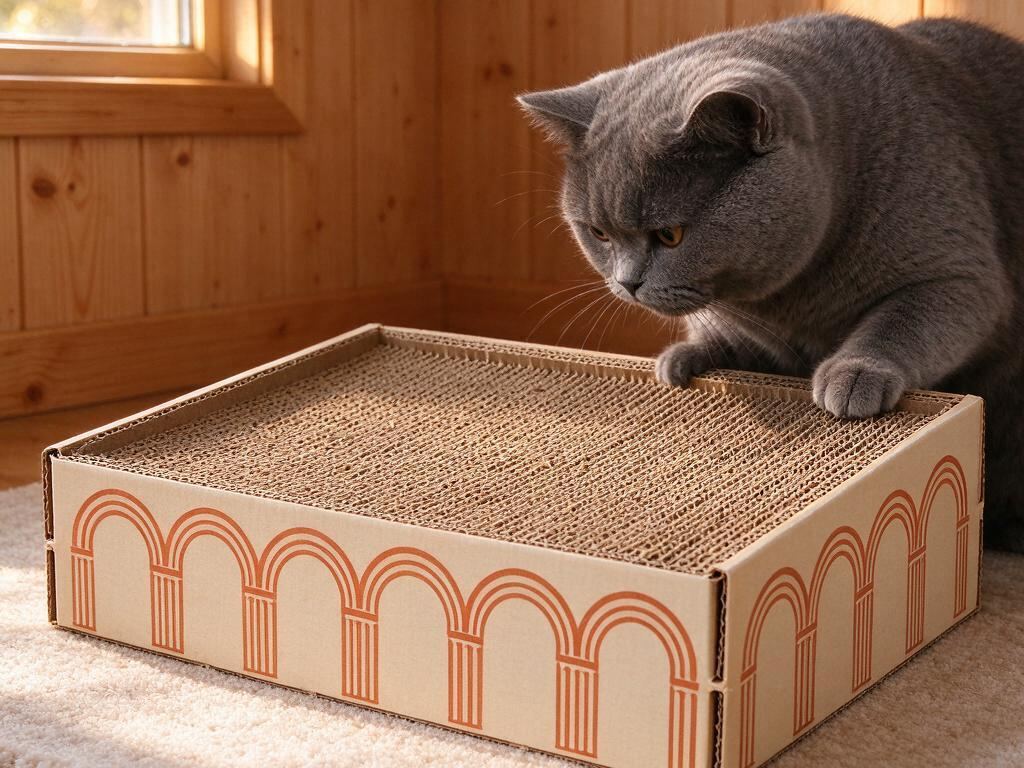
A new shape is a different transaction: judge a tooled quote on the second order, not the first.
The most common way buyers lose money here is asking for “your MOQ” as if a supplier keeps just one. A cardboard cat scratcher manufacturer sets a different floor per order level: stock items, custom print on a structure that already exists, and a new die each land somewhere different. Take a single number at face value and you size the whole buying plan around the wrong tier.
The next mistake is putting a stock quote beside a tooled quote as though they were two prices for the same object. One buys a catalogue item; the other buys a die. Choosing the cheaper of the two tells you nothing, because the tooled unit cost only becomes readable once setup is spread across repeat runs.
Low MOQ read as low total spend is the expensive one, and it catches experienced buyers. At a custom level, plates, setup, and the first-run quantity all sit inside the unit price, so a supplier offering a smaller minimum has usually just pushed the same setup into fewer units. Compare the total invoice against sellable units, not the per-piece figure on the first line of the quote.
Treat the sample as a sample, not a production unit. Board grade, flute, and surface finish can shift once volume production starts, particularly when the quoted sheet is ordered fresh for each run. Ask what the sample was built from, and whether production will pull the same stock.
Two smaller ones still count. Fix the number per SKU and you may never notice that two or three SKUs placed together reach a run size no single one can. Trade a larger first order for a better unit price and the saving tends to reappear later as warehousing and slow-moving stock.
How to Test a Cardboard Cat Scratcher Manufacturer’s MOQ Claim Before You Send an RFQ
A quoted MOQ is only as good as the board stock behind it, the die arrangement, and the space on the production calendar. Each question below asks for a document rather than a number, which is the difference between a figure you can plan around and one you have to hope about.
| Ask | Expected evidence | Red flag | Responsible party |
|---|---|---|---|
| Is that figure per SKU or per purchase order, and can mixed SKUs combine to reach it? | Both numbers on the quote sheet, plus the written rule for combining designs in one run | One figure with no unit attached, or a number that shifts when you ask a second time | Your account contact, in writing |
| Which flute grade and thickness does the price assume, and is that board held in stock or ordered fresh each run? | Grade and caliper named on the quote line, such as B-flute at about 3 mm, plus stock status per run | “High-quality cardboard” and nothing more, or a different board turning up at production | Whoever writes the specification, not the sales rep alone |
| Is the die exclusive to us, where is it stored, and what happens to it if our volume drops? | A tooling clause naming ownership, storage site, and transfer or buyout terms | A verbal “the die is yours” with no clause behind it | Procurement or legal, before the PO goes out |
| Which certificate is offered, for which scope, and at which site? | Certificate number, issuing body, scope, and the address it covers | A brochure logo standing in for an audit of the actual line | Supplier QA lead; you confirm with the issuing body |
The First Order to Place, and What to Ask Before It
For a first order, buy at the level the shelf needs and nothing higher. Stock covers a category test, where the question is simply whether the product sells at all. A private label print on an existing structure covers the case where you already know it does and want your name on the front. Tooling earns its expense when the shape itself is the reason someone picks the item up: a licensed character, a house that has to match a room set, a form no stock line matches. Until a first run proves sell-through, a die is a bet placed before the evidence arrives.
Three facts belong in the first inquiry: how many SKUs, whether artwork already exists, and whether the shape must change. Those answers let a supplier quote in one pass instead of three rounds. MOQ per SKU and MOQ per order should come back as separate written numbers, because a quote that blurs them cannot be compared against the next one.
Then there is the timeline, which should be checkable rather than vague. Petaful states a draft and quote inside 72 hours and a sample ready 5–7 days after artwork is agreed. Any manufacturer should be willing to put two dates like that in writing, or say plainly what theirs are and why.
Questions
How do I compare two cardboard cat scratcher quotes fairly?
Put them on the same order level first, since a stock quote and a tooled quote price different commitments.
What should I check before sending an RFQ to a cardboard cat scratcher manufacturer?
Send three facts up front: how many SKUs, whether artwork already exists, and whether the shape must change.
Can I lower the MOQ by shrinking the scratcher's size or depth?
Yes, size and depth are the cheapest levers available before tooling. Thickness multiplies sheet count, so a 5 cm pad stacks roughly half the sheets of a 10 cm pad at the same footprint, which pulls the run floor down.
How long does a custom cardboard cat scratcher order take?
Plan around 6 to 8 weeks door to door for a typical custom order. Samples usually take 5 to 7 days after artwork is agreed, production runs 7 to 15 days, then express takes 7 to 15 days or sea freight 25 to 35 days.

His guides cover board selection, structural samples, OEM/ODM development and export packing for corrugated cat products. They help purchasing teams compare specifications, prepare a product brief and agree sample and packaging requirements before production.