Should the first sample ship with your logo on it?
Yes, provided you know what you’re asking it to prove. A custom cardboard cat house gets approved on one of two grounds: the die-cut folds, locks and holds a cat, or the print reads cleanly on kraft-toned board with your logo on it. Most first orders only need one of those proved. A flat, unbranded sample settles the structure question and says nothing about print, and it usually costs less to get there.
Two assumptions are worth dropping. Private label doesn’t start with artwork; it starts with a shape that already works. And custom doesn’t automatically mean a new mold. In corrugated, the cutting die and crease layout decide whether the house stands, and print decides whether it sells.
Catalog shapes already list dimensions you can change. The spherical house in Petaful’s catalog runs about 52 × 52 × 40 cm and roughly 2.0 kg. A first branded order on that shape needs print or a branded master carton, not a new die.
Change the shape after sampling and both bills reopen: the tooling and the sample clock. Sequence matters more than either price.
Brand owners, retail buyers, importers and distributors ask the same question with different stakes. Each weighs structure, print and the master carton differently, and the first invoice is where that difference shows up.
What a new die-cut or a new print run commits you to
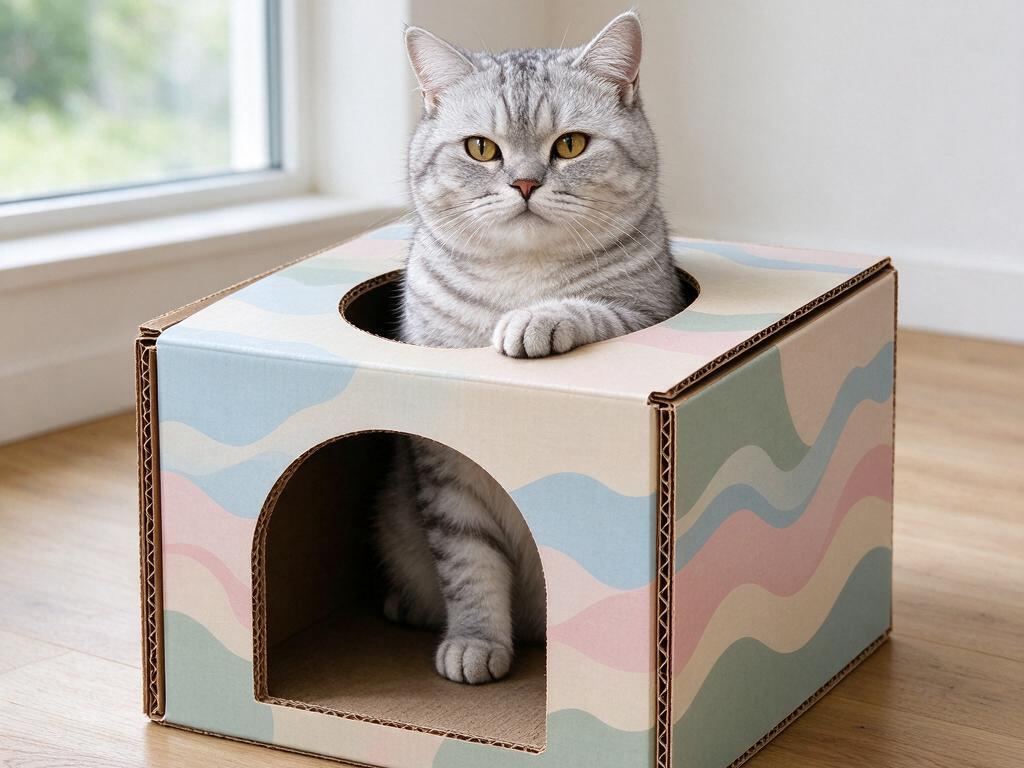
A structure-only sample should make the die-cut opening and crease layout obvious before print is discussed.
Two words blur together in a first quote. A die is the cutting tool: blades that stamp the blank, plus a crease layout that decides where the board folds. Print is ink on board that already exists. Corrugated rarely involves an injection mold, so for a custom cardboard cat house the quote should name which of the two the setup charge covers, and on what quantity basis.
| Route | What it commits you to | What it proves | Where the money repeats | Fit on a first order | Verdict if the structure has not yet held a cat |
|---|---|---|---|---|---|
| New cutting die for a shape nobody stocks | Die build, crease layout, structure sample, fit testing | That the house stands, holds the cat, folds flat again | One bill now; replaced only if the silhouette changes | Only when the shape itself is the reason the line exists | Do this one first |
| New print on an existing die | Plates, artwork, color proofing against a known dieline | That the branding reads on kraft-toned board | Plates repeat per design change, not per season | Proven shape, new seasonal or licensed art | Premature; prove the die first |
| Stock shape with a branded color box | Packaging artwork and carton spec only | That it sells on shelf without touching the structure | Carton changes are cheap; the die is somebody else’s cost | First run where sell-through is still unknown | The safe route when the structure is unproven |
The rule is short. If the structure has not yet held a cat, prove the die first; if the structure is proven and only the branding is new, print comes first. Stock shapes start at the smallest quantity, a printed color box sits at a higher tier, and the MOQ basis is confirmed on the quote rather than in a catalog.
Which order are you placing? Four buyer situations and their first spend
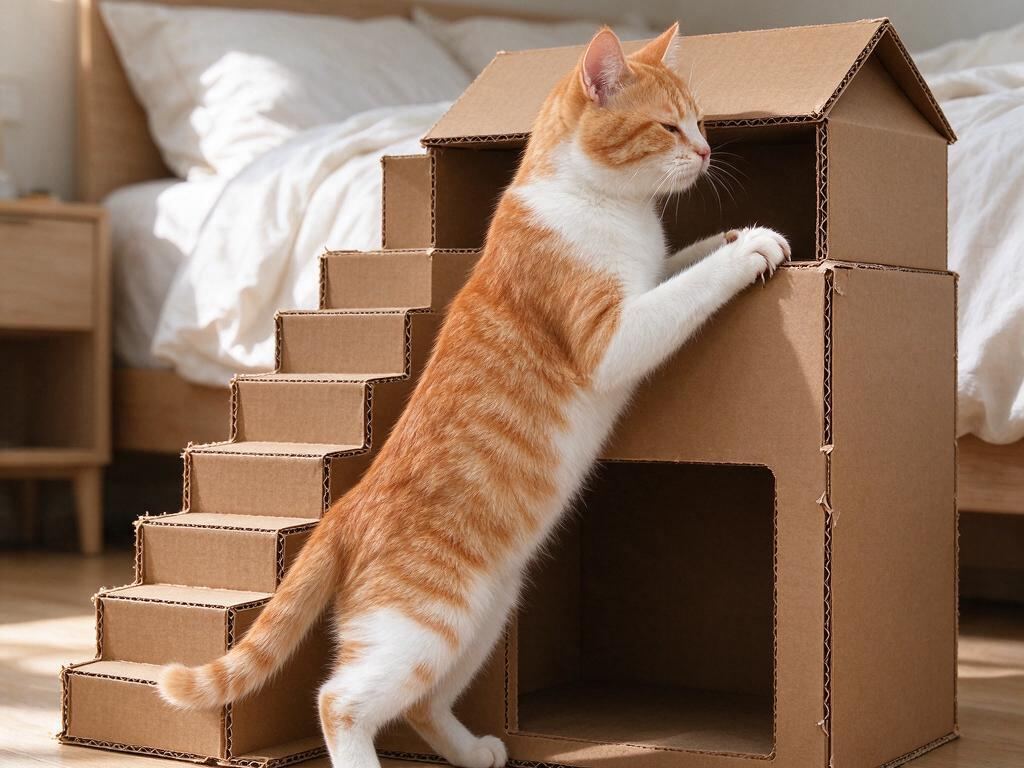
A range can share one print system once each shape is proven.
A first-time brand testing a small run should keep the die bill off the table. A shape that already exists, with the brand on the packaging, is the entry tier; a printed color box sits above it. What that buyer should not do is commission a cutting die for a silhouette nobody has bought yet.
A retailer or importer restocking a proven shape is in a different position. That die is paid, so the live question is print: a seasonal colorway, revised artwork, a licensed design, all running on the same dieline.
A marketplace seller shipping into a fulfillment center should ask for the pack spec, not the product photo. Master carton dimensions, units per carton and prep requirements move landed cost as much as the house does.
A distributor building a range settles structure first (tunnel, two-level, spherical, stackable), then applies one print system across the set so the range reads as a family on shelf. Structure before print, because changing the shape later means paying for tooling twice and reprinting everything that was already packed.
The one buyer who should pay for a new die is the ODM buyer chasing a shape nobody stocks. When the silhouette is what the customer is buying, tooling is the product, not overhead. For a custom cardboard cat house that usually means a shape the catalog does not carry, rather than a new print on an existing one.
Plan backwards from the delivery date
OEM work built to a specification runs about 30–45 days including logistics, and ODM from a mold already on the floor about 45–60 days. A complex job adds roughly 10–15 days. An artwork change inside that window moves the delivery date, not just the sample date, so the print decision has to land before the run is booked, not after the sample is approved.
Where a custom cardboard cat house order goes wrong in the first 30 days
None of these problems show up in the approval meeting. They pass there, and then they surface three weeks later, after the tooling is cut and the print is committed.
Color is the first one. A logo signed off on a PDF proof will look different on kraft-toned corrugated, because the board underneath is not white and the ink sits on a surface that flexes. Ask for the proof printed on the production board. A screen proof only asks you to approve a color you have not seen.
Timing is the second. The sample clock starts when structure and artwork are agreed, not when you send the inquiry. A file change in week two restarts that window rather than extending it, and the bulk date moves with it. Nothing about the delay is negotiable once the sample has to be rebuilt.
Then ask how the sample was actually made. A hand-cut unit can hold a crease that the production die later tears through, because a guided knife cuts a different line than a steel rule in a press. Flute direction belongs in the same conversation. Corrugated wears along the flutes, so which way they run against the cat’s scratch path decides whether a panel scuffs out in a season or holds.
Footprint is not the same as interior. An exterior dimension tells you nothing about whether a cat turns around inside, and it does not match the weight your listing claims. Check the entrance and the interior against that claim. The product photo gets approved and the master carton does not, and that is where transit damage is decided.
What to ask a custom cardboard cat house supplier before you approve the sample
Approving a sample is really five approvals. Structure only, printed product, printed color box, insert plus assembly sheet, and master carton each prove a different part of the order, and a supplier who answers for one has answered for none.
A structure-only sample proves the die and the crease layout. It tells you nothing about ink on kraft-toned board, nothing about the shelf read in a color box, and nothing about whether the carton survives a pallet. Find out what is in the box before you book freight.
| Ask | Evidence to request | Answer that should worry you | What it settles |
|---|---|---|---|
| What is in the sample box? | Contents list: structure, print, color box, insert, carton | “A sample,” unitemized | Which part of the order you approve |
| MOQ per design or per purchase order? | The MOQ written against your drawing on the quote | A number that shifts between emails | Whether a second colorway is affordable |
| Which change needs new tooling? | Die, plate, and pack quoted as separate lines | Tooling folded into the unit price | What a mid-season change costs |
| Who holds die and print files? | Written confirmation the files transfer to you | “Our standard die,” no handover | Whether a second supplier can quote you |
| What pack formats run on the line? | Color box, sleeve, shipper, master carton dimensions | Only one format offered | Whether fulfillment prep is included |
| ISO 9001, what does the scope cover? | The certificate plus the weak-glue-line reject rule | The website badge as the whole answer | Whether QC is a procedure or one person’s habit |
Prove the shape first, then decorate it
Yes, ship the sample with your logo on it, provided the logo sits on a shape you have already agreed to. A die is paid once. A print run that misses gets paid again on every reorder, and again when the artwork has to be re-plated against a dieline that moved. On a custom cardboard cat house first run, that is the whole cost argument.
A licensed design with a fixed launch date can justify print first on a stock shape. The shape risk is already known there; the calendar is not, so print becomes the long pole. That is a different order from a first-time brand still guessing at a structure.
Send the target pack (retail box, e-commerce shipper, or fulfillment-ready), the art files, and two or three catalog shapes to compare side by side. Then ask what the sample box will actually contain: structure only, printed product, color box, insert, instructions. That list is what you approve, not the logo on the front of it.
Petaful lists official samples at typically 5–7 days once structure and artwork are agreed. The “once” matters more than the number. Artwork handover is the project’s real start date; everything before it is still negotiation.
Questions
How long does a custom cardboard cat house sample take?
Usually 5u20137 days once structure and artwork are agreed, not from the inquiry date. Everything before that handover is still negotiation, so artwork approval is the real start of the clock.
When is print first justified on a custom cardboard cat house?
Only when the shape is already proven and the calendar is the risk, such as a licensed design with a fixed launch date. On a first run where the structure has not yet held a cat, prove the die first.
Should I approve my logo on a screen proof?
Ask for the proof printed on the production kraft-toned board, not a screen or PDF file. Ink behaves differently on non-white corrugated that flexes, so a screen proof only asks you to approve a color you have not actually seen.
What pack details should a marketplace seller confirm?
Master carton dimensions, units per carton and fulfillment prep requirements, because those move landed cost as much as the house itself does. Ask for the pack spec rather than a product photo.

About the author
Petaful Editorial
Factory editor
Edits sourcing notes for pet brands and Amazon sellers, from the Petaful floor in Shenzhen.