Yes. Cardboard cat scratchers suit most cats when the product uses safe materials, stays stable, and matches the cat’s preferred scratching angle. They give claws useful resistance and help redirect scratching away from furniture. In addition, many cats enjoy the texture, sound, and light tearing response of corrugated paper. However, owners still need to check wear, moisture, loose parts, and unusual chewing. The best result depends on product quality, placement, and the individual cat.
Why Cats Need to Scratch
Scratching is a normal feline behavior, not a bad habit. Cats scratch to stretch their shoulders, legs, and back. Cats remove worn outer claw sheaths and leave visible and scent marks. Cornell University’s feline behavior guidance explains that scratching helps cats mark territory and maintain their claws.
Therefore, trying to stop scratching completely often creates frustration. A better approach gives the cat suitable surfaces in useful locations. Cardboard cat scratchers can meet that need without requiring a large post or heavy piece of furniture. These products let owners offer several scratching zones around the home.
Why Cats Like Cardboard
Corrugated paper has exposed edges that catch the claws without feeling completely rigid. As a cat pulls, the layers give slightly and create a satisfying tearing sensation. Moreover, the sound and movement provide immediate sensory feedback. Cats that already scratch shipping boxes, paper bags, or floor mats often accept cardboard quickly.
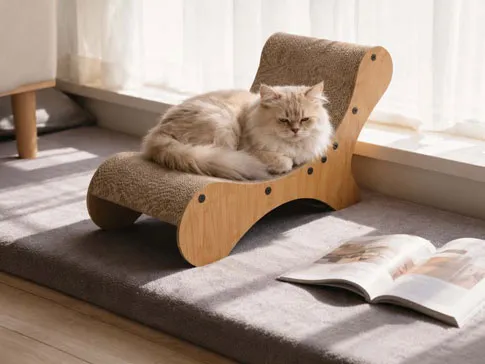
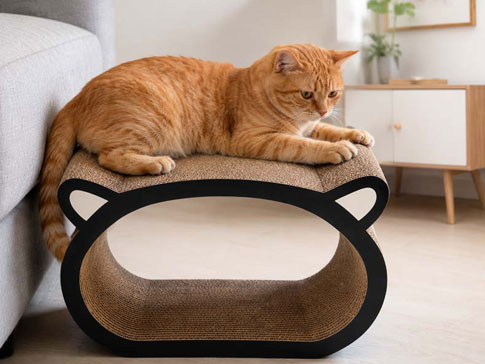
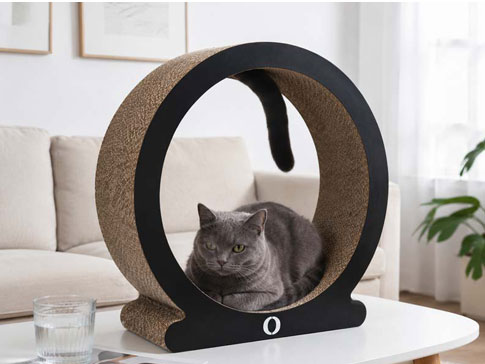
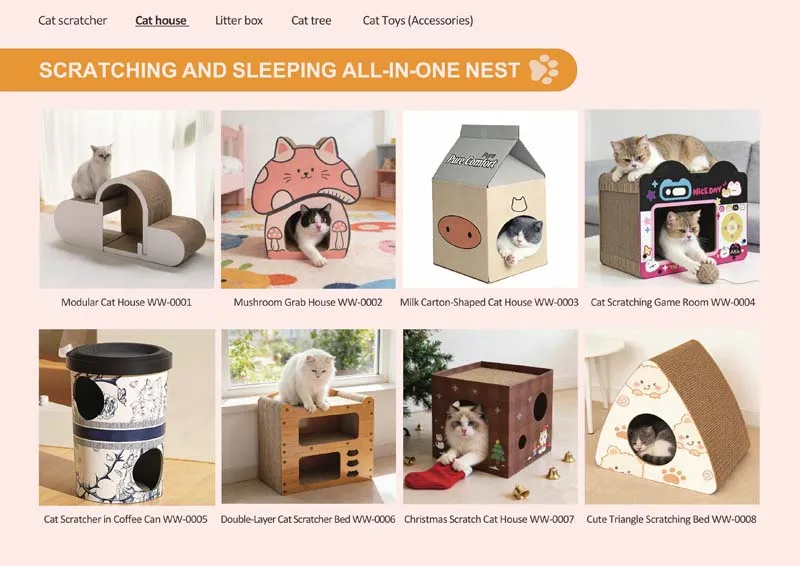
Orientation also matters. Some cats prefer horizontal scratching while standing on all four paws. Others enjoy angled or gently curved surfaces. Cardboard cat scratchers support both formats, so manufacturers can shape them into pads, ramps, lounges, tunnels, and houses. Petaful’s range of cat scratching boards shows how one material can support several scratching styles.
Main Benefits of Cardboard Cat Scratchers
Cardboard cat scratchers support natural claw use and daily stretching. They can reduce damage to sofas, carpets, and door frames when owners place them near existing scratching spots. In addition, the products stay light, so people can move them between rooms without difficulty.
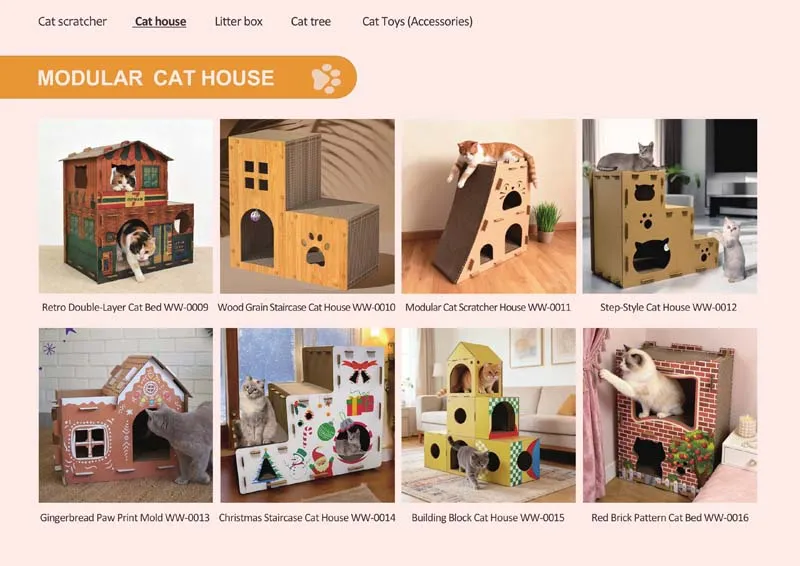
Many designs serve more than one purpose. For example, a curved lounge can offer scratching, resting, and gentle body support. A tunnel can combine hiding, play, and scratching. Meanwhile, replaceable inserts let owners keep the outer frame and renew only the worn surface.
Cardboard gives brands broad design freedom. Producers can cut it into simple pads or sculptural furniture. They can add printed sleeves, edge wrapping, themed graphics, or flat-pack packaging. However, practical value still matters more than appearance. A beautiful scratcher will fail if it slides, bends, or offers too little usable area.
|
Benefit |
Possible Limitation |
|
Satisfying claw resistance |
Surface wears with regular use |
|
Lightweight and easy to move |
Loose paper may appear |
|
Flexible shapes and functions |
Moisture can weaken the board |
|
Often recyclable when clean |
Coatings may affect recycling |
|
Suitable for multiple placements |
Some cats prefer sisal or wood |
Safety and Possible Drawbacks
Cardboard cat scratchers are generally suitable for normal scratching when manufacturers control paper quality, glue, cutting, and structure. Owners should choose products without sharp edges, strong chemical odors, exposed staples, or unstable frames. Furthermore, a wide base or non-slip support helps active cats scratch with confidence.
Small paper flakes usually reflect normal wear. Still, owners should remove loose debris and inspect the surface often. Replace a scratcher when deep holes expose weak sections, bonded layers separate, or the structure starts collapsing. Damp cardboard also needs prompt removal because moisture can cause warping, odor, or mold.
Occasional nibbling does not always signal a problem. However, repeated swallowing of paper deserves attention. Persistent ingestion of non-food items may indicate pica or another health concern. In that case, remove access and speak with a veterinarian. Cardboard cat scratchers should support scratching, not become a regular food source.
Which Cats Benefit Most?
Kittens often enjoy cardboard because the surface feels accessible and encourages exploration. Senior cats may prefer low or angled products that require less climbing. Likewise, indoor cats benefit from extra scratching choices, especially when they have limited access to natural bark or outdoor textures.
Cats with horizontal habits usually accept flat pads and lounges first. By contrast, cats that scratch sofa sides may need an upright board or wall-mounted format. Large cats require enough length for a full stretch and enough width for stable footing.
In multi-cat households, one small pad may create competition. Therefore, owners should provide several scratching areas in separate locations. This approach lets each cat use a preferred surface without blocking another cat.
How to Choose a Good Scratcher
A good product should match the cat before it matches the room. First, observe whether the cat scratches floors, furniture sides, corners, or door frames. Then choose a similar angle and place the new surface close to that location. Cardboard cat scratchers work best when their size and orientation reflect existing behavior.
Check these five product details:
- Board density: Tightly packed layers usually resist wear and release less debris.
- Stable structure: The base should stay still during strong pulling.
- Clean finishing: Smooth edges and accurate cuts reduce snagging risks.
- Useful dimensions: The cat needs enough room to stretch and reposition.
- Replaceable or reversible parts: These features can extend practical service life.
In addition, check the glue, print, coating, and edge materials. Ask for relevant test information when buying for a regulated market. For home use, avoid products with heavy fragrance or peeling decorative films. Quality Cardboard cat scratchers should feel firm, dry, even, and secure.
Placement and Introduction
Placement often decides whether a cat uses the product. Put one scratcher near a sleeping area because many cats stretch after waking. Place another beside the sofa, doorway, or carpet the cat already targets. Meanwhile, keep the scratcher accessible and avoid hiding it in a quiet corner that the cat rarely visits.
Introduce the product calmly. Let the cat investigate without force. You can place a familiar toy nearby or add a small amount of catnip when appropriate. Praise voluntary use and protect the old scratching spot temporarily. However, never drag the cat’s paws across the surface. That action may create fear and avoidance.
Cardboard cat scratchers often become more attractive after the first visible marks appear. Therefore, do not discard a favorite product only because it looks used. Replace it when safety or stability declines, not at the first sign of wear.
Cardboard vs. Sisal
Cardboard and sisal both give cats useful scratching surfaces, yet they feel different. Cardboard offers a softer tearing response and supports flat, curved, or multifunctional forms. Sisal gives firmer resistance and often works well on tall vertical posts.
The right choice depends on the cat’s habits. A cat that scratches carpets may prefer cardboard, while a cat that stretches against walls may prefer sisal. Some homes benefit from both. For a fuller comparison, see Petaful’s cardboard vs sisal cat scratcher guide.
How Petaful Designs Better Cardboard Cat Scratchers
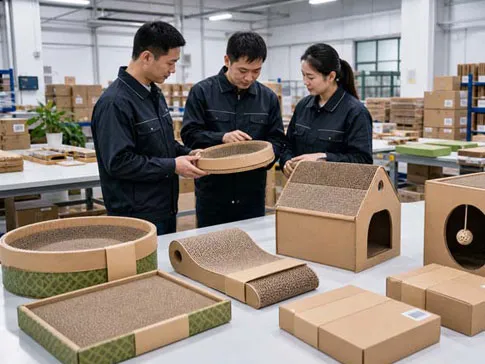
Petaful approaches cardboard products as functional pet furniture, not simple disposable pads. The development team reviews flute direction, board density, bonding strength, scratch angle, edge finishing, and load-bearing stability. As a result, each design can balance claw contact, comfort, shipping efficiency, and retail presentation.
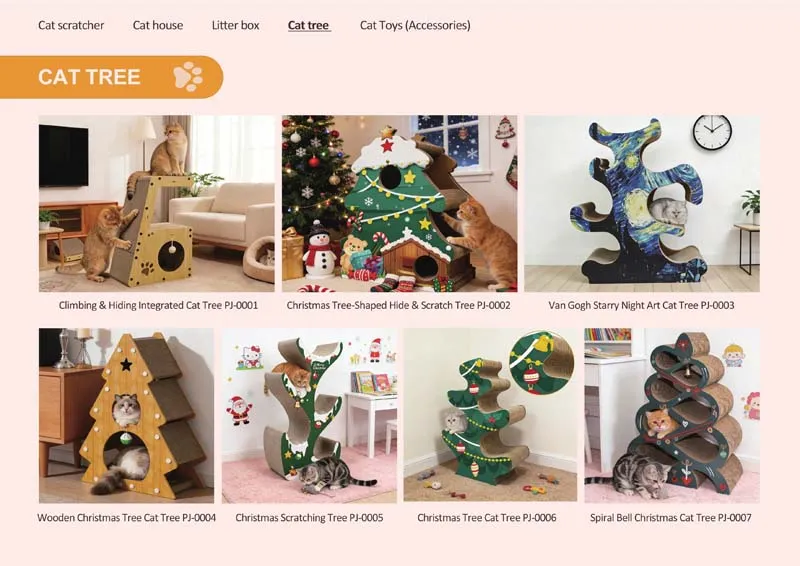
Founded in 2020, Petaful focuses on paper-based pet products, including scratchers, beds, houses, trees, and toys. The company operates a production base of about 20,000 square meters with more than 100 employees. It supports small trial orders and larger production programs for global clients.
For brands, OEM/ODM customization can cover concept development, structural design, sampling, printing, mass production, and packaging. Moreover, Petaful can adapt sizes, shapes, inserts, graphics, and packing methods to different markets. Cardboard cat scratchers still need honest specifications, realistic testing, and consistent quality control at every stage.
FAQ
Are cardboard cat scratchers safe for cats?
Yes, well-made products are usually safe for normal scratching. Choose clean paper, secure bonding, smooth edges, and a stable base. Also inspect the product regularly and remove it if moisture, severe damage, or loose components appear.
Why do cats like cardboard scratchers?
Many cats enjoy the fibrous edges, slight resistance, tearing sound, and visible marks. In addition, cardboard supports horizontal, angled, and curved scratching positions. These qualities make it attractive to cats that already scratch boxes or floor surfaces.
Do cardboard scratchers make a mess?
They can create small paper flakes as the surface wears. However, dense board, firm bonding, and reinforced edges can reduce debris. Regular vacuuming and timely replacement usually keep the area manageable.
How long do cardboard cat scratchers last?
Service life varies with board density, cat size, scratching frequency, and household size. A reversible model may last longer because owners can use both sides. Replace the product when the structure weakens or the surface becomes unsafe.
Can a cat eat cardboard from a scratcher?
A few accidental fibers may pass without concern, but repeated chewing or swallowing needs attention. Remove the product and consult a veterinarian if the cat persistently eats paper, vomits, loses appetite, or shows discomfort.
Are cardboard scratchers better than sisal?
Neither material wins for every cat. Cardboard suits many horizontal scratchers and multifunctional designs. Sisal often suits strong vertical scratching. Therefore, observe the cat’s preferred direction and offer both materials when practical.
Conclusion
Cardboard cat scratchers are good for many cats because they support scratching, stretching, marking, and daily enrichment. They help owners protect furniture and provide suitable resources in several rooms. However, quality, stability, size, placement, and supervision still determine the result.
Choose a format that matches the cat’s natural behavior. Then inspect it often and replace it when wear affects safety. With the right design and location, Cardboard cat scratchers can become a practical, enjoyable part of a cat-friendly home.
Questions
Which trade terms do you ship on?
EXW, FOB, or DDP. Tell us the destination and which term you want, and the quote uses that term. Name it on export packing.
Should I start with OEM or ODM?
Start with OEM when you already have a drawing or a print-ready file. Start with ODM when you want an in-house mold and your artwork on it. A repeat of an approved piece is a reorder. The two paths are on OEM and ODM.
What does Petaful manufacture?
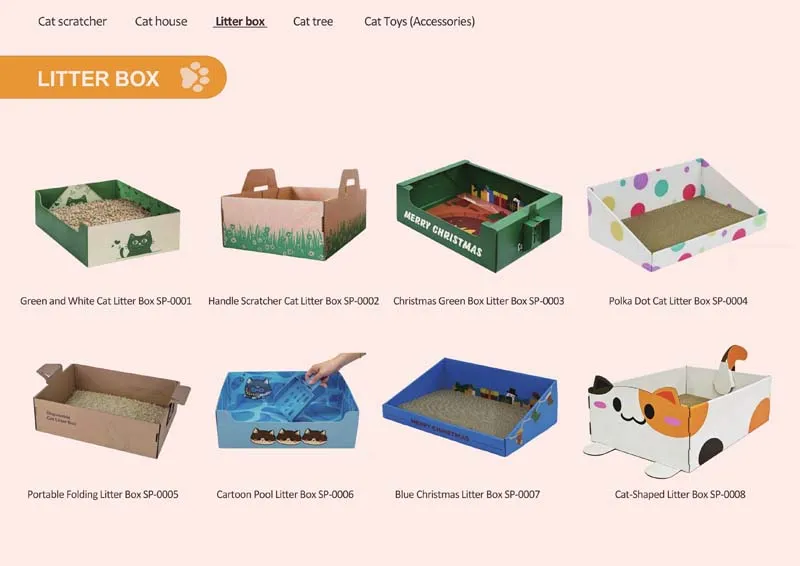
Corrugated cat scratchers, houses, posts, litter boxes, and toys. ZB-0192 is one pair of pads that stands as an L, a tunnel, or a step. Browse the product list.
How do you handle a quality claim?
Send the order reference, SKU, carton mark, photos, and delivery details. Petaful checks the reported issue against the signed sample and order record, then agrees a remedy for a confirmed manufacturing or packing fault. Write to sales.
1 yes · 0 no

About the author
Petaful Editorial
Factory editor
Edits sourcing notes for pet brands and Amazon sellers, from the Petaful floor in Shenzhen.